Water and wastewater owners continue investing in resiliency and resource recovery infrastructure as municipalities modernize aging treatment systems and expand biosolids processing capacity.
Hensel Phelps recently completed a major construction milestone on the Synagro In-Vessel Bioconversion Facility Upgrades project at the Sand Island Wastewater Treatment Plant in Honolulu, advancing one of Hawaii’s largest wastewater infrastructure programs currently under construction.
The $163 million design-build project is intended to expand biosolids processing capacity and strengthen long-term wastewater treatment operations for the City and County of Honolulu.
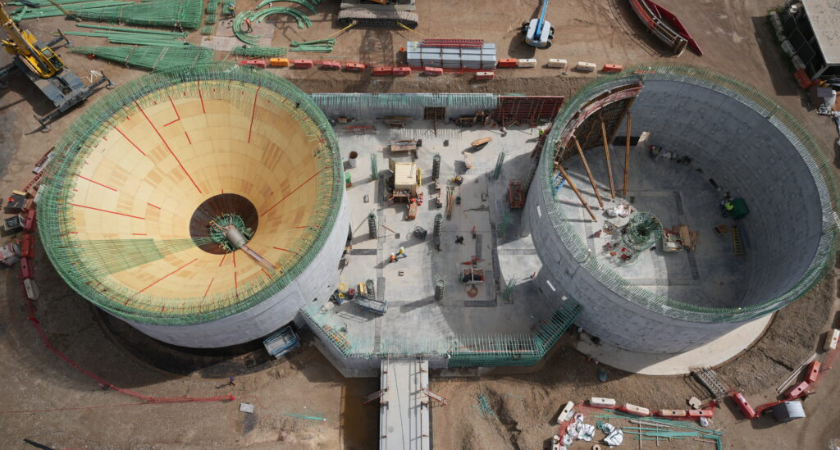
The project includes construction of two new 2.35-million-gallon anaerobic digesters, sludge storage tanks, a control building and associated tunnel upgrades.
Project crews recently completed a continuous 24-hour concrete placement for the hopper foundation of Digester Three, a key structural component supporting the 75-foot-tall digester system.
The work involved construction of an inverted cone foundation requiring specialized formwork, complex geometry coordination and integration of multiple mechanical and process system connections within the structure.
Hensel Phelps coordinated construction activities with DN Tanks and specialty trade partners to complete the monolithic concrete placement designed to support watertight performance requirements for the digester system.
Anaerobic digesters are used in wastewater treatment operations to break down organic material without oxygen, reducing biosolids volume while generating renewable biogas that can be used as an energy source.
The new digesters are intended to improve treatment efficiency, support renewable resource recovery and increase operational resiliency within Oahu’s wastewater infrastructure network.
Construction teams continue advancing critical structures and process systems associated with biosolids treatment and long-term plant operations as the project moves toward its planned 2028 completion.
For municipal owners, contractors and infrastructure developers, large-scale wastewater modernization projects remain a significant segment of public infrastructure investment.
Complex water and wastewater projects increasingly require integrated delivery methods, advanced concrete construction techniques and coordination between structural, mechanical and process engineering disciplines. Investments in anaerobic digestion systems also reflect growing emphasis on sustainability, resource recovery and long-term resiliency within municipal utility infrastructure programs.
Source: Hensel Phelps.