

The Next Data Center Hotspots: Where Construction Is Heading as Northern Virginia Hits Its Limits
.png)
Key Highlights
- Northern Virginia remains the world's largest data center market, but power wait times averaging seven years for large loads are pushing developers to look elsewhere.
- The United States still holds 228 of the world's 373 gigawatts of total data center capacity, but growth is accelerating fastest in emerging markets with available power.
- West Texas, the U.S. Midwest, the Nordic countries, and Latin America are attracting large-scale AI infrastructure investment specifically because of power access.
- iMasons identifies access to power as the single most decisive factor in site selection for large-scale AI data center deployments in 2026.
- Developers who identify and move in these emerging markets early carry a first-mover advantage that is difficult to close once utility agreements, land, and workforce pipelines are established.
The data center industry is in the middle of a geographic shift. The markets that dominated a decade ago are still growing, but the underlying conditions that made them attractive (available power, affordable land, utility capacity, and community support) are deteriorating in several of the most established hubs. At the same time, a set of emerging markets is moving quickly to fill the gap.
According to the iMasons State of the Digital Infrastructure Industry 2026 Annual Report, which synthesizes input from nearly 2,000 global industry members, the digital ecosystem follows the path of least resistance to electric power. That principle is reshaping where data centers are built. The report identifies access to power as the primary condition attracting large-scale AI deployments, ahead of regulatory environment, social license, capital stability, and connectivity.
For construction owners, general contractors, EPC firms, and developers tracking where the next decade of data center work will be concentrated, the following markets represent the clearest near-term opportunities.
1. West Texas
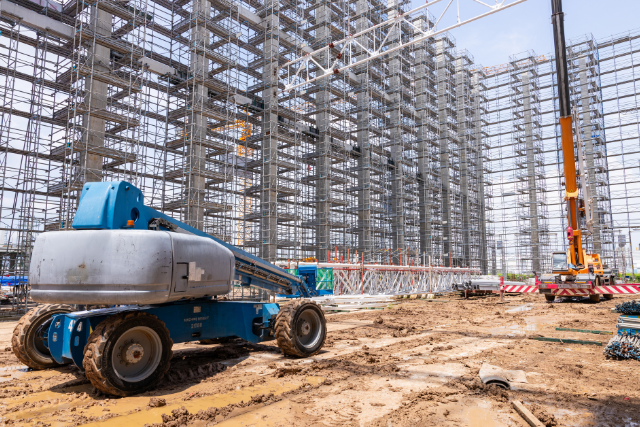
Why it is emerging: West Texas offers a combination of natural gas supply, available land, favorable regulatory conditions, and the expectation of expanded ERCOT transmission that is drawing significant developer attention. The market has become one of the primary destinations for data center projects that cannot secure timely grid connections in the Dallas-Fort Worth core.
ERCOT's large-load interconnection queue stood at approximately 410 gigawatts as of April 2026, with data centers accounting for roughly 73 percent of that pipeline. The Dallas-Fort Worth core cannot absorb that volume on existing infrastructure. West Texas is absorbing overflow, with developers building behind-the-meter natural gas generation capacity as bridge power and banking on future grid connectivity as transmission investment extends into the region.
The iMasons report notes that several multi-gigawatt sites are under development in West Texas, citing available land and fiber connectivity along with favorable regulatory environments that enable behind-the-meter power solutions at scale and faster connections to the power grid than saturated markets such as Northern Virginia.
A single gigawatt-scale data center project currently under construction in Texas employs more than 7,000 construction workers and skilled tradespeople on site daily, according to the report.
Construction implications: Projects in West Texas typically involve significant BTM power infrastructure alongside the data center shell. Contractors bidding for these projects should expect electrical packages that include generator systems, medium-voltage switchgear, and fuel delivery infrastructure in addition to standard data center MEP scope. Transformer procurement needs to begin at the earliest stages of preconstruction given current two-to-four-year lead times.
2. Indiana and the U.S. Midwest
Why it is emerging: Indiana, Ohio, and the broader Midwest are drawing data center investment from developers seeking shorter utility interconnection timelines than PJM's congested mid-Atlantic markets can offer. AEP Ohio's grid investment, partly prompted by Intel's semiconductor campus in New Albany, Ohio, has expanded substation capacity in that corridor. Duke Energy Indiana has engaged proactively with large-load customers and has announced generation investment to accommodate new demand.
The iMasons report specifically identifies the Southeast and Midwest as destinations for several multi-gigawatt sites under development, citing available land, fiber connectivity, and favorable regulatory environments alongside the ability to enable behind-the-meter power solutions at scale.
Columbus, Ohio, has emerged as one of the leading Tier 2 data center markets in the country, according to both Cushman and Wakefield and CBRE market data. The state's data center tax exemption program reduces the friction for developers evaluating the market. Amazon Web Services has announced significant AI infrastructure investment in Indiana, which carries the market validation that hyperscale commitments typically generate.
Construction implications: Midwest projects are generally less reliant on BTM bridge power than West Texas, making electrical packages more straightforward. However, transformer and generator procurement timelines apply equally. The market benefits from established contractor networks in Columbus and Indianapolis, and workforce availability is generally stronger than in more rural Western markets.
3. Northern Virginia Exurbs and Adjacent Markets

Why it is emerging: Northern Virginia is not going away. The market continues to grow due to historical precedence and continued robust business demand, according to the iMasons report. However, the combination of Dominion Energy's interconnection constraints, substation saturation in the Ashburn core, community opposition, and land costs is pushing new development 20 to 40 miles outside the traditional cluster and into adjacent markets including western Loudoun County, the Shenandoah Valley corridor, and markets in neighboring West Virginia and Pennsylvania.
The average wait for a 100-megawatt connection in Northern Virginia is seven years, according to JLL's 2026 Global Data Center Outlook.
Power-entitled sites (those with existing utility commitments) command significant premiums over unentitled land, and the market for those sites is competitive. Developers willing to look 30 to 50 miles from the Ashburn core are finding land with shorter utility timelines and less community friction.
Western Pennsylvania sits within the PJM footprint, which matters to hyperscalers and colocation operators for regulatory and connectivity reasons, but outside the most congested mid-Atlantic substations. That positioning is drawing developer interest from operators who want PJM membership without the Northern Virginia queue.
Construction implications: Projects in this corridor often require significant site development work given terrain and infrastructure gaps compared to established Ashburn campuses. Electrical infrastructure from the road to the fence can be substantial. Contractors active in Northern Virginia proper should be developing relationships in adjacent markets now.
4. The Nordic Countries
Why it is emerging: Sweden, Finland, Norway, and Denmark offer a combination of conditions that are difficult to match elsewhere in the world: abundant clean hydroelectric and wind power, cool ambient temperatures that reduce cooling loads, accommodating regulatory environments, and energy efficiency standards that align with hyperscaler sustainability commitments.
The iMasons report notes that developers of gigawatt-scale AI training facilities are looking outside Europe's traditional markets of Frankfurt, London, Amsterdam, Paris, and Dublin, with a strong focus on the Nordics due to the availability of abundant clean power and land. A cool climate, an accommodating regulatory landscape, and workforce efficiency add to the region's attraction.
Nordic power costs are among the lowest in Europe, and the region's grid is well-interconnected with the broader European network. Several of the world's largest data center operators have established or expanded Nordic campuses in recent years. The region is increasingly being positioned as a destination for AI training workloads that are not latency-sensitive with large-scale computation that can run anywhere power is available and affordable.
Construction implications: Nordic projects present different construction conditions than U.S. markets, including winter scheduling constraints, local labor market dynamics, and specific building code requirements. U.S.-based general contractors and EPC firms pursuing Nordic work typically require local partnerships or established European operations. The region's emphasis on energy efficiency reporting also imposes additional commissioning and documentation requirements.
5. Brazil and Latin America
Why it is emerging: Brazil generates approximately 90 percent of its electricity from renewable sources, including hydropower, wind, solar, and biofuels, according to the iMasons report. That clean grid profile aligns with hyperscaler decarbonization commitments in a way that natural-gas-heavy BTM power in U.S. markets does not. The country's ReData policy framework enables faster access to renewable power capacity, allowing developers to scale AI infrastructure while maintaining carbon commitments.
Paraguay, which borders Brazil and Argentina, co-invested with Brazil to build the Itaipu hydroelectric dam, which generates 14 gigawatts of hydroelectric power. Paraguay also maintains significant wind and solar deployments and exports the majority of its power to neighboring countries. Argentina's Patagonia region holds some of the world's best wind resources. Policy incentives in Brazil, Argentina, and Paraguay are specifically designed to attract North American hyperscalers and neocloud operators with access to power faster than U.S. markets can currently provide.
The iMasons report identifies these Latin American markets as having fulfilled the five conditions necessary to attract large-scale AI deployments: access to available power at scale, an accommodating regulatory environment, social license to operate, capital stability, and connectivity. The report notes a first-mover advantage for developers that move early in these markets.
Construction implications: Latin American data center projects require navigating local permitting systems, currency considerations, and contractor market conditions that differ materially from U.S. norms. Site development infrastructure (roads, water, fiber laterals) often requires more investment than comparable U.S. projects. Several major construction firms have established or are expanding Latin American operations in anticipation of sustained activity. U.S.-based developers are increasingly partnering with local contractors rather than attempting to mobilize domestic workforces.
6. Saudi Arabia and the Gulf

Why it is emerging: Saudi Arabia's Vision 2030 policy framework enables direct access to gigawatt-scale renewable energy without the queue delays common in the United States, according to the iMasons report. The country's geographic position provides direct fiber connectivity to Europe, Asia, and Africa simultaneously - a routing advantage that few markets can offer. Fast regulatory approvals, enacted data protection policy, and lower construction costs than European or U.S. markets are attracting significant hyperscale interest.
The United Arab Emirates is drawing development interest on similar terms, according to the iMasons report, with clean power availability, fast regulatory approvals, and lower costs cited as primary drivers. The report notes that the Middle East region's development pipeline has grown substantially, with 56 gigawatts in the Europe, Middle East, and Africa combined development pipeline as of 2026.
The iMasons report does flag regional stability as a risk factor, noting that concerns stemming from geopolitical tensions in the region could make some investors and providers hesitant about expansion.
Construction implications: Gulf data center projects often involve fast-track schedules driven by sovereign investment timelines. Extreme ambient temperatures require cooling system specifications that differ from temperate markets, with a strong emphasis on closed-loop liquid cooling and chilled-water systems. Labor sourcing follows different models than U.S. or European markets, and contractors need established local partner networks.
7. India
Why it is emerging: India's active data center capacity has grown from 687 megawatts reported in 2024 to 1.8 gigawatts today, with as much or more than 10 gigawatts in the development pipeline, according to data shared with iMasons by market intelligence partners. The growth is concentrated on hyperscale campus development in Mumbai and expanding outward. India's population of 1.4 billion people is the primary demand driver — the country's digital services market is among the largest in the world by user count, and latency requirements favor in-country infrastructure.
The Indian government's National Data Centre Policy and Data Centre Incentivization Scheme are specifically designed to attract hyperscale and neocloud investment. Digital sovereignty considerations — the desire to process and store Indian data within Indian borders — are amplifying this investment.
Power and water constraints are active challenges. The iMasons report notes that these constraints are fueling a surge in power purchase agreements with wind power developers and a shift to closed-loop liquid cooling systems and greater reliance on non-potable water sources in the Indian market.
Construction implications: India presents a high-growth construction market with a distinct labor supply chain, local procurement dynamics, and permitting environment. International contractors typically work through local joint ventures. The shift to liquid cooling is accelerating on new Indian campuses, which changes the MEP scope and commissioning requirements relative to air-cooled facilities.
What These Markets Have in Common
Each of the markets on this list satisfies, to varying degrees, the five conditions that the iMasons leadership team has identified as decisive in attracting large-scale AI deployments: access to power, regulatory environment, social license, capital stability, and connectivity. The markets that are gaining share fastest in 2026 are those where power can be delivered in 12 to 24 months rather than five to seven years.
That timing gap is the central fact driving geographic diversification. The iMasons report is clear that data center owners and operators would rather use the grid to power their projects. Delayed grid access necessitates bridge power solutions in certain markets, and bridge power adds capital cost, site complexity, and schedule risk. Markets where the grid can accommodate large-scale loads quickly attract capital away from markets where it cannot.
For construction owners and contractors, the practical implication is that the pipeline of data center work is spreading across a broader geographic footprint than at any previous point in the industry's history. Firms that develop market knowledge, local relationships, and trade partner networks in these emerging destinations now will be better positioned to compete for work as the pipeline materializes over the next three to five years.
The iMasons report projects that global data center capacity will at least double between now and 2030, with total capacity potentially tripling or quintupling over the next decade. Not all of that growth will happen in Northern Virginia.



TOP STORIES
View AllRECOMMENDED

.png)

