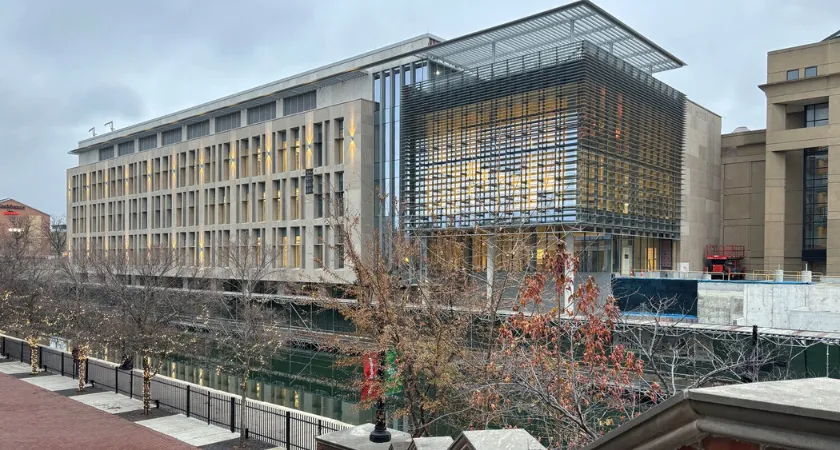
It has been in the works for two and a half decades, and now the building responsible for housing the documentation that details the rich history of Indiana is nearing completion in the coming months.
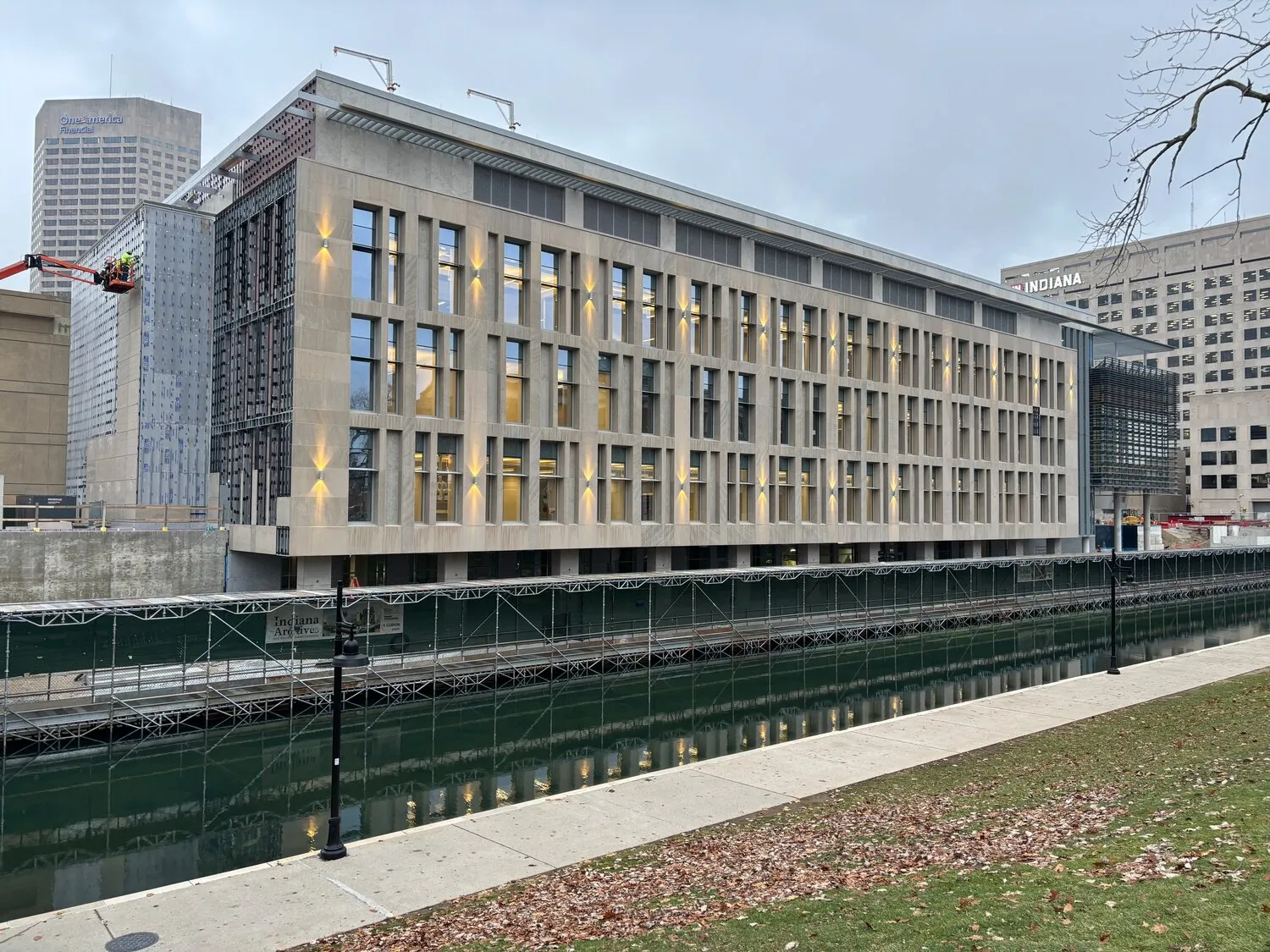
Construction began on the new 130,000-square-foot Indiana State Archives Building in 2023 after decades of discussion about where the new building would be, how well it could serve the public, and how it would be best designed to handle the safe storage of the documents, some of which are centuries old. There has been a tremendous need for a new State Archives Building to move important documents from what was meant to be temporary storage in a warehouse since 2001.
Officials determined the new site for the building would be a narrow strip of land between Ohio and New York streets in Indianapolis. The location at first seemed a challenge for construction crews and architects who had the added responsibility of maximizing every inch of space. The lot is surrounded by a parking garage, canal and city streets. William A. Browne, Jr., CEO of Ratio Design, principal architect for the $102 million project, said that once plans were drawn, the location actually seemed to be made for such a building.
“The building needed to have a windowless, large storage area, so we were able to take storage and stack it up on four of the five floors of the building, which is backed by the parking garage. That left us a nice bar along the canal and a nice parcel at the south end that could face the street. That is where the main entry to the building is,” he said. “This was a case of taking full advantage of the site. The site itself dictated how this building was placed.”
In addition, the location is within walking distance of the state’s library, history center and state museum, a convenient site for researchers, genealogists and members of the public who need to access Indiana’s historical records.
“In a lot of ways, the lot was really the perfect site for the building physically.”
Jacob Ellis of Pepper Construction, the project manager for the building, said that while design plans for the finished building would serve the site and public well, construction crews had to put additional thought and planning into erecting a building on a landlocked site with accessibility challenges.
“Simple tasks that we take for granted on most sites, like delivery and storage of materials, placement of cranes, and access to the façade of the building all became challenges for this site,” he said. “For instance, due to the length of the building and weight of materials being installed, two tower cranes were required to provide the reach needed to pull materials off of the trucks parked along the two streets and then place the materials at the desired location. Also, due to the west side of the facility being constructed so close to the canal and no easy access for lifts to maneuver down and back up to street level, hydro mobiles were used down the length of this side of the building.”
The restricted urban footprint required unconventional construction methods and close coordination among design and trade partners. Project teams scheduled material deliveries during off-peak hours and relied on just-in-time logistics to avoid congestion around the canal and adjacent streets. Engineers also reinforced portions of the site to accommodate heavy equipment while protecting nearby infrastructure. These strategies allowed work to continue safely without disrupting surrounding government offices and public spaces.
To further maximize space, Browne said that designers took advantage of the assets of surrounding buildings, including the State Office complex across the street from the new archives building. To address the need for a loading facility to bring in archival products to the new building crews were able to build a tunnel under the parking garage that leads to the state office complex. This eliminated the need to build a loading dock for the new building on a site with space limitations.
When considering the storage needs, Browne said his team drew from previous experience working with the Indiana State Museum years ago, learning about the storage and care of artifacts and documents. This helped develop plans for compact shelving, HVAC requirements, humidity and other factors needed for historical documents in the storage area of the building. Ellis said tight tolerances pertaining to deviations in temperature and humidity were heavily considered during the construction of the building.
“This was done through specialized air handling equipment/controls and the composition of the room being constructed with no windows to cut out UV rays from entering the space,” he noted.
In addition to storage and administrative office space, the building houses a community-accessible Reading Room on the south end of the second floor. The room is adorned with display cases picturing some of the state’s most important and interesting historical documents. Ellis said the exposed concrete columns, wood paneling and intricate ceiling system make this space one of the showcases of the facility.
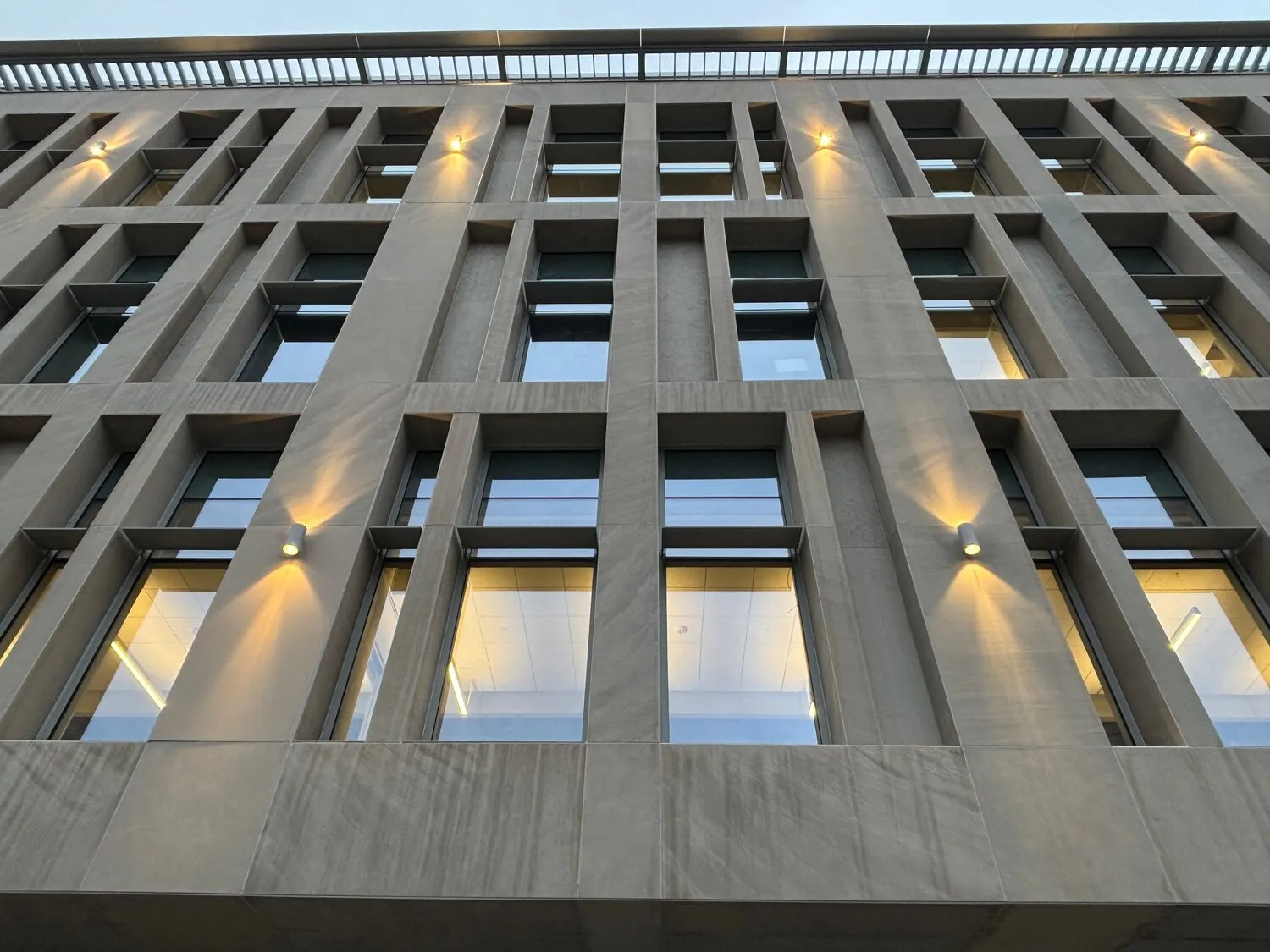
The exterior of the building was designed to further the creation of a destination with the use of limestone color to pair with the design of the State House. Browne said while much of the building was secure for archival purposes, attention was focused on the south end, where members of the public would have access to the building. In addition to the Reading Room, a roof-top terrace was constructed to be used by all state departments as an outdoor space, an additional venue to host events.
Ellis said one of the most significant aspects of the building is the story behind each part of the build. He said that as crews near completion, he continues to be amazed by the project.
“This has been one of the projects for myself and those that have been associated with it that we might never have another opportunity to build because there is only one State Archives building for each state. And when they are constructed, they are built with the intent of having a life span of at or over 75 years,” he said. “ When you put it into that perspective, it makes you stop and think about how exciting this is.”
The Indiana Department of Administration, along with RATIO Architects and Pepper Construction, expects the facility to be substantially complete in the coming months, marking the end of a decades-long effort to provide a permanent home for the state’s documentary heritage. Once opened, the building will centralize collections that have been scattered for years and offer modern preservation safeguards to protect Indiana’s history for generations.
Originally reported by Building Indiana Business.