Institutional investment activity continues to concentrate on stabilized, amenity-rich office properties in high-growth metro areas, with a newly completed acquisition in Irving, Texas highlighting sustained confidence in the long-term performance of premier commercial assets.

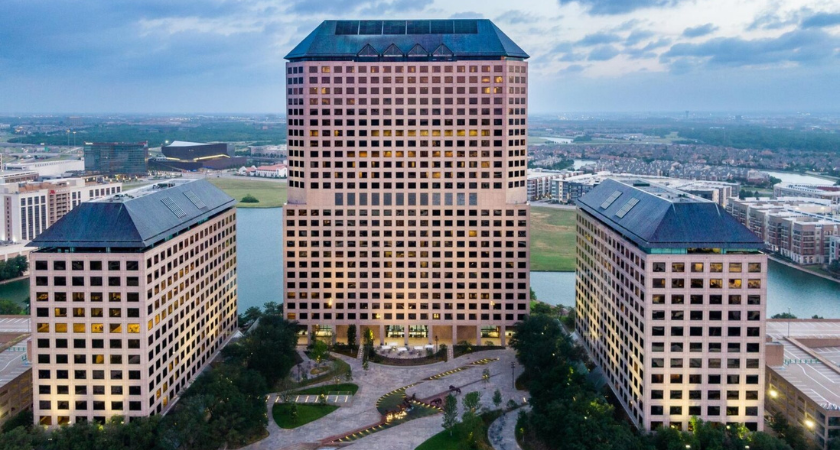
A joint venture led by Vanderbilt Office Properties, Hillwood Urban, and TriPost Capital Partners has acquired a major office campus in the Las Colinas Urban Center, reinforcing ongoing capital interest in well-leased, transit-connected properties across the Dallas-Fort Worth region.
The acquired asset spans approximately 1.4 million square feet and consists of a multi-building Class A office campus known for its visibility and central location within the Las Colinas district.
The property has undergone more than $30 million in prior renovations and currently hosts a mix of corporate tenants across industries including consulting, manufacturing, energy services, and trade organizations. Its tenant roster includes major national and multinational firms, contributing to its position as a stabilized institutional asset.
Financing for the transaction was arranged through Beal Bank USA, supporting continued liquidity in the commercial real estate investment market despite ongoing sector-wide adjustments in office demand.
The acquisition reflects a broader investment trend centered on high-quality office properties that combine strong tenant bases, upgraded amenities, and proximity to transportation infrastructure.
In Sun Belt markets such as Dallas-Fort Worth, institutional capital has increasingly focused on assets that have demonstrated resilience through leasing activity and prior capital improvements, rather than older or functionally obsolete office inventory.
Market participants continue to prioritize assets located within mixed-use environments that offer access to transit corridors, airports, and surrounding residential and retail development.
The U.S. office sector remains in a period of structural adjustment as tenant demand concentrates in newer, better-located, and amenity-rich properties. This has created a widening performance gap between core institutional assets and secondary office inventory.
Dallas-Fort Worth continues to outperform many peer markets due to population growth, corporate relocations, and sustained employment expansion in professional services and technology-adjacent sectors.
For construction owners and developers, this transaction underscores the importance of asset quality, location strategy, and long-term adaptability in office development and renovation projects. Properties that integrate strong infrastructure access, tenant experience upgrades, and flexible space planning are more likely to attract institutional capital.
The continued flow of investment into repositioned office campuses also signals ongoing opportunities for renovation, adaptive reuse, and phased redevelopment projects across major metropolitan markets, particularly in Sun Belt growth corridors.
Originally reported by Hill Wood.