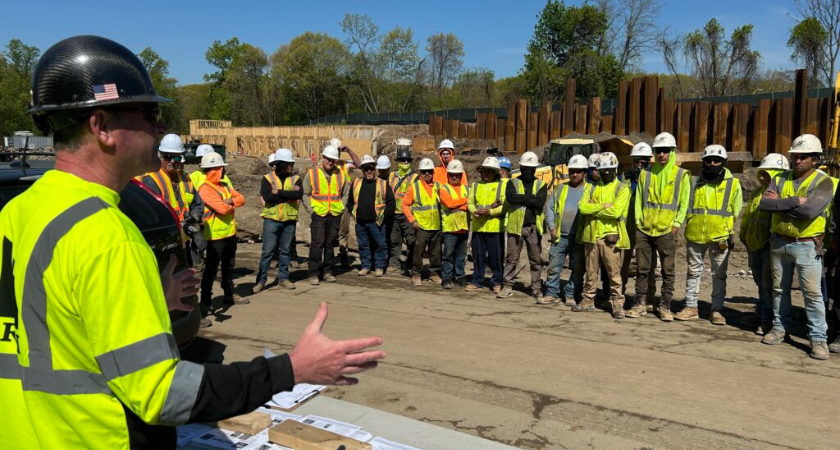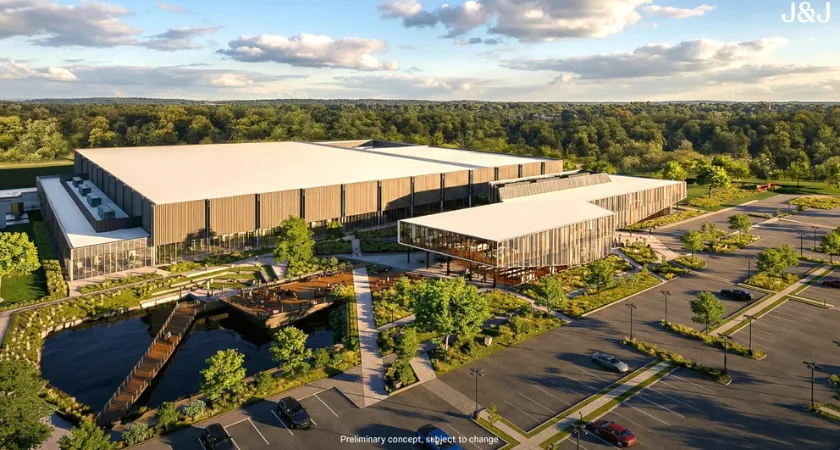
On February 18, 2026, Johnson & Johnson announced plans to build a new cell therapy manufacturing facility in Montgomery County, Pennsylvania, committing an investment exceeding $1 billion.
The state-of-the-art site will serve as a central hub for the company’s production of advanced medicines, according to a company statement. The project represents one of the region’s most significant life sciences construction investments in recent years and reinforces Pennsylvania’s standing as a national biomanufacturing center.
The investment is a key part of Johnson & Johnson’s previously announced plan to invest $55 billion in its U.S. manufacturing, research, and technology operations by early 2029. The company aims to manufacture the vast majority of its advanced medicines within the United States to meet the needs of American patients.
The new Montgomery County facility will be equipped with modern technologies designed to advance the company’s portfolio of treatments for complex conditions, including cancer, immune-mediated diseases, and neurological disorders.
This focus on advanced cell therapy represents a significant step forward in the future of medicine, the company said.
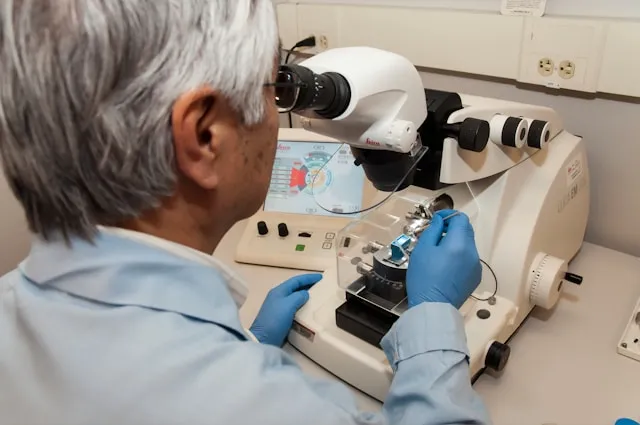
Cell therapy manufacturing is notably more complex than traditional pharmaceutical production. It requires specialized cleanroom environments, advanced automation, cold chain logistics, and highly controlled quality systems. The Pennsylvania facility is expected to integrate digital manufacturing platforms and real-time data monitoring to support precision and scalability.
The launch of J&J’s billion-dollar facility presents a major opportunity for the construction industry in Pennsylvania and across the Mid-Atlantic region. With more than 4,000 construction jobs expected during development, the project will require a large and skilled workforce, including general contractors, specialty trades, mechanical and electrical teams, project managers, engineers, and commissioning specialists.
Large-scale biomanufacturing projects typically involve:
Local suppliers, subcontractors, and service providers are also poised to benefit. Projects of this magnitude often generate secondary demand in logistics, materials supply, equipment manufacturing, and professional services.
While detailed project plans and specifications have yet to be released, contractors and manufacturers should monitor procurement announcements and prequalification opportunities as the project advances through design and early construction phases.
Beyond job creation, this investment is set to inject sustained momentum into the regional economy. Facilities in the life sciences category often catalyze further investment, encouraging clustering of research firms, suppliers, and innovation partners.
“For 140 years, Johnson & Johnson has been a leading innovator in American healthcare, and we are honored to continue advancing that legacy in Pennsylvania,” said Joaquin Duato, Chairman and Chief Executive Officer of Johnson & Johnson. He noted that the project unites scientific excellence with advanced manufacturing and strategic investment.
The planned new facility deepens Johnson & Johnson’s already substantial presence in Pennsylvania. The company currently operates ten facilities across the state, covering over 2 million square feet and contributing an estimated $10 billion annually to the state’s economy.
Pennsylvania Governor Josh Shapiro highlighted the state’s growing reputation as a leader in life sciences and advanced manufacturing.
“That’s why companies like Johnson & Johnson are choosing to double down on their investments here in our Commonwealth - because they know we’ve got the strategy, the workforce, and the speed they need to succeed.”

Industry analysts note that domestic pharmaceutical and biotech manufacturing capacity has become a national priority in recent years. Expanding U.S.-based production strengthens supply chain resilience, reduces reliance on overseas facilities, and supports rapid deployment of next-generation therapies.
For construction professionals, the project signals continued strength in the life sciences construction sector — a category that typically demands technical sophistication, premium materials, and long project timelines. As demand for advanced medicines grows, similar facilities could follow in other innovation hubs nationwide.
With a $1 billion price tag and thousands of jobs at stake, the Montgomery County facility is poised to leave a lasting imprint on Pennsylvania’s industrial landscape while reinforcing Johnson & Johnson’s long-term commitment to U.S.-based advanced medicine manufacturing.
Originally reported by Marshall Benveniste in Construct Connect News.