Construction of a major youth sports destination is moving forward in southeastern Wisconsin as developers continue investing in large-scale athletic and mixed-use recreation complexes designed to attract regional and national events.

Kraus-Anderson Companies has been selected to build the $175 million Breck Athletic Complex in Big Bend, located in Waukesha County near the Milwaukee metro area. The project represents one of the largest youth sports developments planned in the state and is expected to become a regional hub for tournaments and athletic events.
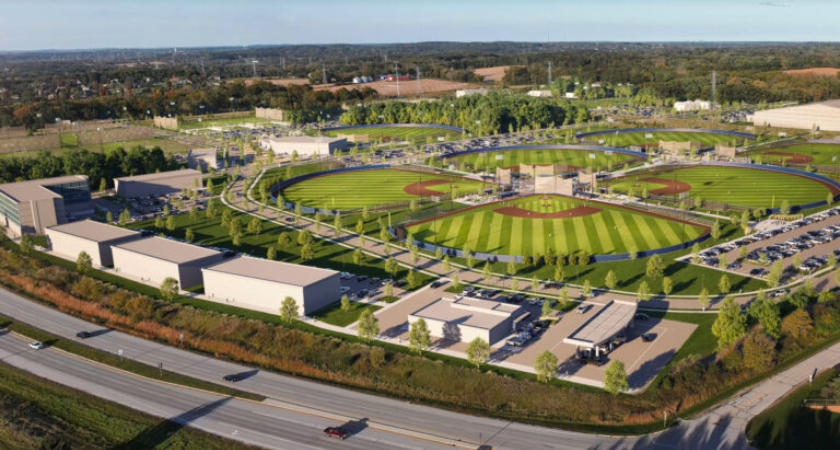
The 150-acre development will feature a multi-sport design centered on baseball, soccer and lacrosse facilities. Plans include six turf baseball fields, a championship field with spectator seating, five soccer fields and four lacrosse fields. A key component of the project is a 150,000-square-foot indoor sports facility designed to support year-round training, competitions and youth development programs.
Beyond athletic infrastructure, the complex will incorporate a wide range of supporting amenities intended to create a destination-style environment. These include fitness trails, golf simulators, commercial retail space, food and beverage offerings, and an on-site hotel to accommodate visiting teams and families.
The project is being designed by ISG Architects and will be delivered in phases. Initial construction is expected to begin in 2026, with soccer fields targeted for early play in the fall of that year. Additional baseball facilities are scheduled for completion between late 2027 and early 2028, depending on final phasing and development timelines.
The Breck Athletic Complex is positioned as a national-level tournament destination, reflecting a broader trend in the development of large-scale youth sports facilities across the United States. These complexes are increasingly structured as mixed-use developments that combine athletics, hospitality and retail components to generate long-term economic activity for surrounding communities.
The project site spans approximately 150 acres and has undergone extensive planning, including geotechnical studies, wetland analysis and zoning adjustments. Developers are working through rezoning approvals and conditional use permitting to consolidate land use and advance construction phases.
Industry observers note that youth sports complexes have become a growing segment of the construction market, driven by demand for travel sports infrastructure, regional tourism and multi-purpose recreation facilities. These projects often require significant civil work, phased scheduling and coordination with municipal planning agencies due to their scale and mixed-use components.
For construction owners and developers, the Breck Athletic Complex reflects continued demand for large-scale recreational and sports infrastructure projects that combine construction with long-term economic development strategies.
Projects of this size often require complex coordination across civil engineering, vertical construction and specialty athletic installations, creating opportunities for contractors with experience in phased delivery and multi-use site development. Owners pursuing similar developments may increasingly prioritize firms capable of managing both infrastructure and commercial components within a single project framework.
The trend also highlights how sports tourism and entertainment-driven real estate development are influencing construction pipelines, particularly in suburban and secondary metro markets where large land parcels remain available for mixed-use expansion.
Originally reported by Kraus-Anderson.