After years of litigation and regulatory review, construction has officially begun on Enbridge’s Line 5 Wisconsin Segment Relocation Project following final federal approval.
.webp)
The U.S. Army Corps of Engineers issued its permit Tuesday, clearing the last major obstacle for Enbridge to proceed with relocating a section of its pipeline in northern Wisconsin.
Line 5 originates in Superior and runs through northwest Wisconsin into Michigan’s Upper Peninsula. A portion of the aging pipeline currently crosses the Bad River Reservation, prompting a prolonged dispute over environmental protection and tribal sovereignty.
Enbridge first submitted permit applications for the relocation nearly six years ago. In November 2024, the Wisconsin Department of Natural Resources granted state permits.
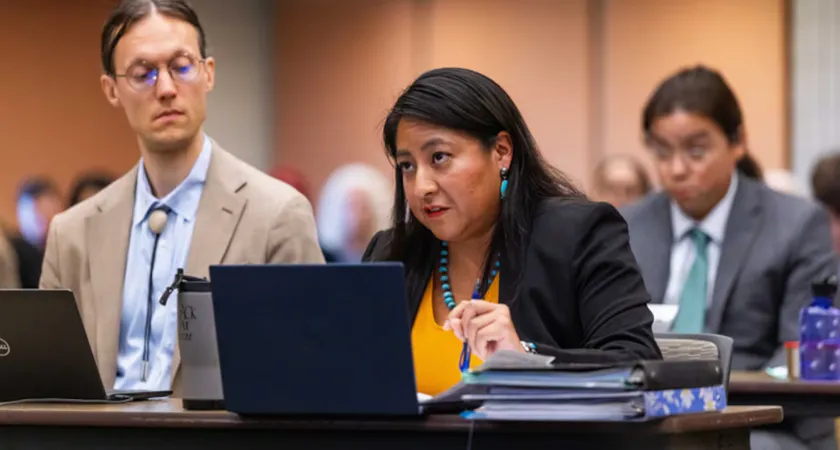
The Bad River Band of Lake Superior Chippewa, along with environmental advocacy groups, challenged those permits, triggering a contested case hearing and extended review process. Public comment sessions were held in Ashland and Madison in August and October 2025.
At those hearings, Enbridge leaders argued that extensive environmental studies showed the reroute would minimize ecological impacts. Tribal leaders and environmental advocates countered that the new alignment would still threaten wetlands, waterways and the Band’s way of life.
Earlier this month, an administrative law judge ruled in Enbridge’s favor, upholding the state permits. The Army Corps’ decision this week provided the final authorization needed to break ground.
Enbridge officials announced that construction would begin immediately and emphasized the project’s economic impact.
In a statement Tuesday, company representatives wrote:
“The finalized permit from the U.S. Army Corps of Engineers allows construction to move forward on the most studied pipeline project in Wisconsin’s history. Construction activities will begin today. The Line 5 Wisconsin Segment Relocation Project will be built by a Wisconsin contractor, subcontractors, and a trained union workforce involving more than 700 family-supporting union construction jobs. The project is expected to bring millions of dollars in construction related spending to Ashland, Bayfield and Iron counties, and the state of Wisconsin.
State permits were issued in 2024 when the Wisconsin Department of Natural Resources (DNR) confirmed any project construction impacts will be temporary and isolated, have no measurable effect on water quality, and would not violate water quality standards.
State permits were upheld in a contested case process decision earlier this month.
Enbridge submitted permit applications to state and federal regulators in early 2020 for the relocation project which will build a new 41-mile segment of pipeline around the Bad River Reservation. Line 5 is critical energy infrastructure serving 10 refineries and propane production facilities – providing raw materials to meet the energy needs of millions of people in the Midwest and Great Lakes Region.”
The company has repeatedly described the relocation as the “most studied pipeline project in Wisconsin’s history,” citing years of environmental assessments and regulatory oversight.
Despite the approvals, the legal battle is not over.
The Bad River Band recently filed a petition for judicial review of the administrative law judge’s decision. Environmental groups also announced plans to seek a court-ordered halt to construction.
Earthjustice Senior Associate Attorney John Petoskey said:
“Enbridge now has approval for most construction activities to build a pipeline that will cause serious and permanent damage to north Wisconsin wetlands and waterways, and especially to the Bad River Band. We are challenging those approvals on behalf of the Band in state and federal court, and we’ve asked the Circuit Court of Iron County to immediately halt construction by issuing a stay.”
Opponents argue that even with mitigation measures, rerouting the pipeline through forested and wetland areas poses long-term environmental risks, particularly to water resources that are central to tribal culture, subsistence practices and treaty rights.
.webp)
Line 5 has long been a flashpoint in the Midwest energy debate. The pipeline transports crude oil and natural gas liquids from western Canada through Wisconsin and Michigan, supplying refineries and propane distributors across the Great Lakes region.
Supporters argue the relocation strengthens safety by moving the pipeline away from eroding riverbanks and off tribal land, while maintaining regional energy stability and fuel affordability.
Critics maintain that the broader environmental risks of fossil fuel infrastructure — including potential spills and climate impacts — outweigh the economic benefits.
With construction now underway in Ashland, Bayfield and Iron counties, attention shifts to the courts, where opponents are seeking emergency relief. Whether judges intervene could determine how quickly the 41-mile reroute advances.
For now, however, federal regulators have granted the final green light, and crews have begun work on one of Wisconsin’s most closely watched infrastructure projects.
Originally reported by Northern News Now staff in Norther News Now.