Large data centers can improve safety, reliability and grid coordination by shifting away from proprietary electrical designs and adopting more standardized frameworks, a senior official at the National Electrical Manufacturers Association said this week.
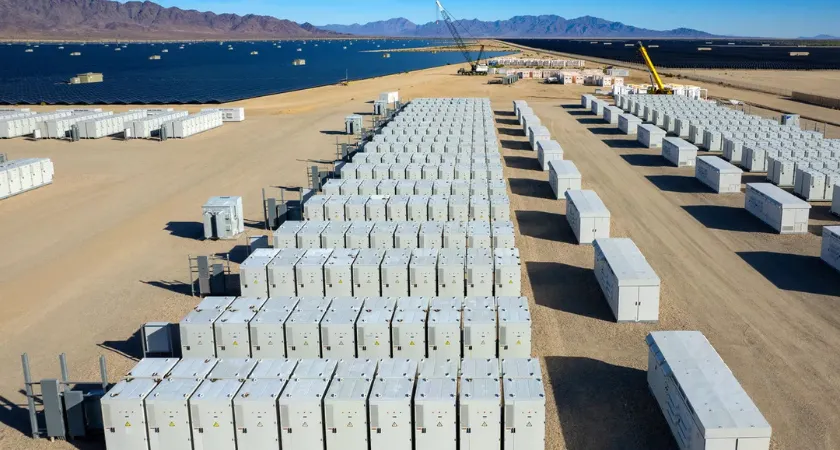
Utilities are increasingly receptive to projects that can “island” from the grid during peak demand periods, relying instead on on-site storage and generation to maintain operations, said Patrick Hughes, NEMA’s senior vice president of strategy, technical and industry affairs.
“We see demand response playing an important role for the grid … it’s an underutilized resource, and we’d like to see it used more widely,” Hughes said, echoing comments NEMA made in a letter to Congress last fall. Data centers can use onsite batteries and microgrids to provide essential flexibility to utilities without interrupting their operations, he said.
A growing share of new U.S. data center projects are planning to rely on behind-the-meter energy resources — systems that generate or store power on-site rather than drawing entirely from the grid.
According to research published last week by Cleanview, facilities representing roughly 30% of planned U.S. data center capacity intend to use such resources. Notably, 90% of those projects were announced in 2025, signaling increasing developer frustration with grid interconnection timelines that can stretch up to seven years in some regions.
Cleanview founder Michael Thomas reported that about 75% of identified behind-the-meter projects rely on natural gas. While large gas turbines face multiyear procurement delays, smaller assets — including mobile generators, reciprocating engines and aeroderivative turbines — can be deployed in a matter of months.
“Data centers are trying to get through utility [interconnection] queues quickly … and being able to show that you can island during peak times, that you’re not going to put a lot of stress on the grid, will get you through the queue faster,” Hughes said.
Developers are increasingly adding gas-fired generation both to reduce required interconnection capacity and to provide redundancy once connected.
Even as gas generation dominates near-term deployments, battery storage is gaining prominence as a complementary resource.
Hughes noted that storage improves redundancy, enhances power quality for sensitive computing equipment and can integrate with zero-emissions generation to support corporate sustainability targets.
On Monday, energy management provider Energy Vault announced it would purchase 1.5 GWh of energy storage from Peak Energy and co-develop a “dedicated energy storage architecture designed specifically for AI Neoclouds and AI-first data center operators” using sodium-ion battery technology.
Analysts say data center operators appear willing to absorb higher upfront costs for energy storage and other behind-the-meter solutions amid growing public scrutiny over electricity affordability.
“The ability to avoid much of the political backlash around data center-electric affordability and protracted interconnection timelines is the appeal of [behind-the-meter assets], albeit at elevated price points,” Julien Dumoulin-Smith, a power sector analyst with Jefferies, wrote in a Monday investor note.
Battery energy storage “is an increasingly critical part of the data center infrastructure,” Dumoulin-Smith added.
In addition to promoting on-site storage and microgrids, NEMA is pushing for greater standardization in data center electrical design.
Last month, the association released voluntary standards for energy storage systems and microgrids on data center campuses. Hughes said the goal is to streamline what is currently a fragmented process, with major developers relying on proprietary internal standards.
Competing technical frameworks can slow engineering reviews, complicate procurement and raise upfront project costs.
“We see a lot of benefit in … starting to standardize around how to deploy storage and microgrids because then you get safer, more efficient data centers,” Hughes said.
.webp)
NEMA is collaborating with ASHRAE and the Pacific Northwest National Laboratory to develop a comprehensive guidebook for data center design. Hughes described it as “a one-stop shop for data center developers and owners,” with release expected in early summer.
The forthcoming guidelines could also help utilities in data center-heavy regions manage the surge in large-load applications.
“[They] provide a common technical framework, which may help compress review cycles and reduce the associated burdens on resource planning departments,” Hughes said.
As AI-driven computing demand accelerates, the interplay between grid operators and hyperscale data center developers is evolving. On-site batteries and microgrids — once considered optional resilience upgrades — are increasingly becoming strategic tools for securing faster approvals, mitigating public
Originally reported by Brian Martucci in Construction Dive.