Industrial construction, long one of Northern Nevada’s strongest commercial real estate sectors following the COVID-19 pandemic, is entering a pronounced slowdown as the region heads into 2026. After years of rapid growth, rising vacancy rates and stabilizing rents have dampened new development activity, signaling a major shift in market conditions.
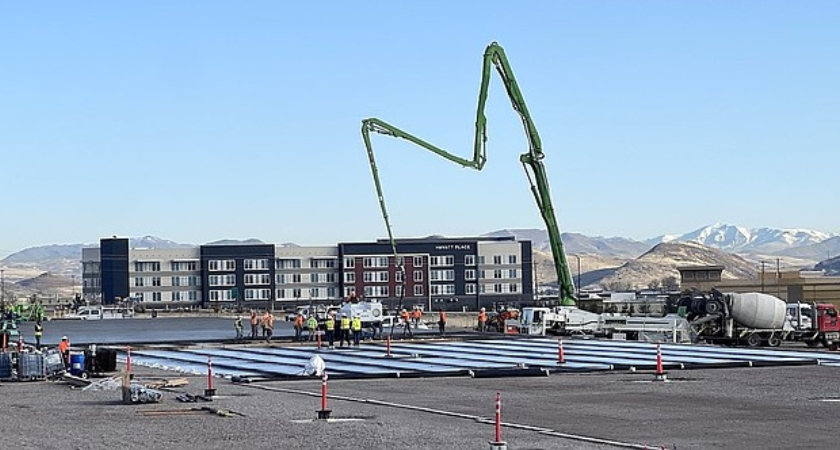
Vacancy across all industrial property classes climbed to roughly 11% in 2025 as a wave of newly completed Class A buildings came online without sufficient tenant demand to absorb the added space. With several projects still under construction and leasing activity lagging, industry experts expect construction to remain largely stagnant throughout 2026.

“Across the board, we saw a drastic slowdown in construction (in 2025),” said Brian Armon, senior vice president and principal of NAI Alliance. “We have seen projects break ground, go to a pad-ready status, and then they are stalled and will just sit.”
The slowdown marks a sharp reversal from the post-pandemic surge that defined the region’s industrial market. Industrial vacancy fell below 1% in the second quarter of 2022, triggering a rush of speculative development as builders scrambled to capitalize on demand.
At the end of 2021, there were 5.4 million square feet of industrial properties under construction in Northern Nevada. That figure jumped to 9.1 million square feet by the end of 2022 and remained elevated through 2023, with roughly 8 million square feet in active development.
The market reached its peak at the end of 2024, when approximately 11.2 million square feet of Class A industrial space was under construction. By the third quarter of 2025, that total had fallen to 3.7 million square feet, and projections suggest only about 2 million square feet of new industrial construction will remain in progress entering 2026.
That represents an estimated 82% year-over-year decline.
“It is a drastic decline,” Armon said.
Tenant demand had driven industrial rents sharply higher over the past five years, but rental growth began leveling off in 2025. While Reno remains competitive compared with markets such as Salt Lake City, Phoenix and Las Vegas, the pricing gap has narrowed.
“We used to be the best value in the West,” Armon said. “Now it’s much closer.”
Land transactions — typically a leading indicator for future development — also slowed significantly last year. According to Armon, most major land deals involved data center uses rather than traditional industrial projects.
“We saw some large chunks trade hands primarily for data center acquisitions, but not for industrial development,” he said.
Despite near-term challenges, developers and brokers remain cautiously optimistic that Northern Nevada can absorb its existing inventory over the next year or two, eventually setting the stage for renewed construction activity. The region’s strategic location continues to offer logistical advantages for serving West Coast markets.
However, global trade policies have created additional uncertainty. Many industrial tenants in Northern Nevada rely on goods imported from Far East countries that have been affected by rising tariffs, putting pressure on distribution and fulfillment operations.
Even so, several developers are pressing forward with targeted projects. Private developer HCM recently broke ground on three industrial buildings in Spanish Springs designed for smaller tenants. The project includes two 23,750-square-foot buildings divisible into spaces as small as 2,375 square feet, along with a larger 67,500-square-foot building.
.jpg)
“There’s really no fully planned business park like this in the area,” said Tomi Jo Lynch, first vice president of industrial properties at CBRE’s Reno office.
Infrastructure work is also underway at the 600-acre Victory Logistics District, where Mark IV Capital is preparing land for future development.
“This property is in a great location, and the utility benefit really advances people’s decision making processes,” said Rick Nelson, senior director of Nevada operations for Mark IV Capital.
Momentum at Victory Logistics District increased further when Microsoft purchased more than 300 acres for future data center development.
“We see this as a major step toward many data center developments at Victory,” said Evan Slavik, president and chief executive officer of Mark IV Capital.
Meanwhile, Panattoni Development has begun construction on two of four planned industrial buildings at its 580 South project near Mount Rose Highway and Interstate 580. One building is fully pre-leased, while a second 198,000-square-foot structure is moving forward on a speculative basis.
“We are going in phases and seeing some pre-leasing before starting the next one,” said Tim Schaedler, Nevada and Northern California partner for Panattoni Development.
Looking ahead, NAI Alliance estimates that another 20.8 million square feet of industrial projects are entitled or planned across Northern Nevada, though most are unlikely to break ground in the near term.
“The market will stabilize and adjust,” Armon said. “Look at the lack of land transactions and the lack of new construction. The existing supply will get absorbed. Ultimately, the cycle will start again, and the projects that are in the pipeline will be successful in two to three years.”
Originally reported by Rob Sabo in Nevadaappeal.