A recent federal whistleblower ruling against a major railroad operator is drawing attention across transportation and infrastructure sectors as employers face increased scrutiny over workplace retaliation and safety reporting practices.
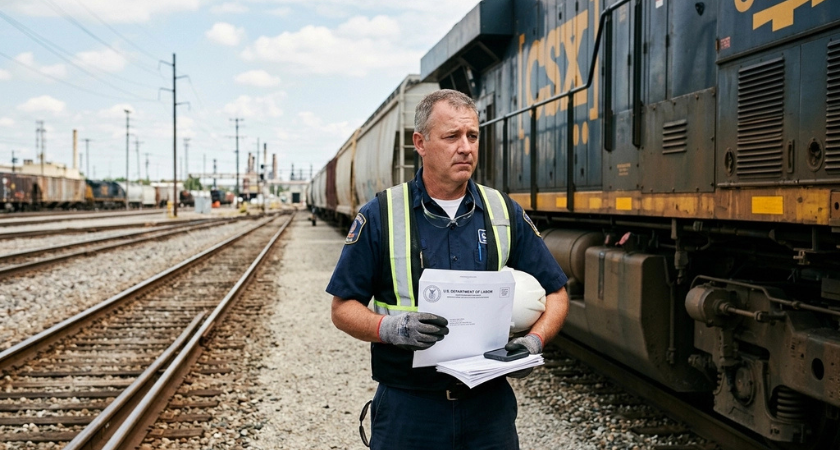
The U.S. Department of Labor announced that its Occupational Safety and Health Administration determined Canadian Pacific Kansas City Ltd. unlawfully suspended an employee after the worker reported a train collision and associated safety concerns tied to operations at the company’s Knoche Yard in Kansas City.
According to OSHA, the employee filed a complaint under protections provided by the Federal Railroad Safety Act after reporting details of a minor August 2024 train collision to the Federal Railroad Administration. The collision reportedly caused limited damage and no injuries, but investigators said the employee disclosed the event and related concerns as required under federal law.
OSHA’s investigation concluded that company management had prior awareness of the incident through radio communications and internal discussions but did not initiate a formal inquiry until federal regulators became involved following the employee’s report.
The case escalated further during a disciplinary hearing involving workers connected to the collision. OSHA said the employee, acting in the capacity of union chairman, disclosed that they had reported the incident to regulators. Investigators later determined the company suspended the worker for 20 days without pay after alleging a violation of internal notification policies, despite the employee not being directly involved in the collision itself.
Federal regulators ordered Canadian Pacific Kansas City to reverse the suspension, compensate the worker for lost wages with interest and remove references to the disciplinary action from the employee’s personnel file. OSHA also directed the company to provide compensatory and punitive damages.
The ruling reinforces the expanding role whistleblower protections play across infrastructure, transportation and industrial sectors where safety reporting can directly affect operational continuity and regulatory compliance. Construction owners, contractors and engineering firms involved in rail-adjacent projects or federally regulated transportation work may face heightened expectations around internal reporting systems and anti-retaliation safeguards.
Legal and compliance experts note that retaliation claims can create significant financial and reputational exposure for employers, particularly as federal agencies continue emphasizing worker protections tied to safety disclosures. Companies operating in heavy industry and infrastructure environments are increasingly being advised to strengthen internal reporting procedures, documentation practices and supervisor training to reduce compliance risks.
The decision also highlights broader federal enforcement priorities surrounding workplace accountability in transportation operations, especially where workers raise concerns involving equipment incidents, operational hazards or potential regulatory violations.
OSHA’s Whistleblower Protection Program oversees enforcement of multiple federal statutes protecting employees who report workplace safety, transportation, environmental, financial and public safety concerns.
The OSHA whistleblower ruling serves as a warning for construction owners, infrastructure developers and contractors overseeing transportation or heavy industrial projects where safety reporting obligations are closely regulated.
Owners managing rail, transit, utility or public infrastructure work may face increased liability exposure if subcontractors or project partners are perceived to discourage workers from reporting hazards, incidents or regulatory concerns. Even when incidents involve limited damage or no injuries, federal agencies are demonstrating a willingness to pursue retaliation claims tied to internal disciplinary actions.
The case also underscores the importance of maintaining transparent reporting channels and ensuring supervisors understand federal whistleblower protections. Construction firms operating under government contracts or transportation-related regulations may need to revisit compliance policies, incident escalation procedures and workforce training programs to reduce legal and reputational risks.
For project owners, retaliation investigations can create operational disruptions, delay schedules and increase scrutiny from regulators, insurers and labor organizations. Industry leaders are increasingly prioritizing safety culture and third-party compliance auditing as part of broader risk management strategies tied to workforce retention and regulatory performance.
Originally reported by U.S. Department Of Labor in OSHA.