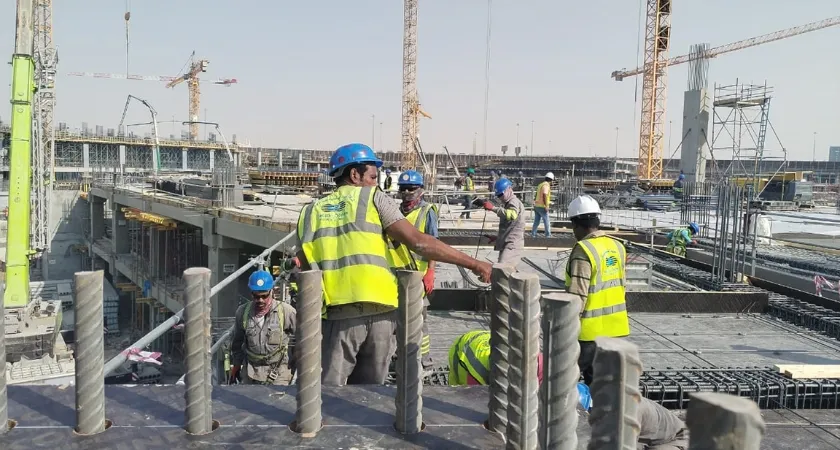
Construction spending across the Pacific region is expected to return to growth in 2026 following a modest slowdown, according to FMI’s latest annual industry outlook. Analysts project overall spending will rise 1.7% to approximately $303 billion, reversing a projected 1% decline in 2025 and signaling renewed momentum for California and neighboring western states.
The recovery is expected to be uneven across sectors, with infrastructure and institutional work carrying much of the load while residential building stabilizes after several years of volatility tied to interest rates and housing affordability challenges.
Industry economists say the anticipated rebound reflects improving economic fundamentals and a backlog of major public and private projects that continued moving through planning stages despite last year’s pullback. California remains the dominant engine of the Pacific market, representing the largest share of total regional volume.

FMI noted that nonbuilding infrastructure will be the primary growth engine, particularly investments tied to energy transition, water security, and transportation modernization. These categories have benefited from federal funding programs and long-term state infrastructure strategies.
The Pacific region continues to rank among the nation’s most active markets for large-scale medical construction. FMI’s report notes that of 15 tracked health system projects valued at $1 billion or more, five are located in California, underscoring the state’s ongoing hospital modernization and seismic upgrade requirements.
Nonbuilding structures are projected to expand 6% in 2026, making it the fastest-growing segment. Within that category, analysts forecast a 10% jump in power construction spending as utilities and private developers invest in grid upgrades, renewable generation, and transmission. Highway and street spending is expected to rise 2%, supported by multiyear transportation packages and local bond measures.
Drought preparedness remains a defining investment theme throughout the West. FMI observed that source protection and aquifer storage are taking a larger share of water supply spending, as agencies prioritize long-term reliability in response to climate volatility and population growth.
Residential construction is projected to inch upward 1% in 2026, with single-family activity showing a similar 1% gain after flat performance in 2025. Multifamily development is expected to remain cautious as developers absorb recently completed inventory in major coastal metros.
The forecast arrives amid mixed signals for the construction labor market and materials pricing. Contractors report steadier supply chains than in previous years, but skilled labor shortages continue to challenge project schedules. FMI analysts said the Pacific region’s diverse project mix — from semiconductor facilities to transit expansions — should help cushion the market against sector-specific downturns.
Public agencies are also increasingly using alternative delivery methods such as design-build and progressive design-build to accelerate complex infrastructure programs, a trend expected to shape procurement strategies through the end of the decade.
While the projected 1.7% increase represents moderate rather than explosive growth, industry leaders view the forecast as evidence of a durable floor beneath the market after several turbulent years. With billions in health care, power, and water projects already funded, California and the broader Pacific region appear positioned for a steadier construction cycle heading into the second half of the decade.
Originally reported by CNN Staff Writer in CNN.