WOODLAWN — A new residential project is moving forward in Chicago’s Woodlawn neighborhood following the issuance of a construction permit for a three-flat at 6541 South Maryland Avenue.
The City of Chicago approved the permit on December 15, clearing the way for a three-story, three-unit residential building with a reported construction cost of $450,000. Permit records show the application was filed on October 10, 2025.
The property is owned by GA Roslyn LLC, an Arlington Heights–registered entity. Peter Sterniuk is listed as the architect of record, while Kasper Development will serve as the general contractor. Permit details are limited but indicate the project will include three slab parking spaces and a rear stairway.

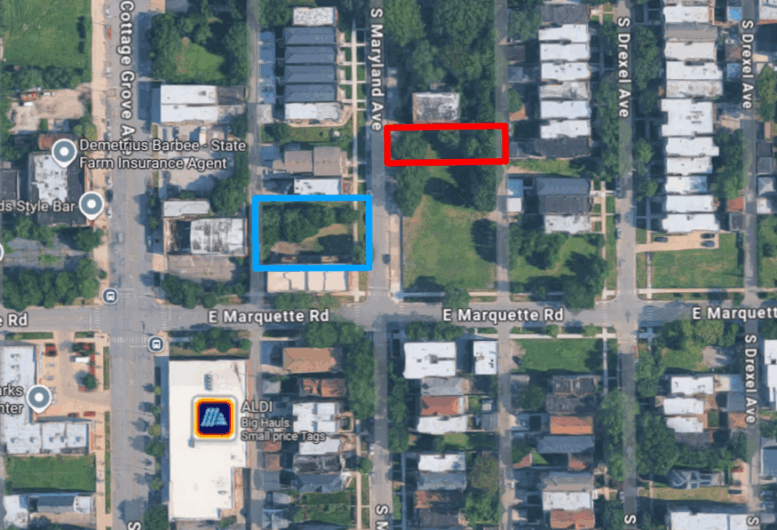
The site is located mid-block between East Marquette Road and East 65th Street, an area that continues to see incremental infill development. While no additional permits are currently pending for the remainder of the block, the southern portion remains largely undeveloped and could support future residential projects.
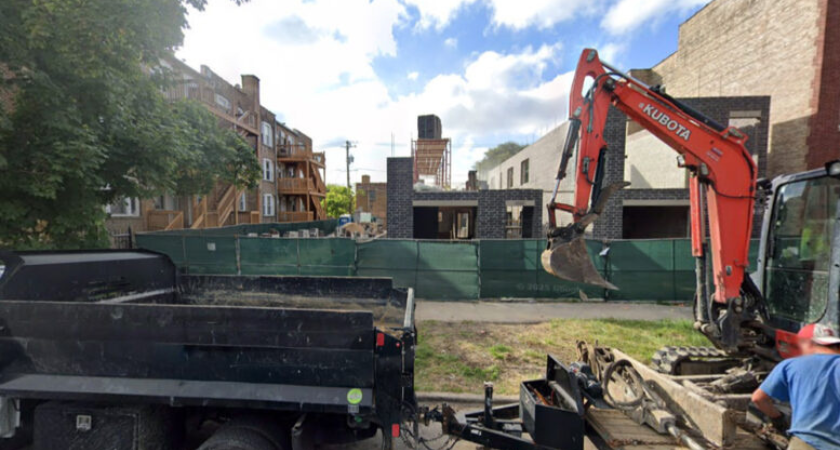
Immediately north of the site, 6537 South Maryland Avenue is occupied by a deteriorating three-story brick building that has been boarded up for more than a decade, according to available Street View imagery. Across the street, however, construction activity is already underway at 6548–6552 South Maryland Avenue, where three additional three-flats—also designed by Sterniuk—were permitted earlier in 2025 and are currently under construction by a separate developer.
The new development benefits from strong transit access. The property sits within a one-block walk of CTA Route 4 bus service along Cottage Grove Avenue. Additional routes—including X4, 67, 95, and N5—are available less than two blocks south, while the Cottage Grove Green Line station is approximately three blocks north, offering convenient rail access to downtown and other parts of the city.
Together, the projects along South Maryland Avenue signal continued residential investment in Woodlawn, particularly near transit corridors, as the neighborhood evolves through small-scale infill rather than large, master-planned developments.
Originally reported by Daniel Schell in Chicago Yimby.