MIT researchers have uncovered new evidence that helps settle one of the most longstanding questions in ancient construction: how Roman concrete has managed to survive earthquakes, seawater, and the elements for over two millennia. A newly discovered construction site in Pompeii has provided the clearest confirmation yet that ancient builders used a “hot-mixing” process — a method that explains the material’s remarkable resilience and self-healing behavior.
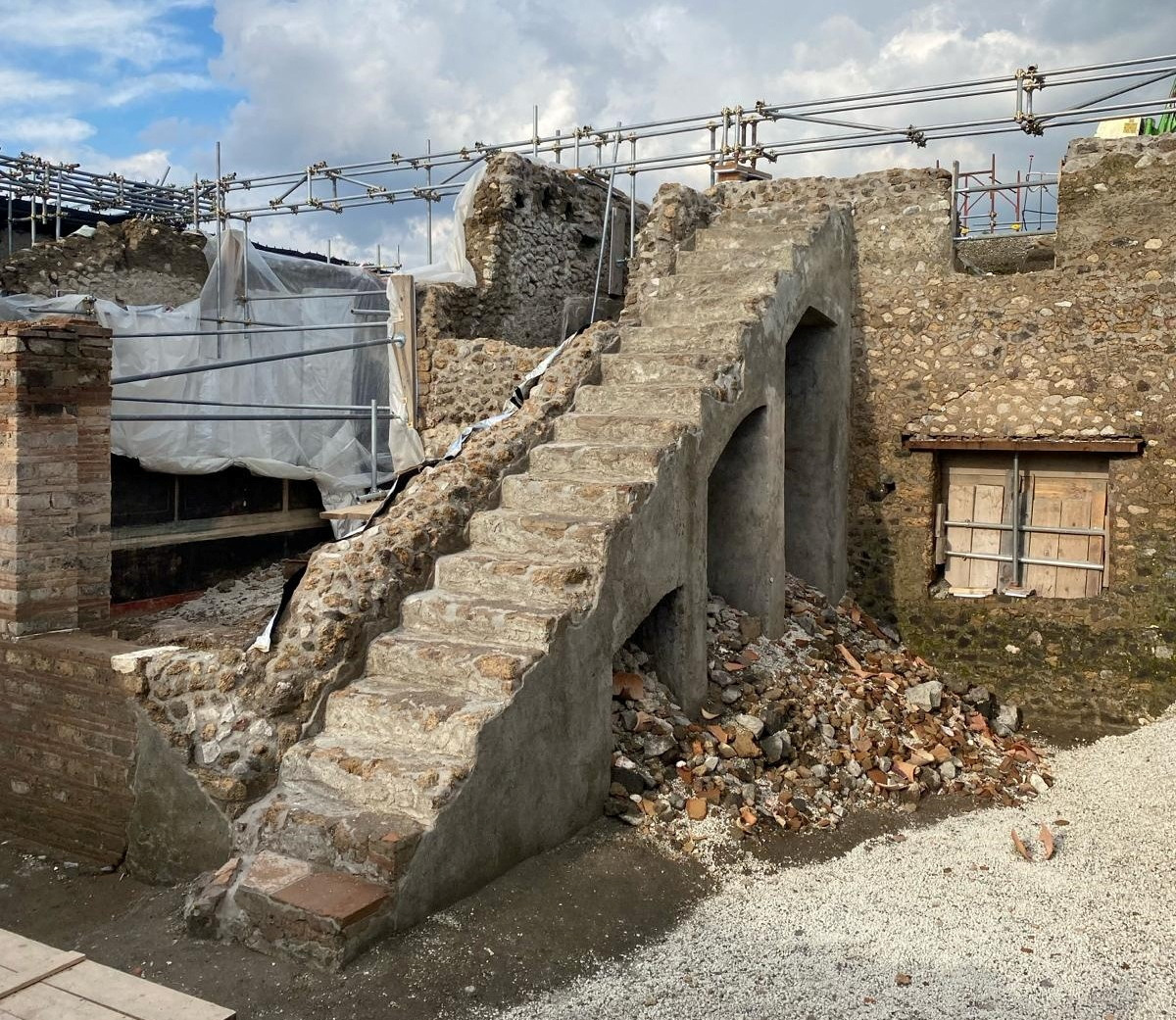
The discovery comes after years of research led by MIT Associate Professor Admir Masic, whose earlier findings suggested that Romans added water to a dry mix of volcanic ash and lime, triggering heat-producing chemical reactions that preserved reactive lime clasts throughout the concrete. These lime clasts later dissolved when cracks formed, naturally filling voids and strengthening the structure. However, the process described in Masic’s 2023 paper conflicted with what ancient architect Vitruvius wrote in De architectura, the foundational text on Roman building methods.
“Having a lot of respect for Vitruvius, it was difficult to suggest that his description may be inaccurate,” Masic says. “The writings of Vitruvius played a critical role in stimulating my interest in ancient Roman architecture, and the results from my research contradicted these important historical texts.”
Now, after studying a perfectly preserved Pompeii construction site frozen in time by the 79 C.E. eruption of Mount Vesuvius, Masic and his team have confirmed that hot-mixing was indeed a key part of Roman concrete production. Samples taken from raw material piles, partially built walls, and completed structures revealed intact quicklime fragments mixed directly with volcanic ash — proving that the dry-mix method was being used in real-time construction just before the eruption.
“We were blessed to be able to open this time capsule of a construction site and find piles of material ready to be used for the wall,” Masic says. “With this paper, we wanted to clearly define a technology and associate it with the Roman period in the year 79 C.E.”
The analysis went beyond confirming the mixing process. MIT researchers also examined the chemical behavior of volcanic ash ingredients, including pumice, and found that these minerals continued to react for years, generating new crystalline formations that enhanced strength. This additional layer of natural reinforcement explains why Roman harbor walls, aqueducts, and temples have endured environmental stress that typically destroys modern concrete.
“Through these stable isotope studies, we could follow these critical carbonation reactions over time, allowing us to distinguish hot-mixed lime from the slaked lime originally described by Vitruvius,” Masic says. “These results revealed that the Romans prepared their binding material by taking calcined limestone (quicklime), grinding them to a certain size, mixing it dry with volcanic ash, and then eventually adding water to create a cementing matrix.”
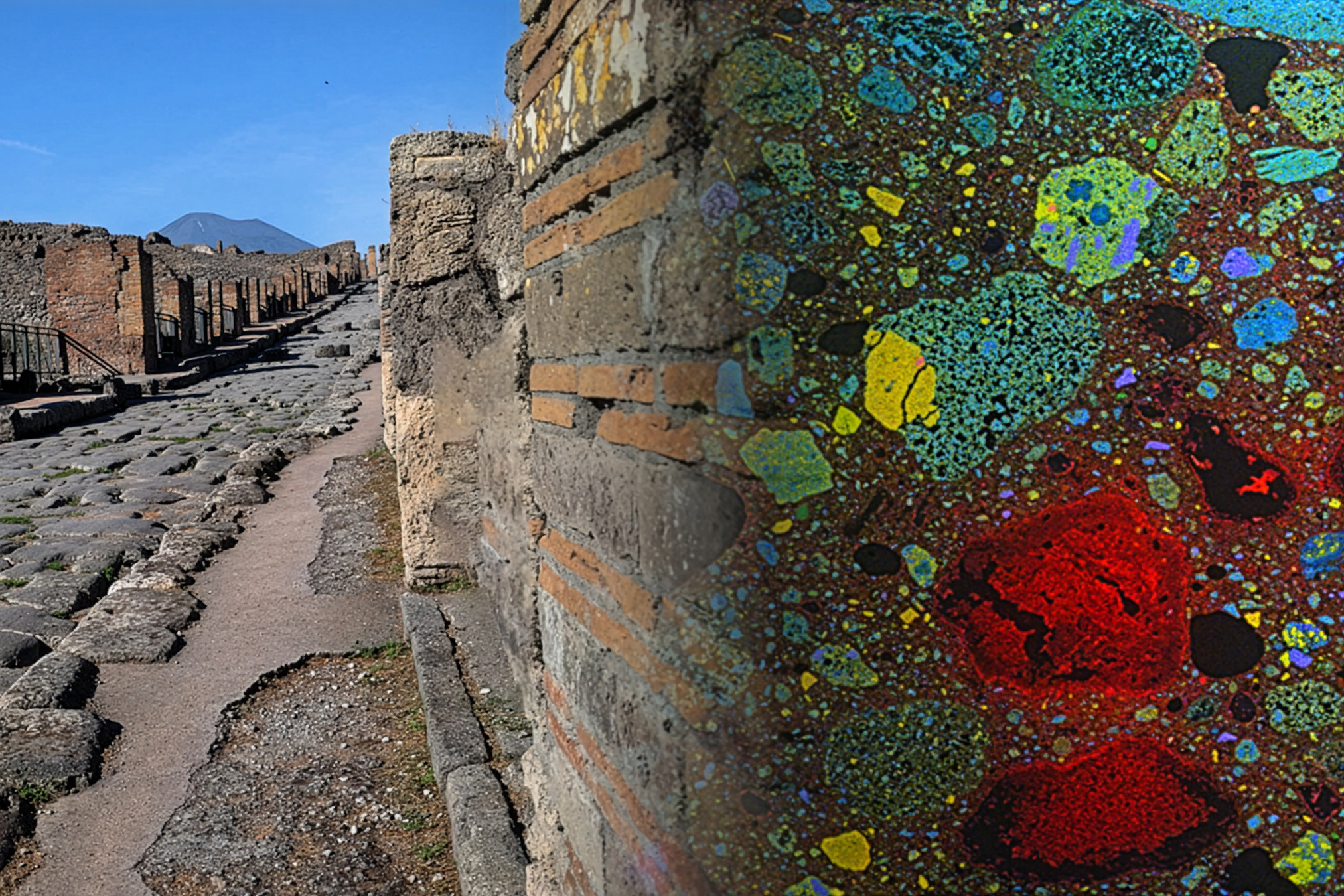
The newly discovered construction site offered a rare chance to see ancient methods in context — complete with raw materials, tools, and in-progress walls. For Masic, the moment was overwhelming.
“I expected to see Roman workers walking between the piles with their tools,” he recalls. “It was so vivid, you felt like you were transported in time. So yes, I got emotional looking at a pile of dirt. The archaeologists made some jokes.”
The research doesn’t merely rewrite historical understanding; it could influence how concrete is produced today. Masic’s team emphasizes that although modern engineering cannot wholly replicate Roman techniques, elements of ancient hot-mixing could inspire self-healing, long-lasting materials for contemporary infrastructure.
“There is the historic importance of this material, and then there is the scientific and technological importance of understanding it,” Masic explains. “This material can heal itself over thousands of years, it is reactive, and it is highly dynamic. It has survived earthquakes and volcanoes. It has endured under the sea and survived degradation from the elements. We don’t want to completely copy Roman concrete today. We just want to translate a few sentences from this book of knowledge into our modern construction practices.”
Masic, who also co-founded the materials company DMAT, believes translating these insights into future building systems could reduce maintenance needs, extend structural lifespans, and improve the sustainability of global concrete production.
“This is relevant because Roman cement is durable, it heals itself, and it’s a dynamic system,” he says. “The way these pores in volcanic ingredients can be filled through recrystallization is a dream process we want to translate into our modern materials. We want materials that regenerate themselves.”
The study, published in Nature Communications, includes contributions from Ellie Vaserman ’25, Principal Research Scientist James Weaver, Associate Professor Kristin Bergmann, PhD candidate Claire Hayhow, and a team of collaborators in Italy. Their work further cements the idea that Roman engineering was not only advanced for its time but may continue to influence the future of modern construction.
Originally reported by Zach Winn | MIT News.