A construction contractor blamed for damaging a gas line before a home explosion in Hayward had been involved in a similar gas leak at the same location months earlier, according to residents and authorities familiar with the investigation.
.jpg)
The explosion occurred on East Lewelling Boulevard earlier this month, leveling a home and damaging at least two neighboring buildings. Investigators say the incident happened roughly two hours after construction crews were using heavy equipment to remove a section of asphalt as part of a road improvement project.
The National Transportation Safety Board said a steel gas line dating back to the 1940s was “damaged during grading work associated with a road improvement project along the street in front of the home.”
Ravi Chhatre, a retired NTSB investigator who examined the 2010 San Bruno gas explosion, said incidents like this underscore the risks associated with heavy machinery near underground utilities. “When damage like that happens, there’s always a learning experience and one should learn from what happened,” Chhatre said.
He added that contractors should avoid mechanized tools near gas infrastructure. “Typically, near a gas line,” he said, “hand digging is recommended.”
Residents told NBC Bay Area’s Investigative Unit that the December explosion was not the first incident involving the contractor on the Lewelling project. Months earlier, a separate gas leak reportedly occurred nearby after workers struck a PG&E line while removing sidewalk concrete. A patch of new concrete still marks the location of that earlier repair.
Chhatre described the earlier incident as “a big red flag,” suggesting potential shortcomings in contractor practices, utility records, or both.
Despite gas escaping for nearly two hours before the explosion, PG&E and Alameda County fire officials confirmed no evacuation was ordered that day. Fire officials said the utility characterized the situation as a small leak under control, while PG&E said it is still investigating why an evacuation was not initiated.
“Two hours is a significant amount of time for enough gas to leak and migrate,” Chhatre said, noting that gas can continue moving underground even after the supply is shut off.
“Is it an inconvenience?” he asked. “Yes, but I’m sure a lot of those people who are injured probably would have preferred to get evacuated and find out nothing is wrong, and then be back home…”
The contractor involved referred questions to the NTSB, while PG&E also declined to comment pending the release of a preliminary federal report.
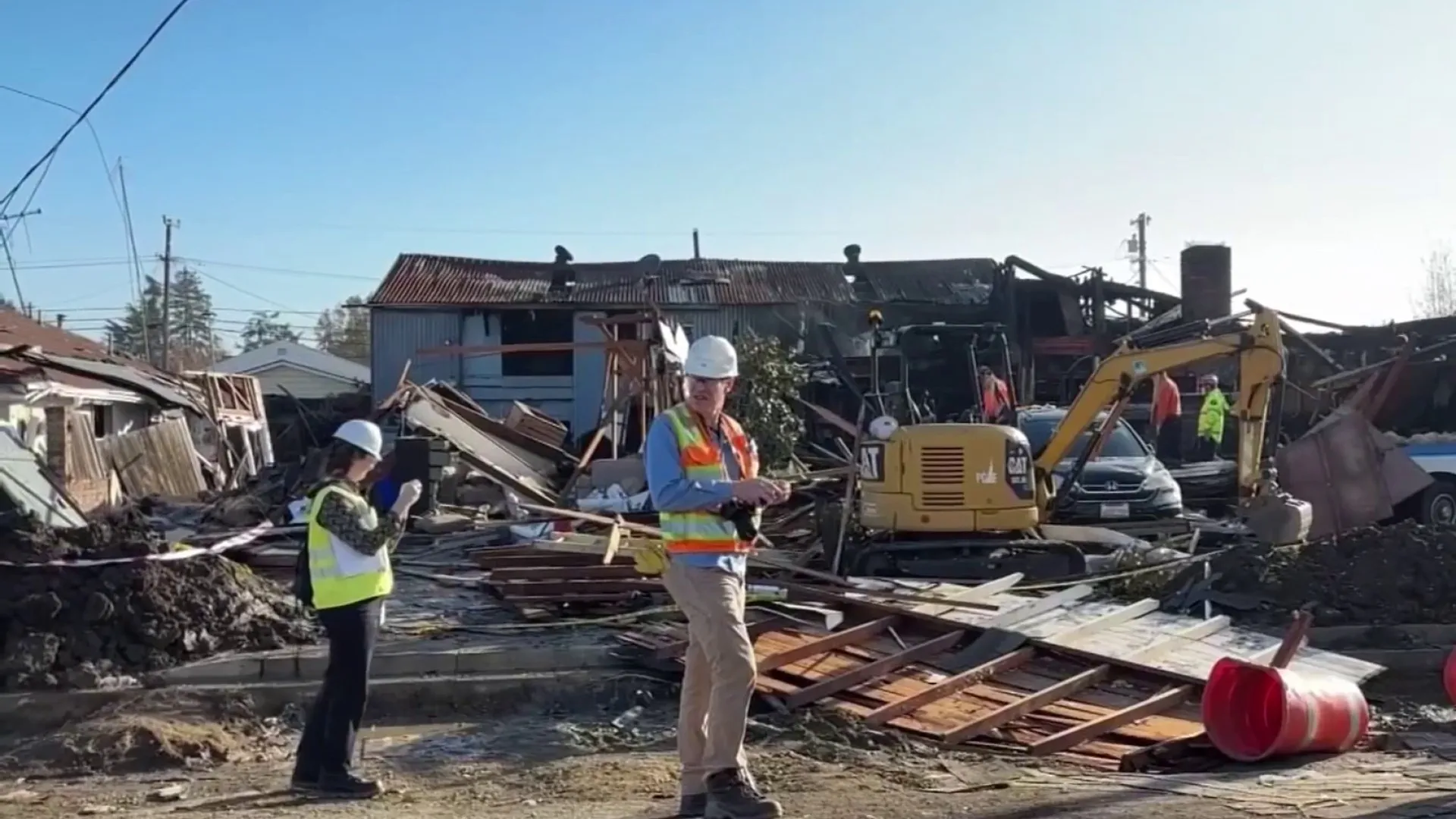
Investigators examining a deadly gas explosion in Hayward are now focusing on a troubling pattern involving the same construction contractor tied to both the blast and an earlier gas line strike at the same site.
According to the NBC Bay Area Investigative Unit, construction crews were working along East Lewelling Boulevard just two hours before a home exploded earlier this month, causing extensive damage to surrounding buildings and injuring multiple people. Crews were reportedly using a grinder to remove a 14-foot-wide section of asphalt as part of a roadway improvement project.
Federal investigators say the work damaged a decades-old gas line. The National Transportation Safety Board confirmed that a ¾-inch steel pipe from the 1940s was “damaged during grading work associated with a road improvement project along the street in front of the home.”
Former NTSB investigator Ravi Chhatre said such incidents are avoidable with proper precautions. “When damage like that happens, there’s always a learning experience and one should learn from what happened,” he said.
Chhatre emphasized that mechanized equipment should be used cautiously around buried infrastructure. “Typically, near a gas line,” he said, “hand digging is recommended.”
Residents say the December explosion followed a previous gas leak on the same project months earlier, when workers reportedly struck a PG&E line while removing sidewalk concrete. That leak required emergency utility repairs, and a visible concrete patch remains at the site.
Chhatre described the earlier incident as “a big red flag,” pointing to possible failures in construction practices, mapping of underground utilities, or both.
Despite confirmation that gas was leaking for nearly two hours before the explosion, no evacuation was ordered. Alameda County fire officials said PG&E had indicated the leak was minor and under control, while PG&E acknowledged it is still investigating why evacuation protocols were not followed.
“Two hours is a significant amount of time for enough gas to leak and migrate,” Chhatre warned, noting that underground gas movement can continue even after valves are shut.
“Is it an inconvenience?” he asked. “Yes, but I’m sure a lot of those people who are injured probably would have preferred to get evacuated and find out nothing is wrong, and then be back home…”
The contractor declined to comment, referring questions to federal investigators. The NTSB is expected to release a preliminary report on the explosion in the coming weeks.
Originally reported by Jaxon Van Derbeken in NBC Bay Area.