NORTHERN NEVADA — As private development slows across Northern Nevada amid economic uncertainty, high interest rates, and rising construction costs, public infrastructure projects are increasingly sustaining the region’s construction industry, according to local contractors.
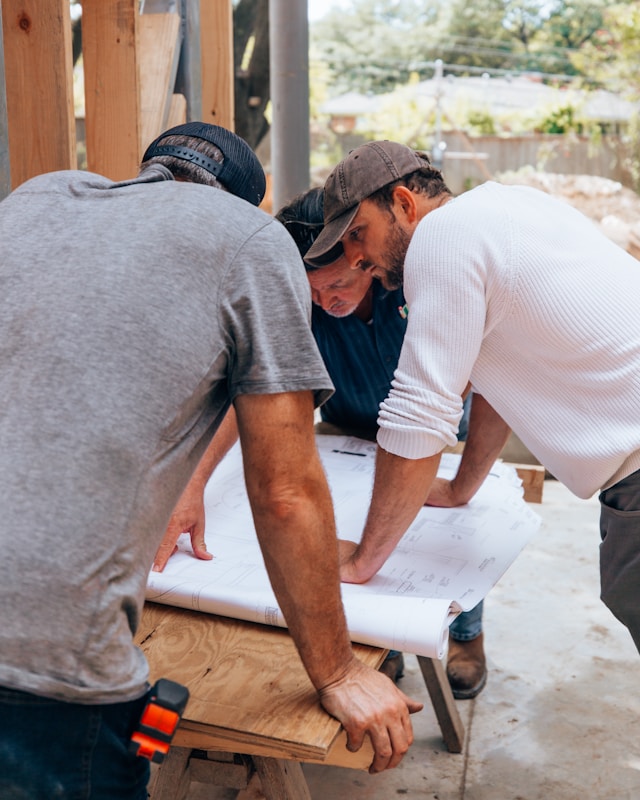
For Q&D Construction, Northern Nevada’s largest privately owned construction firm, public-sector work now represents the backbone of its business. Public works projects account for about 90 percent of Q&D’s revenue mix, said Chief Executive Officer Lance Semenko, underscoring the growing importance of government-funded infrastructure as private development remains constrained.
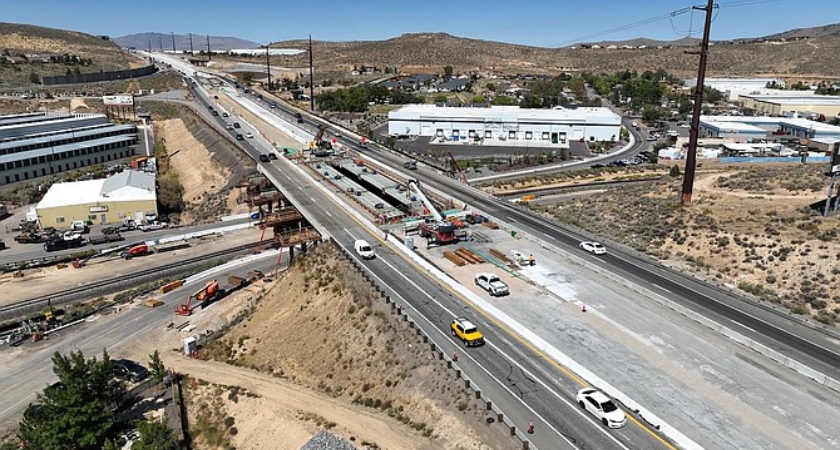
Q&D’s current portfolio includes several major transportation and infrastructure initiatives. Among them is a joint venture with Road and Highway Builders to widen U.S. Highway 395 northbound from McCarran Boulevard to Golden Valley Road. In early 2026, the company is scheduled to begin replacing seven bridges along westbound Interstate 80, including structures at the Mae Anne Avenue, Lawton, Mogul interchange, and Garson Road overpasses.
The firm is also resuming work begun in 2025 to repave 13.2 miles of Highway 50 from Spooner Summit to Stateline, a two-season project limited to the May-to-October construction window. Crews have already completed the stretch from Stateline to the Cave Rock tunnels, Semenko said.
Beyond highways, Q&D is involved in aviation and logistics infrastructure. The company is working with Clark Sullivan to install underground infrastructure for a new central utilities plant at Reno-Tahoe International Airport, while its aviation division has partnered with Webcor Builders on the new ground transportation center at RNO. Q&D is also preparing 600 acres at Victory Logistics District with horizontal infrastructure to support future development.
Those public and institutional projects — combined with work at regional airports and data center campuses at Tahoe Reno Industrial Center — have helped Q&D maintain a workforce of about 600 employees, even during the typically slower winter months.
“That’s 600 people still feeding their families and not going on unemployment,” Semenko said. “It helps the whole community.”
Looking ahead, Semenko expressed confidence in the firm’s near-term outlook.
“As far as next year goes, we will be busy,” Semenko added. “The data centers are driving a lot of work.”
Q&D’s aviation division recorded one of its strongest years on record, with active projects in Fresno, California; Kalispell, Montana; Spokane, Washington; and Rock Springs, Wyoming.
“They are chasing work everywhere,” Semenko said.
While public-sector work has provided stability, competition for private-sector projects has intensified, particularly in the Reno-Sparks market. Contractors are increasingly bidding on fewer opportunities, often with slimmer margins.
Dan Angelesco, founder and president of DA Builders, said developers are struggling to make projects pencil out in the current cost environment.
“That’s the only way these jobs are happening,” Angelesco said. “Every single project seems like we give them a number per plan spec, and they need to drop something. Sometimes we will start construction and we are working it through, and sometimes they say we need to get to a certain number before starting.”
Construction costs have continued climbing due to labor constraints, rising material prices, and escalating permitting and development fees. Angelesco said a national daycare developer recently abandoned plans in Northern Nevada after months of preconstruction because costs exceeded those in other markets.
“Reno is not cheap,” he said. “With permit fees, they were at $350,000 in development fees, and it’s $100,000 to $150,000 in other regions for the same 11,000-square-foot box. We value engineer, but the cost of construction is at all-time highs.”
High interest rates remain another challenge for developers, Angelesco noted, though the issue has persisted for several years.
Competition has also intensified in the bidding environment.
“We are having to bid double the work to get the same amount of return,” he said.
Angelesco said DA Builders once won three to four projects out of every 10 bids. Today, the firm is securing three to four projects out of every 20, with cost consistently cited as the determining factor.
Despite the slowdown, some large private developments are moving forward. The largest private project currently underway is Grand Sierra Resort’s construction of a 10,000-seat arena and a 2,800-space parking garage for the University of Nevada men’s basketball team. The parking garage is expected to be completed in 2026, with the arena scheduled to open ahead of the 2027 season.
Originally reported by Rob Sabo in Nevada Appeal.