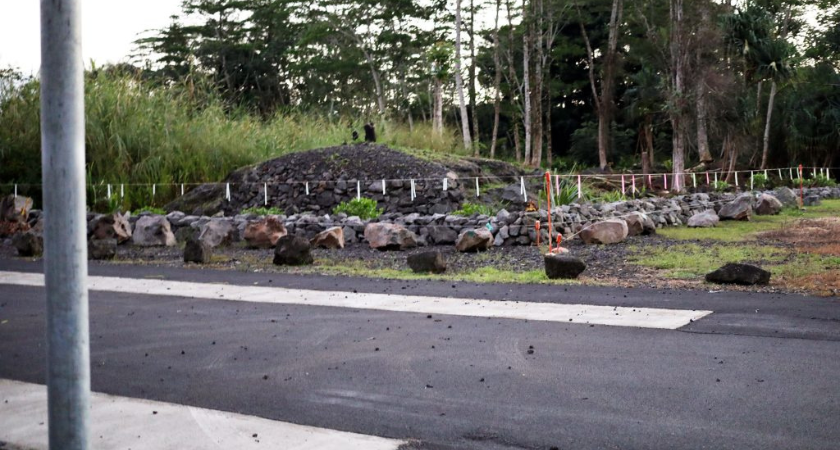
Residents of Hawaiian Paradise Park on the Big Island have voted to halt construction of a large mailbox facility after the discovery of iwi kūpuna — ancestral Native Hawaiian remains — near a planned site, escalating a dispute that has stretched on for more than a year.
The Hawaiian Paradise Park Owners Association has been working for nearly two years to build four mailbox parks throughout the sprawling subdivision, which spans more than 12 square miles and includes over 8,800 lots. One of the proposed sites, designed to hold approximately 1,400 mailboxes at Makuʻu Drive and 16th Avenue, became the center of controversy after workers uncovered a lava tube opening containing human remains in July 2024.
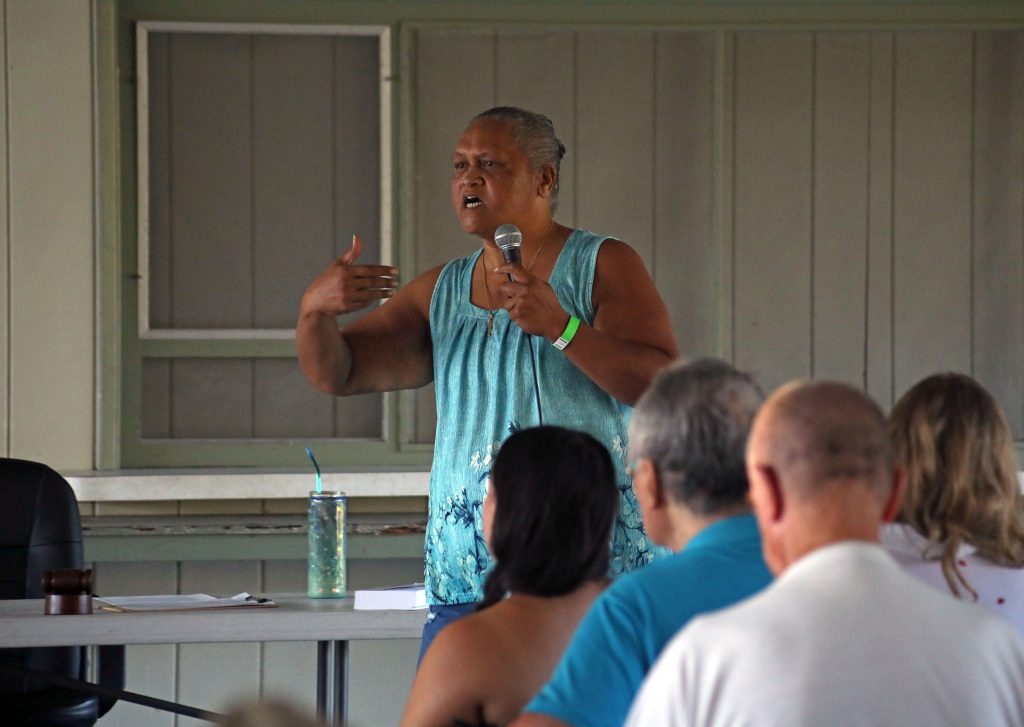
The discovery occurred after land clearing and the pouring of a concrete slab, sparking heated debate between residents and the association’s board. While some homeowners argued that construction should not proceed near a culturally significant burial site, board members cited the high cost of relocating the project, estimating it would require hundreds of thousands of dollars to move the mailboxes elsewhere.
Tensions reached a turning point during the association’s final meeting of the year on Dec. 14, when 46 of 56 members in attendance voted to approve a resolution introduced by Lanell Lua-Dillard, chair of the association’s Cultural Preservation Committee. The resolution effectively stops work at the site by nullifying a stewardship agreement entered into by the board earlier this year.
“Keoni is not on the Hawaiʻi Island Burial Council and he does not work for the State Historic Preservation Division, so he does not have the authority to give the ʻgo-ahead,ʻ” Lua-Dillard said.
The approved resolution prohibits anyone from handling, removing, or altering the burial site unless the State Historic Preservation Division grants approval and a burial treatment plan is formally approved by the Hawaiʻi Island Burial Council. Violations could result in civil penalties of up to $10,000 per day.
Hawaiian Paradise Park currently has about 3,000 occupied homes. Of the four planned mailbox parks, only one — located at Kaloli Drive and 4th Avenue — has been completed. The association intends to complete all four installations by next year, including two larger mailbox parks designed to serve roughly 3,000 households each.
At present, many residents rely on P.O. boxes or collect mail through friends and family living outside the subdivision.
Native Hawaiian burial practices historically involved discreet interment of loved ones in caves, dunes, and other natural features protected by ʻohana. These burial sites hold deep spiritual significance, reinforcing connections between people, land, and ancestry. State and county safeguards exist to protect such unmarked burial sites, though the mailbox project did not initially require an archaeological survey due to its limited footprint.
Following the 2024 discovery, State Historic Preservation Division archaeologist Nicole Mello inspected the site and determined the newly discovered lava tube was likely connected to an already documented burial cave located about 65 meters away.
.jpg)
“Based on our inspection, there appear to be three sections of lava tube leading from the new construction area to the previously identified lava tube,” Mello stated. “Since the new lava tube was within the footprint of additional ground disturbances proposed for the mailboxes, additional work could cause harm to the area.”
State officials advised the association to halt construction, establish a protective buffer, and seek further guidance. Although association treasurer Kari Hoffman later said permits had been approved by the state and county, she was unable to provide documentation when homeowners requested proof.
Board members have repeatedly pointed to the $600,000 budget for all four mailbox parks as justification for not relocating the Makuʻu site, at times suggesting residents fund an alternative location themselves.
“Every time people express concerns, it is met with financial issues and the suggestion to fund it themselves,” Lua-Dillard said. “We were all told there are $3 million in annual funds, so that response is inappropriate.”
Lua-Dillard emphasized that protecting the burial site is deeply personal.
“It is my kuleana (responsibility), and I know you all don’t understand it,” she said.
She also spoke about her family’s ancestral ties to the land, once owned by King Lunalilo, underscoring why she and others continue to oppose development near the burial cave.
“There haven’t been many moments this year where we could relax and not worry about someone starting work on the mailbox park again,” Lua-Dillard said. “I’m proud of every one who came to every meeting to fight for our kuleana.”
As of now, construction at the site remains halted, with future decisions contingent on state approvals and further community discussions.
Originally reported by Kelsey Walling in Big Island Now.