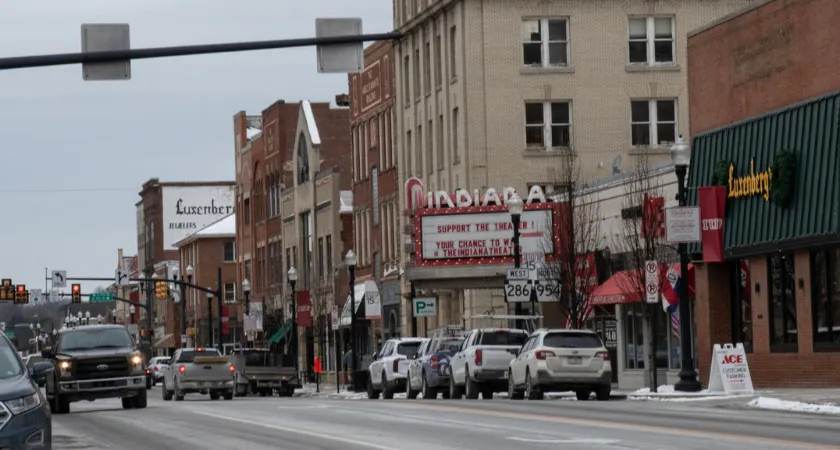
INDIANA COUNTY, Pa., – Citing rising home prices, aging housing stock and lagging construction rates, Josh Shapiro on Thursday introduced a sweeping 10-year housing strategy designed to position Pennsylvania as what he called “a national leader in access to safe and affordable housing.”
.webp)
“This is a long-term plan to cut costs, to build more affordable housing (and) to break down barriers that have kept Pennsylvanians from finding that home for far too long,” said Shapiro. “I know that this is an ambitious plan … if we execute on it, Pennsylvania will go from the bottom of the pack to being a national leader when it comes to housing construction.”
The governor delivered his remarks from The Tower at Henry Avenue in Philadelphia, a 173-unit redevelopment project supported by nearly $1 million in tax credits from the Pennsylvania Housing Finance Authority.
Prior to state support, Shapiro said, it was “an abandoned building … that sat dormant for way too long.”
“This is an example of what we need more of across Pennsylvania,” he said.
State officials estimate Pennsylvania must build 450,000 new housing units by 2035 to meet projected demand. At its current pace, the state will fall short by nearly 185,000 units. Almost half of that unmet need is concentrated in southeastern Pennsylvania, though shortages affect every region.
Compounding the issue, more than half of the state’s homes are over 50 years old, increasing maintenance and rehabilitation costs for homeowners and landlords alike.
Over the past decade, home prices surged — fueled in part by pandemic-era demand — while wages have struggled to keep pace. Today, more than 25% of Pennsylvanians are considered “housing cost burdened,” meaning they spend over 30% of their income on housing.
The 52-page Housing Action Plan follows an executive order signed by Shapiro last year and incorporates feedback from nearly 2,500 residents, housing advocates and industry stakeholders.
The strategy rests on five core pillars:
Some proposals — including capping rental application fees and sealing eviction records for individuals who were not evicted — were previewed in Shapiro’s recent budget address. However, many components will require legislative approval.
“I’ve put out a concrete plan — both on funding and on reform — it’s time for them to act,” said Shapiro. “The good news is: I have heard positive feedback from them. And I would say to anyone who doesn’t like my idea, ‘What’s yours?’”
“Because we can no longer wait. We have got to get this done,” he continued. “We’ve got to build more housing. We’ve got to reform our housing laws.”
A key funding proposal would authorize $1 billion in general obligation bonds to support critical infrastructure investments benefiting housing, schools, energy and local governments. Shapiro said he hopes “the lion’s share” of the fund would be directed toward housing initiatives.
While executive actions can advance some reforms, Shapiro acknowledged that “a lot” of the agenda depends on the General Assembly.
Local governments would also play a significant role, particularly in updating zoning codes that restrict multifamily development or accessory dwelling units. Bipartisan lawmakers have already introduced legislation aimed at reforming municipal planning rules to allow duplexes, triplexes and other higher-density housing options.
Rick Siger, secretary of the Pennsylvania Department of Community and Economic Development, will lead implementation of the housing strategy. His department plans to hire a deputy dedicated to the effort.
“There’s urgency here, and it demands not just a whole of government approach, but really a whole of Pennsylvania approach,” said Siger.
Each pillar includes measurable benchmarks comparing Pennsylvania to neighboring states stretching from Illinois to Massachusetts.
Among the targets:
.webp)
Currently, Pennsylvania ranks fourth overall among neighboring states on combined housing metrics such as construction, affordability, stability and equal access.
Shapiro framed the proposal as both an economic development and quality-of-life initiative, arguing that stronger housing supply will lower costs, attract workers and strengthen communities statewide.
If fully implemented, the decade-long roadmap could significantly reshape Pennsylvania’s housing market — but its success will depend heavily on legislative cooperation, municipal reforms and sustained public investment.
Originally reported by Whitney Downard in Penn Capital.