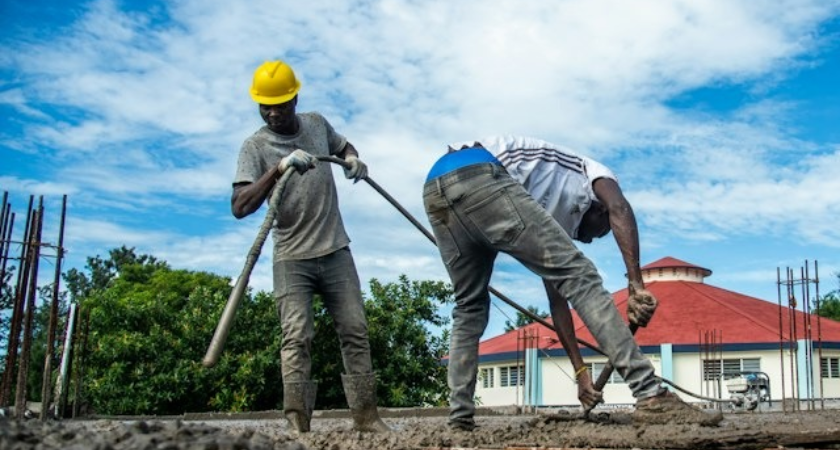
PHOENIX — After decades of asking for something many residents take for granted, a South Phoenix neighborhood is finally seeing new sidewalks take shape — marking a major victory for longtime community advocates.
For years, neighbors pushed the city for safer walkways but repeatedly hit the same response: “no” — not because the community didn’t want sidewalks, but because the city’s process treated silence as opposition.
That changed only after residents kept organizing, kept showing up, and pushed for a crucial update that helped turn “no” into action.
.webp)
This week, the neighborhood saw a major breakthrough with the completion of the first stretch of sidewalk — built directly in front of 90-year-old Ms. Lottie Lecian’s home. She has supported the effort since the earliest days, and the moment represents far more than concrete and curb space.
It’s a symbol of persistence, especially for a neighborhood that refused to stop asking, even when the system made progress difficult.
Neighbors organized through People United Fight Back, collected petitions, and partnered with the city to change a policy that had stalled improvement projects for years.
Under the old process, when residents didn’t respond to a proposed neighborhood improvement, it was automatically counted as a “no.” But advocates argued that silence shouldn’t be treated as rejection — especially in neighborhoods where language barriers, work schedules, or lack of awareness might prevent responses.
Once that rule was updated so that non-responses became an automatic “yes,” the long-running deadlock started to move toward real development.
The sidewalk project is being celebrated not just as an infrastructure upgrade but as proof that community organizing can reshape local policy and produce tangible change.
For residents who have watched neighbors walk in dirt paths, navigate unsafe road edges, or push strollers without proper pedestrian space, the new sidewalk means increased safety and access.
The project also reflects the impact of consistent civic involvement — demonstrating how grassroots advocacy can influence how cities approve and prioritize neighborhood improvements.
As the community celebrates this step forward, residents hope it’s the start of more long-overdue upgrades — driven by the same message that carried them through the fight: keep showing up, and the system can change.
Originally reported by Cameron Polom in ABC 15.