Texas A&M University is moving forward with a major investment in agricultural and food-processing infrastructure as construction begins on a new meat science and technology facility designed to support research, workforce development, and industry collaboration.
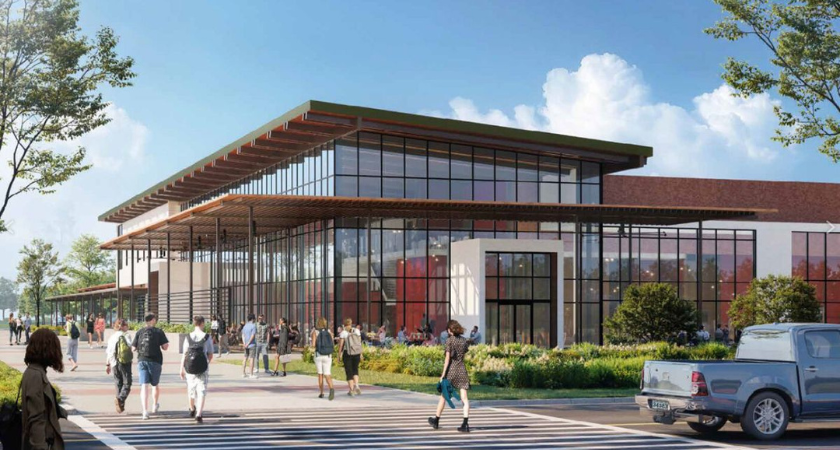
The $133.4 million project, being built by Skanska, will deliver an 85,600-square-foot facility for Texas A&M AgriLife on the university’s West Campus in College Station. The building is expected to become a central component of a broader agricultural district planned for the campus.

University officials say the facility is intended to modernize educational and processing capabilities tied to meat science, poultry science, and food production programs. Planned features include updated laboratories, classrooms, processing areas, and public-facing retail space intended to showcase products developed through the program.
The investment reflects growing demand for specialized agricultural and food-processing infrastructure as universities and public institutions expand research capacity tied to food safety, supply chain resilience, and workforce preparation.
For contractors and construction owners, the project highlights continued institutional spending on highly technical research facilities that require complex mechanical systems, sanitation standards, and specialized processing environments. Projects tied to food science and agricultural research often involve strict regulatory and operational requirements, creating opportunities for builders with experience in laboratory, higher education, and industrial processing construction.
Texas A&M’s meat science program has operated for roughly a century and remains one of the university’s longstanding agricultural education initiatives. The new facility is expected to support hands-on training programs focused on meat processing, food safety, and agricultural innovation while strengthening partnerships between academia and industry stakeholders.
The project also continues Skanska’s long-running construction relationship with Texas A&M University. The contractor has delivered multiple campus projects over the past decade, including the Wayne Roberts ’85 Building for the Mays Business School, which was completed earlier this year.
Higher education institutions across the United States have increasingly invested in research-driven facilities tied to agriculture, biotechnology, and food production as public and private sectors seek to address labor shortages, production efficiency, and evolving food supply demands.
For construction owners and developers, the Texas A&M project underscores how universities remain active drivers of large-scale capital projects despite broader economic uncertainty. Research-oriented developments also continue to generate demand for specialized subcontractors, advanced building systems, and long-term campus expansion planning.
Construction on the facility is expected to conclude in 2028.
Originally reported by Construction Equipment Guide.