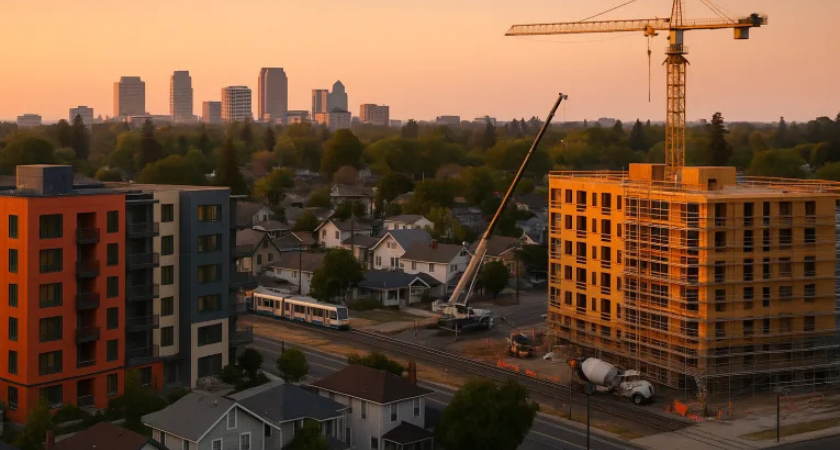
SACRAMENTO — In an effort to modernize California’s housing construction industry and address long-standing affordability challenges, Assembly Speaker Robert Rivas has appointed Assemblymember Buffy Wicks, D-Oakland, to chair the newly established Select Committee on Housing Construction Innovation.

The new committee will focus on advancing innovative construction methods that could reduce building costs, accelerate production timelines, and help California meet its aggressive housing and climate goals. The announcement comes at a time when the state continues to face one of the most severe housing shortages in the country, with escalating construction prices hindering efforts to boost supply despite expanded zoning and streamlined approvals.
Wicks emphasized the stakes, pointing to the gap between policy progress and on-the-ground outcomes. “California has made real progress in the work to open up land and speed approvals — but those gains won’t matter if we can’t bring down the cost of actually building homes,” she said. “This Select Committee will dig into the innovations that can meaningfully lower construction costs and help us produce housing at the scale Californians need. By learning from practitioners, studying what’s working around the world, and further identifying the barriers holding us back, we can chart a path toward modernizing how we build housing in this state.”
Even with years of legislative reform aimed at unlocking new housing sites, actual building volumes have lagged. State officials say a major contributor is the construction industry’s slow transition toward industrialized building systems—approaches that have already reshaped homebuilding in countries like Sweden and Japan.
While other sectors have embraced automation, robotics, digital fabrication, and modular manufacturing, California’s residential construction processes often remain highly labor-intensive and decentralized. Advocates say that adopting prefabrication, modular systems, and advanced manufacturing techniques could cut construction timelines by months and significantly lower costs—two outcomes urgently needed to reduce homelessness and improve affordability.
The Select Committee on Housing Construction Innovation will examine:
Committee members will hold two to three public hearings through winter 2025–2026. The panel also plans on-site visits to modular factories, industrialized construction facilities, and demonstration projects to evaluate how emerging methods are being deployed in practice.
Assemblymember Josh Hoover, R-Folsom, said the committee’s work is critical to breaking old patterns. “We’re never going to end our housing crisis by doing things the same way we’ve always done them,” Hoover said. “That’s why I’m excited to be on this Select Committee and help lead innovation that will help us build a lot more homes in California.”

Findings from the committee will be compiled into a housing innovation white paper to be released in early 2026. Lawmakers plan to use the recommendations to craft new legislation targeting construction-phase inefficiencies and innovation barriers. This package is expected to become a cornerstone of the state’s next major housing reform cycle.
Speaker Rivas said the committee reflects California’s need to embrace new approaches. “Californians deserve housing that is affordable, full stop. That means building faster, slashing red tape and embracing bold ideas,” he said. “Assemblymember Buffy Wicks is leading the charge, and I expect this committee to deliver affordable solutions, highlighting new construction techniques, while continuing to provide opportunities for homebuilders and good-paying jobs for construction workers.”
Alongside Wicks, the panel includes a broad mix of urban, suburban, and rural lawmakers:
The diverse representation is intended to ensure the committee evaluates construction innovation from multiple regional and economic perspectives.
Originally reported by Vanguard Administrator.