GRAND RAPIDS, Mich. — AI-powered climate technology startup Woodchuck has secured a growth-round investment from Michigan Rise, a venture investment arm of the Michigan State University Research Foundation, to accelerate its national expansion and technology development.
.jpg)
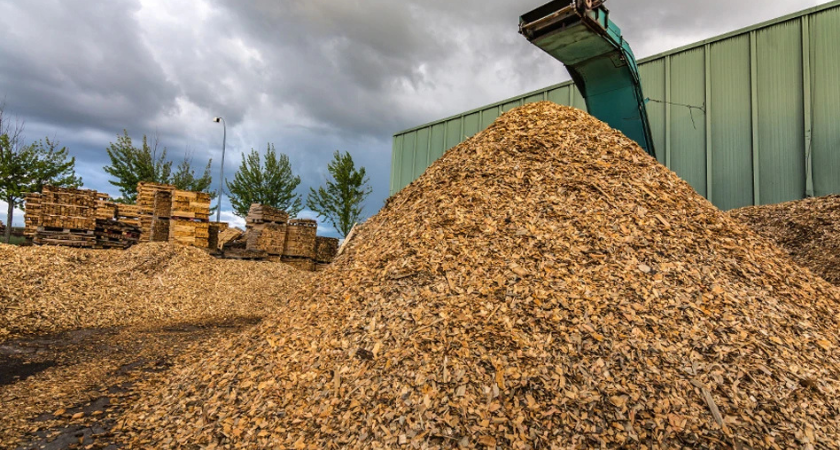
The Grand Rapids-based company specializes in AI-enabled construction waste diversion, helping contractors reduce landfill use while cutting hauling costs. Woodchuck reports it has already diverted more than 13,000 tons of wood waste from landfills, saving contractors an estimated 30% to 40% on waste-hauling expenses while supplying clean biomass energy to regional power producers.
The company’s platform combines smart containers, contamination-prevention tools and on-site processing solutions that are currently deployed with major contractors and owners, including Walbridge, Barton Malow, Ford, Amazon and data-center developers.
“What impressed us is how quickly Woodchuck is executing on an idea that reframes construction waste,” says Calvin VanderWal, a venture associate at the MSU Research Foundation. “Todd and his team are moving with urgency, and their model is already being shaped by feedback from multiple flagship partners. They’ve paired that momentum with strong co-investors and a deliberate decision to put down roots in Grand Rapids. It’s a compelling combination that positions them to scale a new standard for how waste can be managed and monetized.
“We think Woodchuck represents the future of job-site operations. It’s rare to find a company that is simultaneously reducing emissions, lowering costs and building critical renewable-energy infrastructure.”
The investment will support Woodchuck’s expansion beyond the Great Lakes region into national construction markets, including electric vehicle battery manufacturing, semiconductor facilities and large-scale data center projects.

Woodchuck plans to use the new capital to accelerate development of its AI image-recognition and contamination-prevention systems, expand on-site processing hubs for large and complex construction sites, and strengthen renewable biomass supply chains serving utilities and industrial energy users.
The funding will also enhance the company’s real-time reporting and analytics tools, which allow contractors to track diversion rates, carbon impact and material flows directly from the job site.
“This funding allows us to scale exactly where the market is demanding it most,” Todd Thomas, CEO of Woodchuck, says. “Contractors are under pressure to cut costs, hit diversion targets and report carbon impact with accuracy. Our AI solves those problems right on the job site—not in some distant facility. The Michigan Rise venture investment team immediately understood that Woodchuck is not just a waste solution. We’re a competitive advantage for builders.
“We’re entering a moment where every major contractor is rethinking how they handle materials. AI-driven diversion will become standard across the industry, and support from the MSU Research Foundation venture team is helping us get there faster.”
Founded to address inefficiencies in construction and demolition waste handling, Woodchuck’s technology focuses on preventing contamination at the source, enabling clean wood recovery and conversion into biomass energy. This approach helps contractors meet sustainability goals while reducing disposal costs and improving compliance reporting.
With construction firms facing increasing pressure from owners, regulators and ESG requirements, Woodchuck’s growth comes as demand rises for scalable, data-driven waste diversion solutions that deliver both environmental and financial benefits.
Originally reported by Emma Andrus, Associate Editor in CD Recycler.