


Wyoming is moving closer to becoming a major hub for artificial intelligence infrastructure after Laramie County commissioners unanimously approved plans for a massive data center campus that could ultimately become the largest in the United States.
.jpg)
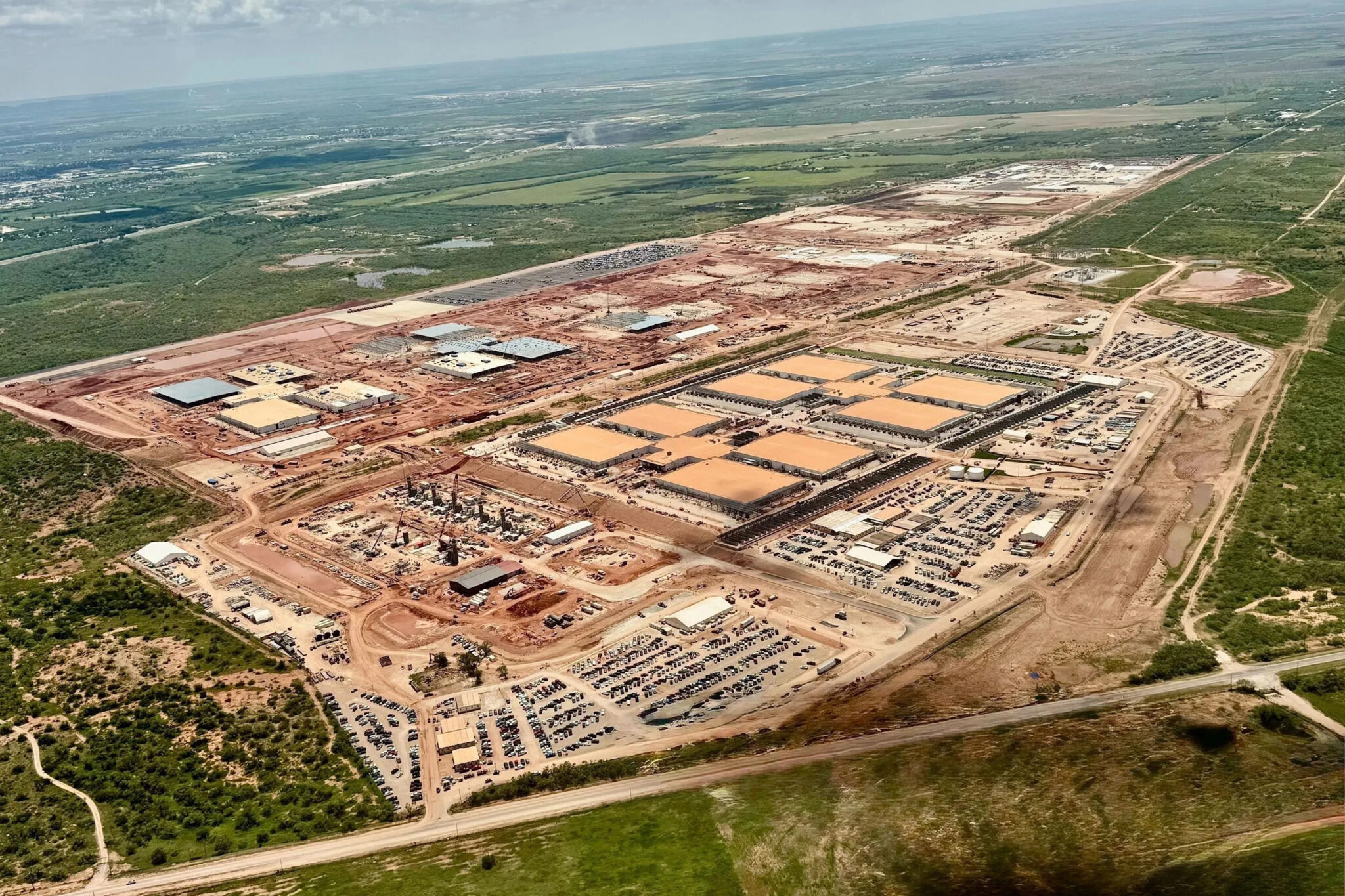
The proposed development, known as Project Jade, would initially open as a 1.8-gigawatt facility before potentially scaling up to 10 gigawatts—an amount of electricity comparable to the output of roughly 10 nuclear power plants. If fully built out, the campus would surpass any existing AI or cloud computing site in the world in terms of energy use.
The project will include a large data center campus developed by AI infrastructure firm Crusoe, alongside the BFC Power and Cheyenne Power Hub built by Tallgrass Energy Partners. Those adjacent facilities would supply electricity through on-site natural gas turbines.
Matt Field, Crusoe’s chief real estate officer, told county commissioners that the project’s first phase will rely on natural gas, with future plans to reduce emissions.
“The first phase of the project will leverage natural gas with a potential pathway for CO2 sequestration in the future,” Field said.
Crusoe and Tallgrass have highlighted the project’s proximity to Tallgrass’ existing carbon sequestration infrastructure, which they say will support “long-term carbon capture solutions” for the gas turbines powering the data center. According to the Wyoming Energy Authority, future phases could also incorporate solar energy to supplement natural gas generation.
While the companies have not yet disclosed which technology firms will ultimately occupy the campus, Crusoe spokesperson Andrew Schmitt said the project is designed to meet the extreme computing and power demands of hyperscale cloud providers and AI industry leaders.
Construction for both projects is now expected to move forward at the Switch Grass Industrial Park, about eight miles south of Cheyenne. With site plans approved, initial buildings are expected to be completed in 2027.
Ahead of the final approval, residents living near the project raised concerns about water use, emissions, traffic, and wildlife impacts. The Hyndman Homesites Homeowners Association submitted a letter asking county officials to ensure protections for nearby aquifers, limit light and noise pollution, and safeguard wildlife migration corridors.
“We accept the inevitability of the project and want to identify and mitigate concerns before they become problems,” the homeowners’ association wrote.
Water use has emerged as one of the most contentious issues. Data centers of this scale require vast amounts of water for cooling, a challenge in Wyoming’s arid climate. Crusoe has said it plans to rely on closed-loop cooling systems that recycle treated water, though experts note that evaporation losses are unavoidable.
“Even if it’s a quote-unquote closed loop, you’re going to have losses because of the nature of heat exchange,” said Jonathan Brant, a University of Wyoming environmental engineering professor. “Those computers generate an incredible amount of heat.”
Brant also raised concerns about how wastewater will be handled after repeated cooling cycles.
“It’s scary when you think about the power and the water that’s going to be consumed by these facilities,” Brant said. “That’s why they keep it secret.”
State leaders and developers argue the project positions Wyoming to compete in the rapidly expanding global AI market. The construction phase is expected to employ up to 5,000 workers at its peak, while long-term operations could support about 400 permanent jobs, ranging from maintenance roles to engineering positions.
“Wyoming is pro-business and pro-growth,” U.S. Sen. John Barrasso (R-Wyo.) said in a press release. “Our commitment to innovation and investment is what makes our state great. New, state-of-the-art data centers like this will bring high-paying jobs and a skilled workforce to southeast Wyoming.”
Gov. Mark Gordon has also voiced support, previously calling Wyoming an ideal location for AI expansion due to its energy infrastructure and climate. In a statement following the project’s announcement, Gordon wrote that the development was exciting for “Wyoming and for Wyoming natural gas producers.”
Wyoming Energy Authority Executive Director Rob Creager framed the project as part of a broader geopolitical competition.
“I’ve heard it as an arms race before,” Creager said. “We can’t lose track of the fact that we’re in a competition with folk in China. It is really crucial to national security that we lead on AI and that we have those technologies.”
Environmental groups remain deeply skeptical. Johanna Fornberg, a senior researcher at Greenpeace USA, warned that massive AI investments risk locking states into decades of fossil fuel dependence.
“The industry has been using a lot of these big hypothetical promises about the benefits of AI,” Fornberg said. “They’re selling it for healthcare and curing cancer, accelerating climate action, improving well-being, even in your day-to-day life and in your job. And that’s all sort of a tactic to create demand and support for the data center buildout that’s happening.”
Fornberg said the sheer scale of Project Jade underscores the risks.
“This data center, at 10 gigawatts, is huge,” she said. “I mean, a large nuclear power plant provides about 1 gigawatt of energy. So, at the top end, we’re talking about the same energy output as 10 big nuclear power plants, which is a lot.”
She also criticized reliance on carbon capture technology.
“Carbon capture is sort of one of these techno solutions that is very energy intensive, expensive and often just increases net emissions and pollution overall,” Fornberg said.
Wyoming currently lacks comprehensive regulations requiring data centers to publicly disclose energy and water use. A recent white paper from the Wyoming Outdoor Council called for new permitting standards, community protections and mandatory reporting, citing Illinois’ Data Center Energy and Water Reporting Act as a possible model.
During public hearings, residents questioned whether deep well drilling could threaten drinking water supplies connected to the Ogallala Aquifer.
“You don’t know until you punch a hole in it what you’re dealing with,” said Randy Fox, president of the Hyndman Homesites Homeowners Association.
Another resident, Thomas White, echoed concerns about contamination.
“What happens when they punch a hole and there’s leaks that contaminate the aquifer?” White said. “How much water will they be taking out of the ground? We have to take that into consideration.”
Despite mounting questions, state lawmakers are not expected to address AI data center regulation during the upcoming legislative session. Meanwhile, environmental groups nationwide are calling for stricter oversight.
“There has to be strong regulations in place in order for these companies to do the right thing,” Fornberg said. “I think the issue is not whether or not we should value innovation, it’s how we are valuing innovation.”
Originally reported by Leigh Reagan Smith in Inside Climate News.






