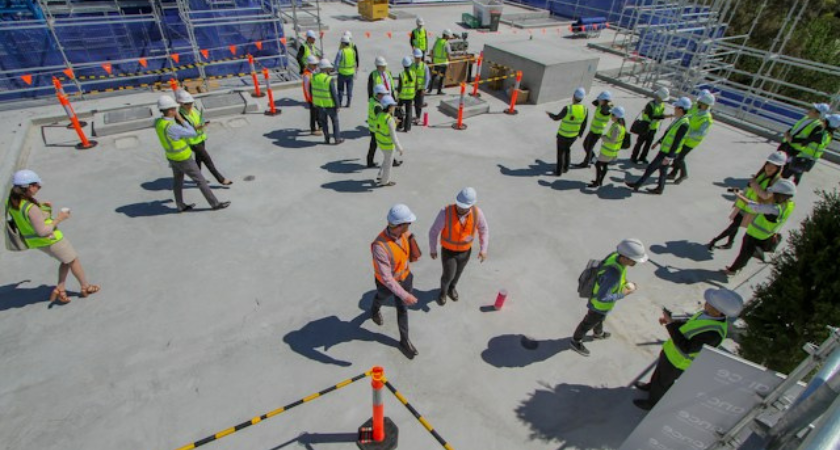
Construction crews near Gillette are assembling what researchers describe as the largest coal-to-products field demonstration facility in the United States, marking a major step in Wyoming’s effort to move coal beyond traditional power generation and into advanced manufacturing.
The project, located at the Wyoming Innovation Center (WyIC) in Fort Union Industrial Park, spans roughly 9.5 acres and includes three major components: a main building housing offices and laboratories, a material processing building, and open-air pilot pads designed to test innovative coal-based processes. The primary office and lab structure measures 4,070 square feet.
Trina Pfeiffer, director of the University of Wyoming School of Energy Resources’ Center for Carbon Capture and Conversion, said the project represents the realization of a long-held vision.
“The new part is that we are actually building this,” Pfeiffer said. “We talked about building it for a long time and we had some delays. There were some financial delays and there were some technical delays, but we figured it all out, and now we're actually constructing.”
The initiative has progressed steadily from laboratory research to pilot testing and now into full field demonstration — a phase Pfeiffer describes as essential for proving commercial viability.
“This project has been a long time coming,” Pfeiffer said. “We started in 2016 with an idea of how we can repurpose coal, not just burning it, but using it for other resources, other products.”
“We went from bench to pilot to now field demo,” she said. “Wyoming is leading the way for coal products work when it comes to commercializing it.”
Scott Quillinan, acting executive director of the School of Energy Resources, said the scale of the facility underscores how far the research has advanced.
“The thermal oxidizer that's up there, it's like a 60-foot-tall unit. So it's really large scale,” Quillinan said. “For me, really seeing this stuff grow up out of the lab, and then you get out there and you see what it looks like constructed in the field, that's the really neat part.”
Once operational, the facility will be capable of processing eight to 10 tons of coal per day, converting it into intermediate materials that can be used for roads, buildings, agriculture and nuclear applications.
Researchers selected pyrolysis and solvent extraction as the facility’s two primary upstream processes.
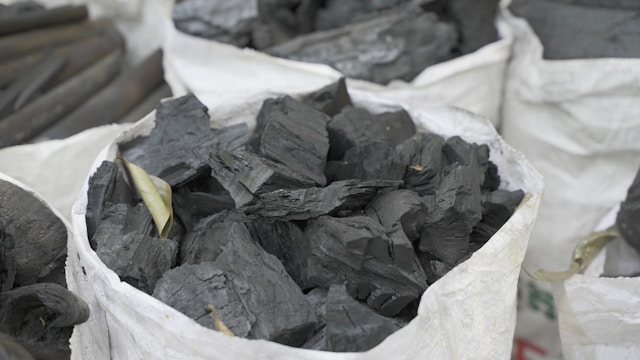
“The coal pyrolysis component takes coal, and it burns it in high temperature without oxygen, and you're making like a coal char,” Quillinan said. “That coal char just breaks it down into basically carbon. And so that carbon is a really good building block for all of the construction materials that we build out of coal.”
Those construction applications include exterior building components and structural materials designed to substitute for conventional lumber.
“We're doing some fascia components that would go on the outside of a building, like a veneer,” Quillinan said. “Structural units that kind of could take the place of 2-by-4s within a building.”
The solvent extraction process targets petrochemicals in coal to create asphalt binder.
“That will then be used to pave a road out of coal,” he said.
Pfeiffer said the ability to use coal for paving represents a significant innovation.
“The fact that we can pave roads with it is a real novel use,” Pfeiffer said, pointing out that petroleum-based asphalt binders are becoming more difficult to source.
“We're providing another raw material that can step in and fill it,” she said.
The coal char produced through pyrolysis also shows promise as a lower-cost alternative to biochar for agricultural soil health.
“So you can actually grow crops with this stuff too, because it helps with soil health,” Pfeiffer said.
For higher-value markets, researchers are collaborating with BWXT to develop nuclear-grade graphite and are exploring methods to extract rare earth elements from coal.
“The big point of all of this is to use every molecule of the coal,” Pfeiffer said. “We really think that you can use coal in a lot of different ways. Burning it, yeah, OK, fine. But everyone's been doing that for a long, long time. There's other uses for it.”
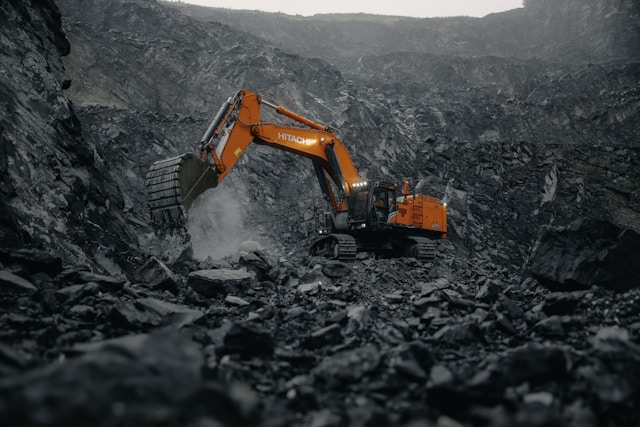
The demonstration plant is designed to convince investors that the technology can operate at commercial scale.
“In July, we're going to start that puppy up and we're going to be making a lot of char and a lot of material in order to demonstrate that we can make this stuff at a much larger scale,” Pfeiffer said. “So investors can see, yes, it is scalable. We can get engineering data to actually build the coal refinery — a big plant, if you will, a commercial unit.”
Quillinan said industry interest is already strong.
“Most companies that we've been talking to want us to get through this demonstration phase to show that it can be done at commercial levels,” he said. “But there's tremendous interest in all of the products that are coming out of the coal refinery.”
Construction of the pyrolysis portion of the facility is nearing completion, with equipment delivery expected in spring and startup anticipated in August. The solvent extraction phase is scheduled to begin construction later in 2026. The project is approximately 85% complete, and the university is requesting $2.09 million in additional legislative funding to address inflationary costs.
“With the finish line now in sight, continued and immediate support is more critical than ever to ensure this project remains on track,” Quillinan said. “We are hopeful that the state will help to maintain our momentum and carry this work fully into operation.”
Energy Capital Economic Development CEO Rusty Bell said the Wyoming Innovation Center was designed for exactly this type of project.
“This is precisely what this facility was designed to support,” Bell said. “As the largest project at WyIC, this initiative, alongside our other current tenancy hosting an SER-led project, exemplifies our mission to bridge the gap between research and commercialization utilizing Wyoming coal.”
The facility could eventually be replicated for coal sourced from other Wyoming basins, offering new markets for mines facing long-term uncertainty.
“The main point of what started all of this was we wanted to try to keep the mines open and everybody employed,” Pfeiffer said. “This is a way to diversify the coal use. It's not going to replace the amount that you used to burn the coal. That's true. But if you diversify enough, you could really make a go of it, I think. And then the market doesn't have to just depend on who's in (federal) office.”
“There are so many benefits resulting from these projects supporting both the energy and agricultural sectors in Wyoming, as well as new industries in manufacturing, processing and engineering,” Pfeiffer said. “By constructing this integrated coal processing field demonstration plant at the Wyoming Innovation Center, we are not just testing technology — we are building a foundation for a diversified economy for Wyoming.”
Originally reported by David Madison in Cow Boy State Daily.