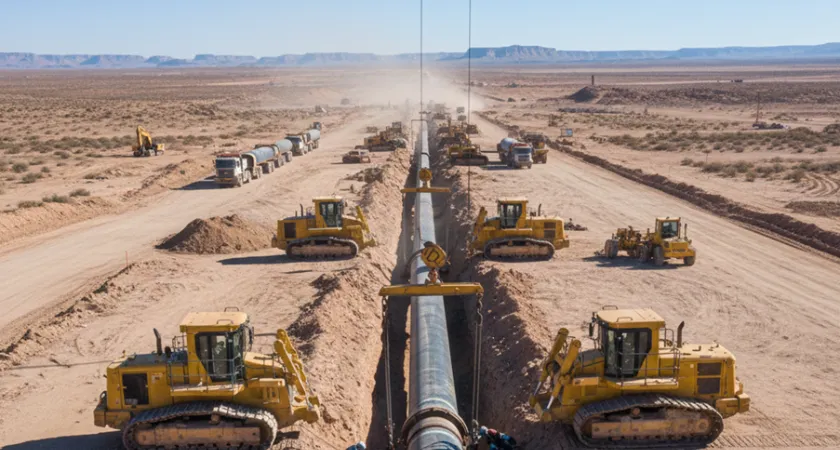
Pipeline Construction Market Projected to Reach USD 96.2 Billion by 2033
The pipeline construction market represents a critical segment of global infrastructure, covering the design, engineering, procurement, and installation of pipeline systems used to transport oil, gas, water, chemicals, and other fluids. These networks enable long-distance movement of essential resources and support economic development, industrial operations, and community services.
The sector includes both onshore and offshore pipeline projects, spanning transmission, distribution, and gathering lines. It also covers inspection, maintenance, rehabilitation, and digital monitoring services that ensure long-term performance and safety.
According to Research Intelo, the global pipeline construction market was valued at USD 58.4 billion in 2024 and is projected to reach USD 96.2 billion by 2033, growing at a 5.7% CAGR. The expansion reflects continued investment in energy transportation, modernization of aging assets, and rising demand for water and wastewater infrastructure.
Why Pipeline Infrastructure Matters
Pipelines remain one of the most efficient and environmentally responsible methods for transporting large fluid volumes. Compared with road or rail alternatives, they offer lower operating costs, reduced emissions, and uninterrupted supply capability.
For national and regional economies, pipeline systems contribute to:
- Strengthened energy security
- Support for industrial and urban growth
- Expansion of cross-border trade
- Reliable access to clean water resources
As global consumption rises, dependable pipeline networks are increasingly viewed as strategic national assets.
Key Growth Drivers Reshaping the Industry
Rising Oil and Gas Consumption
Industrialization across Asia, Africa, and Latin America is generating strong demand for crude oil and natural gas. New hydrocarbon discoveries in North America, the Middle East, and offshore regions are fueling large-scale transmission projects designed to connect production basins with refineries and export terminals.
Shift Toward Cleaner Energy
Natural gas is playing a central role in the global energy transition, replacing coal in power generation and industrial applications. This shift requires extensive pipeline connectivity between producers and end users. At the same time, developed economies are upgrading outdated networks to meet modern safety and environmental standards.
Water and Wastewater Expansion
Urban population growth is increasing pressure on municipal water systems. Governments worldwide are investing in new pipelines to secure drinking water, improve sanitation, and manage wastewater more effectively. This diversification is reducing the industry’s dependence on oil and gas alone.
Materials and Technology Innovation
High-performance steel alloys, composite materials, and anti-corrosion coatings are extending pipeline lifespans. Modern construction methods, automated welding, and trenchless installation are lowering costs and minimizing environmental disruption. Digital monitoring platforms allow operators to detect leaks early and optimize maintenance schedules.
Regulatory and Environmental Landscape
Environmental concerns surrounding leaks and habitat disruption have led to stricter regulations. Authorities increasingly require advanced inspection regimes, real-time monitoring, and transparent risk management plans. While compliance can raise project costs, it also improves public confidence and long-term asset reliability.
Community engagement has become a central element of project planning. Developers are adopting sustainable construction practices, rerouting sensitive areas, and integrating carbon-reduction strategies to secure approvals.
Regional Outlook
- Asia Pacific – USD 19.6B in 2024:
The largest market, driven by massive projects in China, India, and Southeast Asia supporting urbanization and energy imports. - North America – USD 16.7B in 2024:
Growth tied to shale production, replacement of aging networks, and cross-border gas connections. - Middle East & Africa – USD 9.4B in 2024:
Continued investment in export pipelines and domestic distribution, particularly in Saudi Arabia, UAE, and Nigeria.
Ongoing Challenges
Despite strong fundamentals, the market faces obstacles such as lengthy permitting, land acquisition disputes, and price volatility in oil and gas. Accidents and spills remain reputational risks, pushing companies toward stricter safety cultures and advanced detection technologies.
Future Opportunities
The next decade is expected to bring diversification beyond conventional fuels. Emerging segments include:
- Hydrogen transmission corridors
- Carbon capture and storage (CCS) pipelines
- Renewable gas and biofuel networks
- Smart, sensor-driven operations
Digital twins, predictive analytics, and automation will further transform how pipelines are built and managed.
Conclusion
The pipeline construction industry continues to underpin global energy and utility systems. With the market forecast to approach USD 96.2 billion by 2033, success will depend on balancing expansion with sustainability, safety, and community expectations. Companies that embrace innovation and environmental responsibility are poised to lead the next phase of infrastructure development.
Originally reported by Research Intello.