Ask a project team how they know what got installed yesterday, and the honest answer usually involves an iPad, a set of plans, and a lot of walking. Someone goes floor to floor, marks up drawings in Bluebeam, and hopes nothing slipped through.
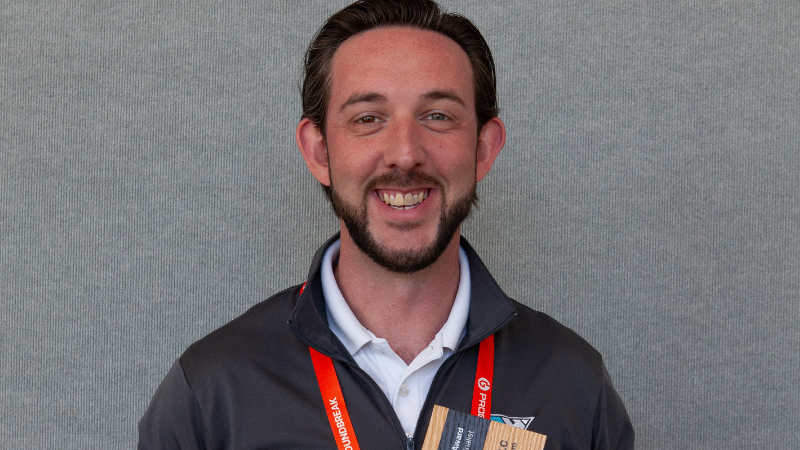
NK Chaitanya thinks that is the wrong job to give the people who build things. NK Chaitanya is co-founder and CEO of Track3D, a Reality Intelligence platform that turns jobsite imagery into measured progress data. Walk the site with a camera, and Track3D tells you what was installed, where, and how much, down to the inch.
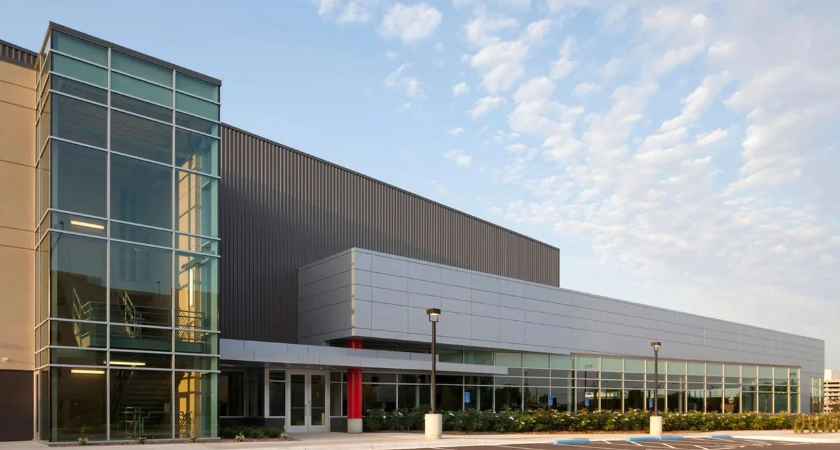
The results are getting noticed. On the $300M Courtyard 3 Connector at San Francisco International Airport, Hensel Phelps used Track3D to eliminate 2,964 hours of manual coordination, prevent three major reworks, and save $342,000 in verified labor. Hensel Phelps has since signed an enterprise agreement to bring Track3D to more than 200 active projects.
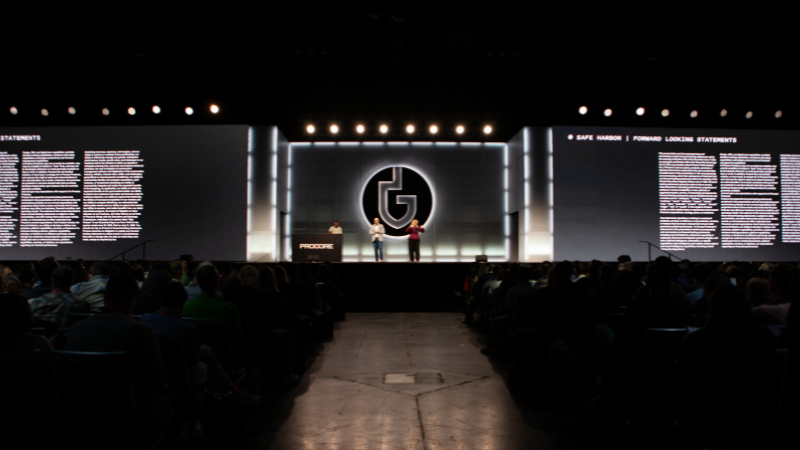
Live from Procore Groundbreak 2026 in Orlando, Carli Mcculloch, Associate Editor of Constructionowners.com (official media partner), sat down with NK Chaitanya for an in-person episode of CO Pod.
Carli: You recently saved Hensel Phelps about $342,000 on a project. That's been the talk of the town. Tell me about it.
NK: Thanks for having me. At Track3D, we automate construction monitoring. We take jobsite imagery and convert it into quantifiable progress information. It tells you whether you're on track, and what got completed, where, when, and how much, on a day-to-day basis.
This used to be done manually, and in a very archaic way. People would walk the site and mark up plans, or mark up Bluebeam on their iPad, to show what work got done that day. That never gave a complete, clear picture of what was happening on site. And it took a lot of time and effort to capture.
So we made it super simple. You take a camera, walk around, and capture complete site details down to an inch. The system automatically measures every installed quantity and does a great job identifying everything on its own.
That was especially useful on a project we did a case study on with Hensel Phelps, who now have us on more than 200 jobs across the country. In San Francisco, we saved time and resources collecting the data. We helped avoid multiple reworks, and in many cases the team could address problems proactively instead of reacting to them.
Carli: That's the key with technology. We want to take the data we're gathering and the issues we're fixing and move forward, rather than stay stagnant.
NK: Absolutely. Think of it like a smoke alarm rather than a fire detector. You catch issues early, so fixing them becomes much simpler and easier.
Carli: You used a key word there: simple. Not much in construction is simple these days. There's complexity, compliance, deadlines, all of it. What are you doing to make things simpler for contractors?
NK: Those were the design principles we started with. We call it simple, fast, accurate, and cost-effective.
Construction workers are extremely passionate about what they do. They take great pride in the structures they build. You'll see stickers on their hard hats from every place they've worked. Every time they pass one of those buildings, they say, "This is my place. This is something I built."
Here's an analogy I often use. Building with Lego is super fun. But imagine that every time you put a piece down, you had to document it and measure it.
You'd take the fun out of the job. People are so passionate about this work, but we're asking them to do admin work, to document and record everything. That's what the industry has been doing for a long time.
That's why Track3D exists. It has to be a simple, fast, accurate way to get your progress. Do what you love, and let the mundane, boring things get done more accurately. That was the entire genesis of Track3D.
Carli: Something I always say is that details get lost in the monotony. When people do the same thing day in and day out, it becomes routine, and they lose the details that make the work so important. A platform that does it right every time keeps that attention to detail.
NK: Exactly. When we ask people to do the mundane task of collecting and verifying data, it often ends up incomplete, inaccurate, inconsistent, or simply inaccessible. Then the project's stakeholders aren't getting the right information at the right time to make the right decisions.
I'm extremely passionate about this industry. Our mission is to make it even simpler, better, and faster, and to get people the results they deserve.
Carli: Where can people reach you if Track3D sounds like a fit for their company?
NK: Visit us at track3d.ai, or reach me at nk@track3d.ai. If you're associated with the construction industry in any way, I'd love to talk. I'm learning every day, and the work this industry does fascinates me.
Progress data is only as good as the way it's collected. When tracking depends on someone walking the site with a marked-up PDF at the end of a long day, NK's four failure points show up fast: the data is incomplete, inaccurate, inconsistent, or stuck where nobody can find it. Decisions get made on a partial picture.
That's the case for treating progress capture like a smoke alarm. The goal isn't a better record of what went wrong. It's an early warning while the fix is still cheap. At SFO, that meant 2,964 hours of manual coordination gone, three major reworks prevented, and $342,000 in verified labor savings on a single project.
There's a people side to this, too. The crews who put stickers on their hard hats for every job didn't get into construction to do data entry. Every hour spent documenting is an hour not spent building, and the details that matter are the first to slip when the work turns into routine.
If you're weighing progress-tracking tools, judge them on NK's four tests: simple, fast, accurate, and cost-effective. Ask how quickly the data reaches the people making decisions, and whether your field team can capture it without slowing down.
NK Chaitanya is co-founder and CEO of Track3D, an AI-powered Reality Intelligence platform that automates construction progress tracking for general contractors, trades, and owners. With a background in computer vision, AI, and robotics, NK speaks on jobsite data, progress monitoring, and making construction technology simple enough for the field. Visit track3d.ai or email nk@track3d.ai.