Commercial property owners can reduce winter-related roofing risks by addressing maintenance issues before severe weather limits roof access and repair work. Nations Roof’s latest quarterly outlook outlines inspection priorities and planning steps for facility teams preparing for seasonal conditions across different markets.
The guidance identifies five areas for review before winter weather arrives: drainage, outstanding repairs, recent rooftop work, emergency response procedures and documented roof conditions.
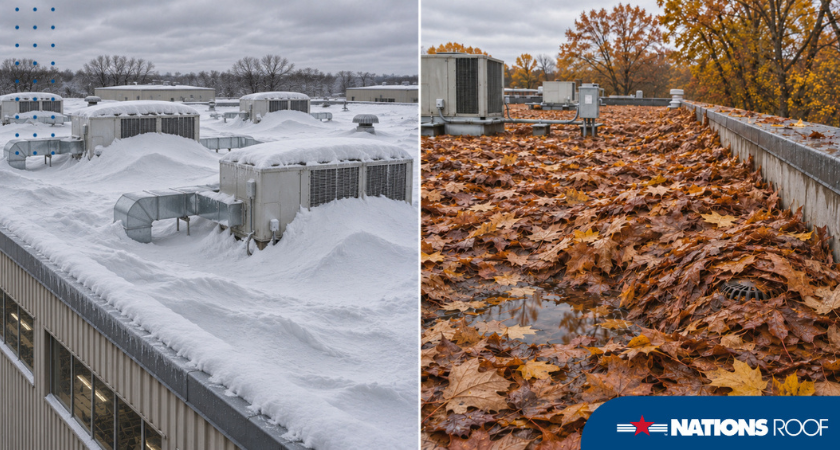
Facility teams should clear leaves and debris from drains, gutters and scuppers, review inspection reports and confirm that previously identified repairs have been completed. Areas around HVAC equipment, roof penetrations and access routes also warrant inspection following work by other trades.
A documented condition baseline, including current photographs and inspection findings, can help property teams evaluate changes after severe weather. Facilities should also confirm emergency contacts, roof access procedures and documentation requirements before winter conditions create additional challenges.
For buildings in snow-prone regions, winter planning should establish who monitors conditions, coordinates crews and manages roof access. Facility teams should identify skylights, drainage points and rooftop equipment before removal work begins and coordinate activities with building operations.
Snow depth alone does not determine roof loading. Snow density, drifting, ice accumulation and building-specific conditions also affect the assessment. Structural professionals may need to be consulted when conditions warrant further evaluation.
Buildings in warmer regions face different seasonal risks. Heavy rain and accumulated debris can obstruct drainage, while repeated temperature changes may place stress on roof seams, flashing and transitions. Increased rooftop activity from seasonal HVAC servicing also creates a need to inspect surrounding roof areas after maintenance work.
Nations Roof recommends organizing inspection findings into three planning categories: repairs requiring immediate attention, maintenance and investigation scheduled for 2027, and longer-term capital needs such as roof replacement.
This approach connects budget decisions to documented roof conditions and helps facility teams distinguish urgent work from projects that can be planned over a longer period. Property portfolios can also benefit from consistent reporting across locations, making it easier to compare roof conditions and allocate maintenance resources.
The company also highlights its debris and snow removal checklists as resources for reviewing winter responsibilities with facility teams and roofing providers.
For commercial property owners and facility managers, addressing roof deficiencies before severe weather can help limit emergency repairs and protect building operations. A professional roof assessment provides a documented basis for prioritizing repairs, planning maintenance and evaluating future capital requirements.
Source: Nationsroof.