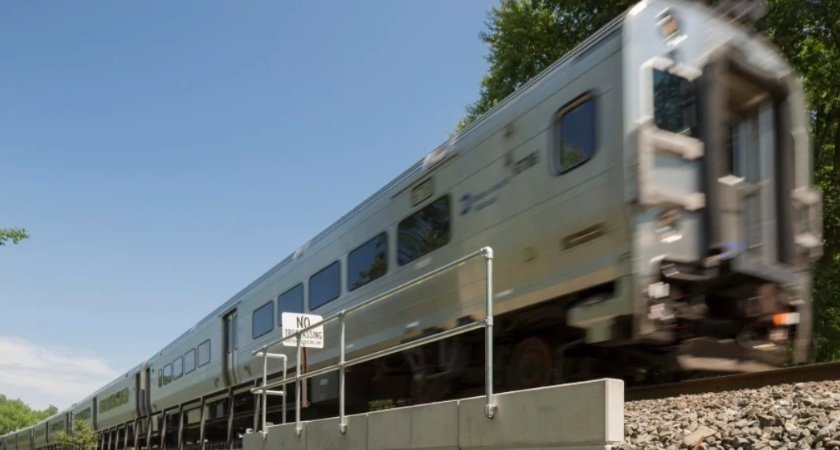
Flooding, extreme rainfall and slope failures pose risks to rail service along Metro-North Railroad’s Hudson Line, prompting a new design initiative focused on improving the corridor’s climate resilience.
The Metropolitan Transportation Authority selected a joint venture between STV and WSP to lead design and preliminary engineering for the $270 million initiative. The work forms part of a wider $800 million resilience investment intended to protect the 75-mile route connecting New York City with Poughkeepsie in the Hudson Valley.
The initial design-build package will focus on vulnerable sections of the line, including areas between Spuyten Duyvil and Hastings-on-Hudson. The project team will also prepare a corridor-wide resilience framework to guide future infrastructure improvements.
The joint venture plans to use mobile light detection and ranging (LiDAR), ground-penetrating radar and artificial intelligence-enabled subsurface mapping to assess existing conditions and identify potential infrastructure vulnerabilities.
These technologies will support preliminary engineering and help inform decisions about where resilience measures may be needed. The wider assessment will consider threats including coastal flooding, heavy rainfall, mudslides and washouts.
The project addresses risks along a rail corridor that serves a significant commuter market. Climate projections cited by STV indicate that rising sea levels could increase exposure to tidal flooding in low-lying sections of the route over the coming decades.
The Hudson Line initiative is part of the MTA’s broader effort to strengthen transportation infrastructure against climate-related disruptions. STV has also worked on resilience and modernisation initiatives involving the Gateway Program’s Hudson River Tunnel, New York City Transit flood mitigation and Metro-North infrastructure.
For public transportation owners and engineering contractors, the programme highlights the role of early risk assessment and corridor-wide planning in prioritising infrastructure investment. Integrating field data into preliminary design can help project teams identify vulnerable assets and develop targeted improvements before advancing construction packages.
Source: STV Inc.