Most large contractors don't have a technology shortage. They have a technology sprawl problem. A vendor pitches one project team, that team buys in, and nobody checks whether the tool fits the other 50 jobs running across the company. The result is siloed data, one-off workflows, and field teams who never quite trust the next new thing.
Graham Condit, Director of Emerging Technology at Skanska USA Building, works on the other side of that problem. His job is to decide which tools are worth piloting, prove whether they scale, and then help project teams actually use them.
Graham has been building things since he was a kid stacking Lego models. He picked up virtual design and construction (VDC) skills in high school, studied architecture, and spent years on Skanska's Emerging Technology team testing everything from field software to exoskeletons. He also mentors students through the ACE Mentor Program.
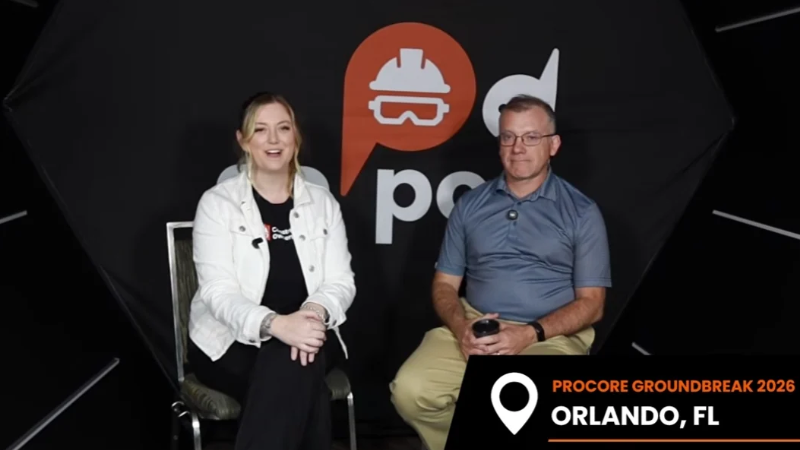
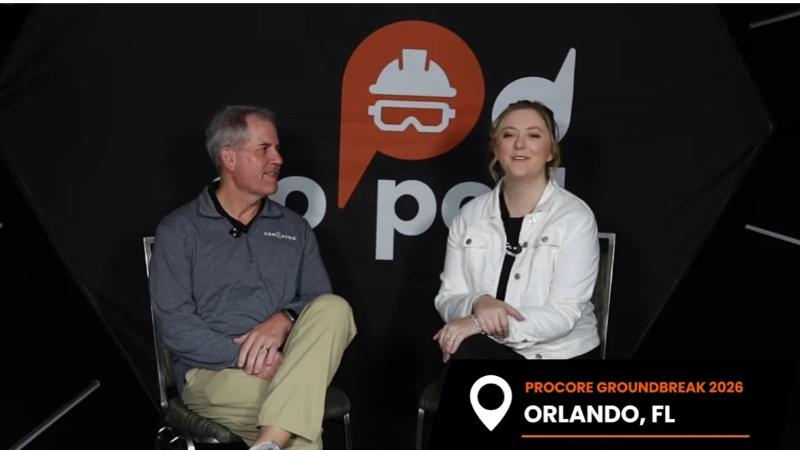
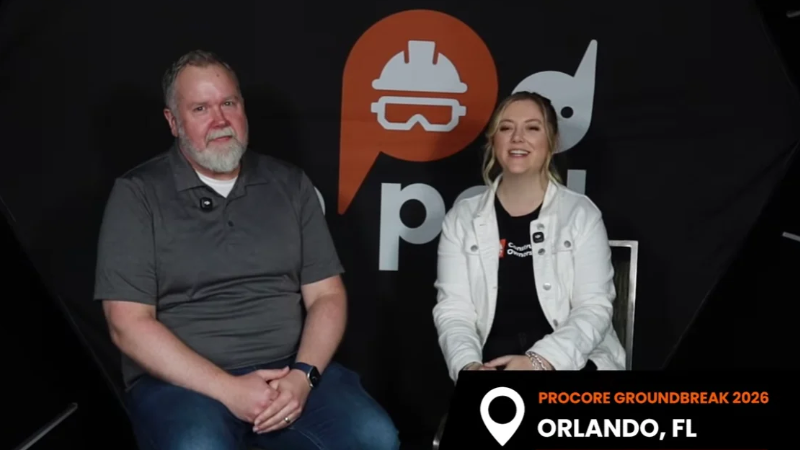
At Procore Groundbreak 2026 in Orlando, Florida, thousands of construction professionals, technology leaders, and innovators gathered under one theme: build and win together in the AI era.
While at the conference, Caroline Raffetto, editor-in-chief of Constructionowners.com, sat down with Graham at the Lumber booth for a live, in-person episode of CO Pod. They talked about getting reliable data off the jobsite, why Skanska runs new technology through a formal enablement process, and why the best tools start with problems the field already has.
Caroline: So tell me, how does having, you know, this more accurate information help your teams and your PMs make decisions?
Graham Condit: I mean, I think obviously information is hard to come by sometimes in the industry. We have all different kinds of silos of how information comes together. But like this allows us to kind of get that information off of the site. And so we create visuals and Power BI environments and things to help, you know, give that kind of consistent operational information to the teams that are going to make those decisions. And so having a kind of a format to deliver that makes it easier for people to go from project to project, and then also for more senior kind of supervisorial people to see how it looks from project to project on a higher level too.
Caroline: Exactly. And I'm sure that also probably helps y'all's bottom line as well.
Graham Condit: It doesn't hurt. I mean...
Caroline: Exactly. We love saving a little bit of money when we can. Um, one thing that I've heard, you know, especially from other contractors, is that change is hard. Change is really hard, especially with technology. You guys have always been, you know, more on the tech-forward front, but if you could take me back to kind of, you know, when that kind of started for you guys, how was it to adapt those teams to new tech?
Graham Condit: Well, I mean, I think anytime you're looking at introducing technology to your projects, it's hard when everything is decentralized, right? And you're set up where, you know, you have a technology vendor come in and try to sell a team on a technology without any regard to any other project that's happening. How can you build standards? How can you build kind of things to, you know, build the SOPs and the functions to be able to really support teams kind of going forward?
Caroline: Yeah.
Graham Condit: And so we actually have a setup within our digital team to help kind of deliver that, right? We've got a tech enablement process. We engage with our technology vendors, and then pilot and kind of go forward from that standpoint on projects to help kind of understand if that technology scales, and then also to manage that tech stack. So we can't be getting every technology out there. It's irresponsible to do that as a company. And so from a standpoint of being able to manage the data side of it, and then also manage the introduction and change management function of our teams to being able to use the technology, we have to have kind of a format to deliver that to them.
Caroline: Yeah. One last question. This one is always sitting in my mind, and I love asking this one, but, you know, when you guys are looking at new tech, new tools, even, you know, new Procore software, how do you make those decisions on what you're going to go for?
Graham Condit: Yeah. I mean, like, I think team engagement is probably one of the bigger things. Like, you can't show people something, and if they're not into it, they're not going to use it. And so it's really trying to get things that are going to answer problems from our field.
Caroline: Yeah.
Graham Condit: And so one is identifying what challenges they're kind of presented with and being able to kind of address those. Um, but then also mirroring that up with, you know, the workflows and things that they're going to understand to be able to kind of implement and use the technology in an effective way. Um, and so it's really kind of one of these things that needs to kind of grow somewhat organically from the teams. And so we have to keep that kind of ear open always to kind of listen to that, and basically help our teams kind of bring that technology to us, and then help us kind of scale it with the company.
Caroline: Well, I love that, and I just love everything you guys are doing at Skanska and, you know, really the values that you guys have of putting, you know, technology first and really using that to not only improve your projects but your employees' lives, your business. So thank you, guys, for doing that, and thank you for sharing your story with me.
Graham Condit: Yeah. I know, it's been a fun Groundbreak, and yeah, I look forward to the next one too.
Most technology problems in construction aren't software problems. They're coordination problems. When every project team picks its own tools, data ends up in silos, and nobody can compare one job to the next. Graham's point is that a company has to decide how technology enters the business, not just which technology to buy.
Skanska answers that with a tech enablement process run by its digital team. Vendors are engaged centrally. Tools are piloted on real projects to see whether they scale. Only then do they join a managed tech stack, with SOPs and change management to support the teams using them.
The payoff shows up in the data. When jobsite information flows into one consistent format, like shared Power BI dashboards, project managers can move between jobs without relearning the reports. Senior leaders can see how every project is performing side by side.
But process alone doesn't drive adoption. Graham is clear that people won't use a tool they aren't into. The best candidates start as answers to problems the field already has, and they fit workflows crews already understand. Leadership's job is to listen, help teams bring those tools forward, and then scale what works.
For construction owners, the takeaway is practical. Don't let vendors set your tech strategy one project at a time. Pilot before you scale. Standardize how data comes off the jobsite. And keep your ear on the field, because the tools that stick usually start there.
Saying no to most technology is part of the strategy. The contractors who manage their tech stack deliberately will be the ones who get real value from it.
Graham Condit is the Director of Emerging Technology at Skanska USA Building. He leads how Skanska evaluates, pilots, and scales new construction technology, from field tools to AI applications on the jobsite. Trained in architecture with a background in virtual design and construction, Graham is also a mentor with the ACE Mentor Program. He speaks on technology adoption, jobsite data, change management, and practical AI in construction.