A major transportation infrastructure project is moving forward on Florida's east coast as construction begins on a $101.9 million replacement of the Sebastian Inlet Bridge, a critical link along State Road A1A in Indian River County.
The long-planned project addresses aging infrastructure concerns while introducing new transportation and recreational features intended to improve safety, mobility and visitor access in one of the state's most heavily traveled coastal corridors.
.avif)
For contractors, public owners and infrastructure stakeholders, the undertaking represents a significant long-term investment in bridge modernization and resiliency within Florida's transportation network.
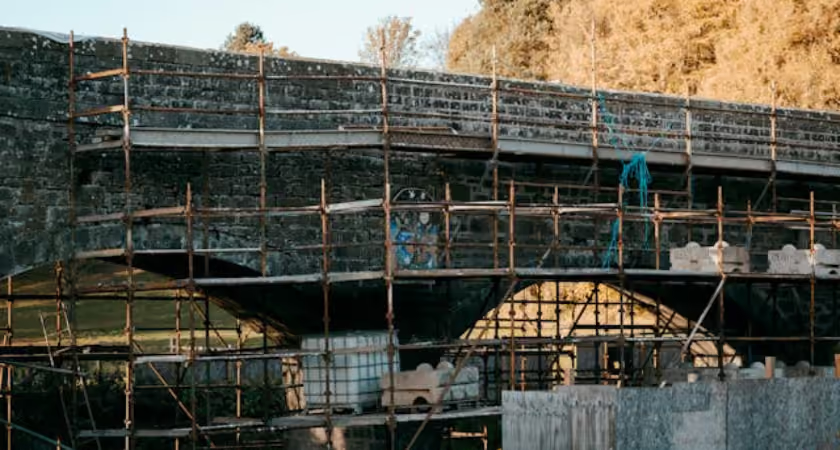
The existing James H. Pruitt Memorial Bridge, originally constructed in 1964, was previously identified as structurally deficient and scheduled for replacement. Transportation officials determined that both the bridge's substructure and superstructure had deteriorated to the point where a full replacement was necessary after decades of service and multiple rehabilitation efforts.
The replacement structure will be built east of the current bridge alignment and will feature a 51-foot vertical clearance. Plans call for 12-foot travel lanes and 8-foot shoulders designed to accommodate modern traffic demands and improve operational safety.
Additional project elements include public observation decks extending from both the north and south shores beneath the bridge, creating new waterfront viewing opportunities for residents and visitors.
Roadway enhancements will also include new crosswalks at the north and south entrances of Sebastian Inlet State Park, along with dedicated turn lanes intended to improve traffic circulation and reduce congestion along the corridor.
The start of construction introduces the first phase of traffic management measures for motorists traveling through the area.
Single-lane closures along State Road A1A are scheduled during daytime hours through late June as crews begin initial construction activities. Portions of the northern parking area at Sebastian Inlet State Park will also be unavailable for the duration of the project, although park operations are expected to continue.
Transportation agencies are coordinating access plans to maintain traffic flow while allowing construction to proceed safely around the active roadway and recreational areas.
Bridge replacement projects of this scale continue to be a significant source of work for heavy civil contractors as states address aging transportation assets nationwide. Coastal bridge projects also increasingly incorporate resilience, safety and multimodal transportation features to meet evolving infrastructure needs.
The Sebastian Inlet project combines structural replacement with pedestrian improvements, traffic management enhancements and public-access amenities, reflecting a broader trend toward multi-purpose infrastructure investments.
The six-year construction schedule highlights the growing demand for large-scale bridge replacement and rehabilitation projects across the United States. Owners, contractors and engineering firms can expect continued opportunities tied to aging transportation infrastructure, particularly in coastal regions where durability, safety and resilience are becoming central project requirements.
As the Sebastian Inlet replacement advances toward its anticipated 2032 completion, it will serve as a notable example of long-term infrastructure planning aimed at extending transportation capacity while improving public access and safety.
Originally reported by Colleen Wixon in TC Palm.