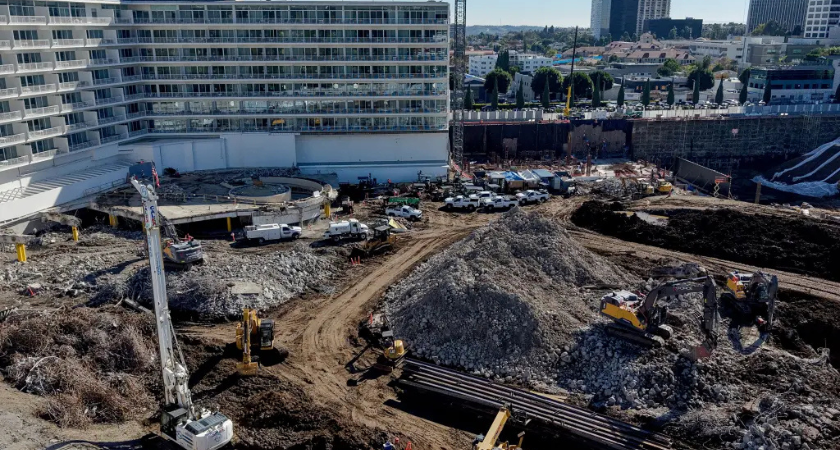
Beverly Hills’ next landmark isn’t a movie studio or celebrity mansion — it’s a $10 billion mega-development rising into the skyline and reshaping one of the world’s most famous ZIP codes. The One Beverly Hills project has officially gone vertical, marking a major milestone in transforming 17.5 acres into one of the most luxurious residential destinations on earth.
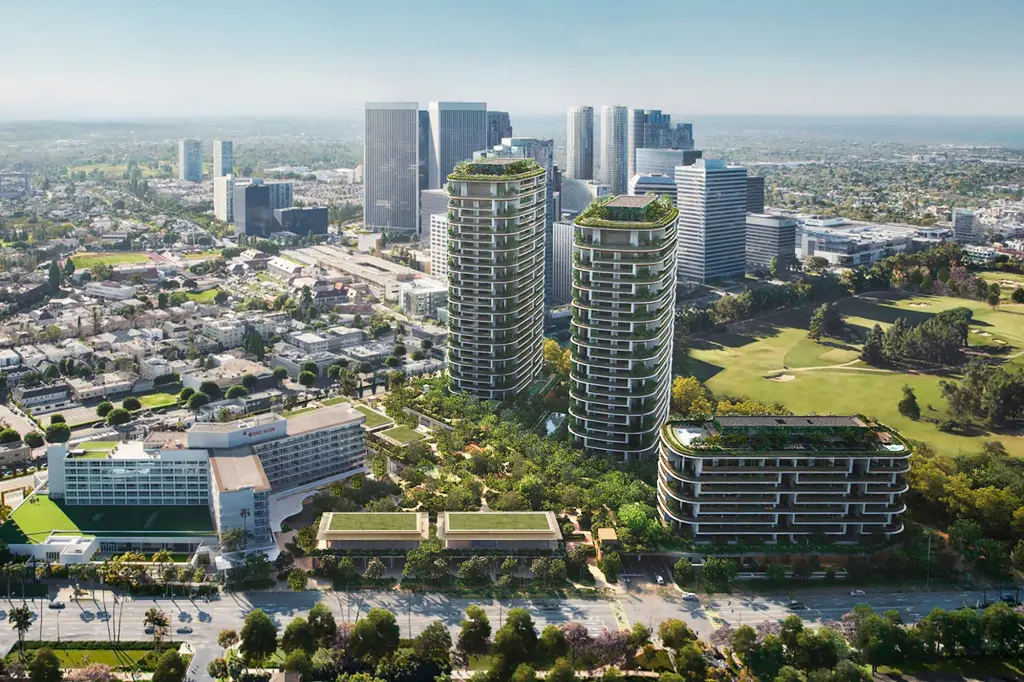
Over the weekend, a strategic construction push poured 3,800 cubic yards of concrete, laying the foundation for two soaring towers that will become the tallest structures ever built in the 90210. What appears now as a vast construction zone of cranes and dirt is being prepared to house the ultra-wealthy in an “urban resort” that blends elite real estate, global luxury brands and curated green spaces.
The project is anchored by the first Aman hotel on the West Coast, a brand known for attracting billionaires and exclusive clientele, including notable figures like Bill Gates and the Kardashians. Alongside the hotel, the site will introduce two Aman-branded residential towers, where ownership begins at around $20 million and penthouses may exceed $40 million.
The community will include a 100,000-square-foot private club, alongside high-end dining and retail spaces designed for an invitation-only lifestyle. Membership alone is rumored to require a $200,000 initiation fee and $20,000 a year in dues, signaling a residential environment priced beyond typical luxury buyers.
One real estate insider, speaking to The Post, praised the design but questioned the extreme valuation. They remarked, “I think it will be the nicest condo building in LA, if not the United States,” but added concerns over investment rationale, saying, “It makes no sense. The pricing is estimated at $7,000 per foot. So a 4,000-square-foot condo will cost $28 million. I think people would be foolish (if solely looking at it as an investment) to spend more than $4,000 per foot.”
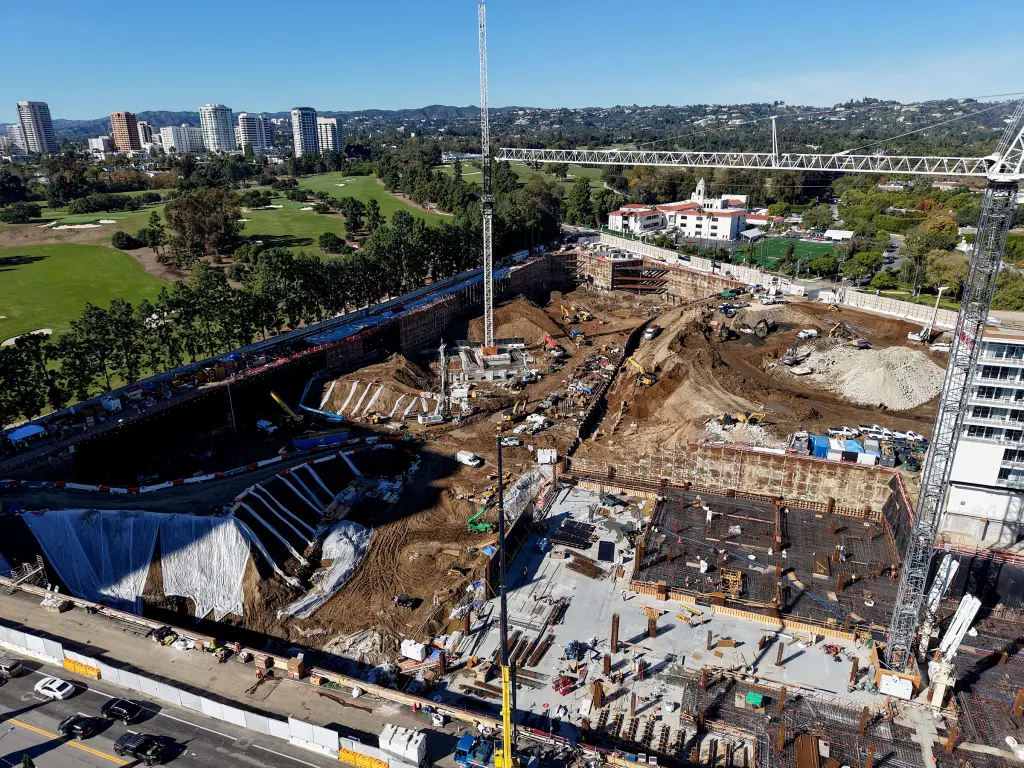
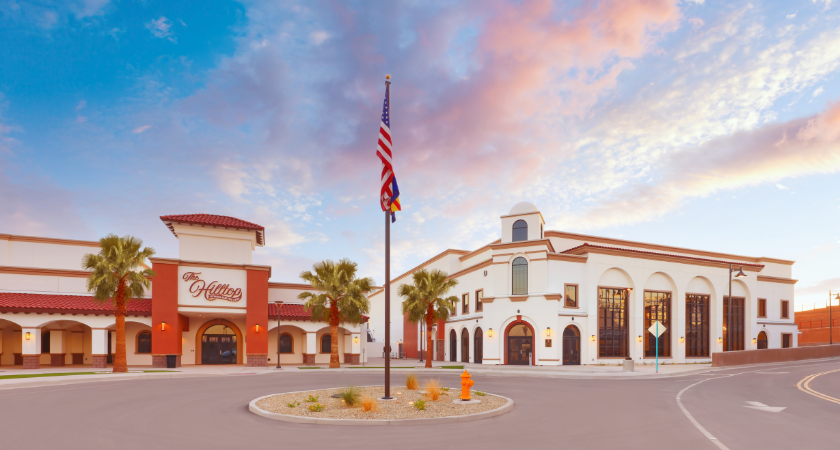
Developed by Cain International, OKO Group and Alagem Capital Group, led by entrepreneur Beny Alagem, the project has been years in the making, requiring extensive negotiations and approvals to redevelop the nexus of Wilshire and Santa Monica boulevards. The complex will effectively merge with historic luxury destinations: The Beverly Hilton and the Waldorf Astoria, creating a unified super-premium resort corridor.
When completed, the master plan calls for 10 acres of botanical gardens, of which 4.5 acres will be publicly accessible, surrounded by 200,000 square feet of designer retail and dining. The residences and hotel will sit within a walled and curated landscape intended to function as a self-contained ecosystem for affluent global buyers.
Targeting completion in 2027 and full activation ahead of the 2028 Los Angeles Olympics, One Beverly Hills will serve as both a luxury icon and a strategic hospitality asset for the city during one of its largest global events.
The One Beverly Hills development underscores a growing trend in global real estate: hyper-luxury urban compounds that combine brand-name hospitality, curated natural amenities and elite membership clubs. Such developments are no longer merely residential towers, but status-driven ecosystems where pricing aligns with exclusivity rather than investment logic.
As the cranes continue to rise, critics question whether this scale of luxury serves the city’s broader needs, while supporters argue the project will reinforce Beverly Hills’ global identity, increase tourism revenue and elevate surrounding property values.
Either way, the newest statement in Los Angeles architecture won’t be a film studio or award show venue — but a vertical playground built for the world’s wealthiest residents.
Originally reported by Bianca Heyward in NY Post.