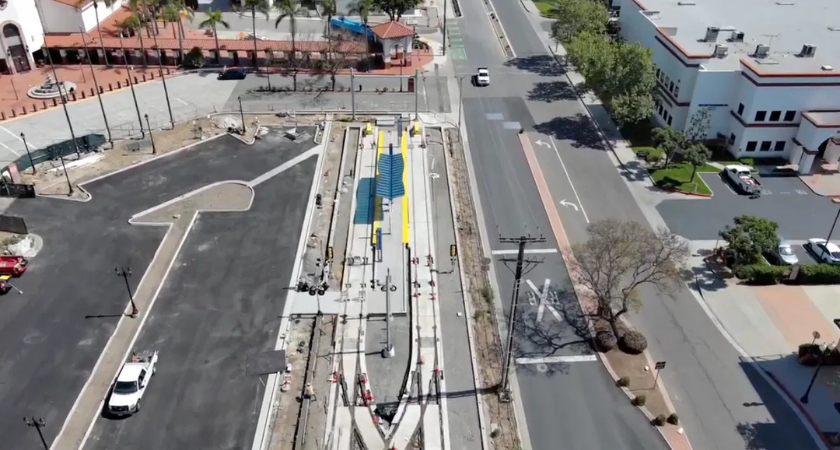
More than a dozen new transit projects are expected to open across the United States in 2026, reflecting a continued shift by cities toward lower-cost and more flexible transportation solutions, according to new data from The Transport Politic.
After opening more than 160 miles of new rail, bus and fixed-guideway transit in 2025, cities are on track to add roughly 94 additional miles this year. The trend underscores a growing preference for bus rapid transit and similar systems over traditional light rail, particularly as construction costs and funding constraints weigh on local governments.
Cities are increasingly favoring bus rapid transit, which typically operates in dedicated lanes, as well as arterial rapid transit systems that rely on existing roadways and use traffic signal priority to improve speed and reliability. These approaches offer many of the benefits of rail transit without the higher upfront costs or longer construction timelines.
“Over the past decade, a lot of cities have been reorienting their investment approaches,” said Yonah Freemark, a researcher at the Urban Institute and creator of The Transport Politic. “Light rail is just very expensive for these cities, and they’re not finding the mechanism to reduce that.”
Across North America, approximately 150 miles of new fixed-guideway transit lines are projected to open in 2026 in the U.S., Canada and Mexico combined — a notable decline from the more than 240 miles that opened in 2016. The reduced total reflects the slower pace of large rail projects in the U.S., even as demand for transit infrastructure remains strong.
Several major U.S. cities are advancing projects that prioritize cost-effective transit improvements:
While U.S. cities increasingly lean toward bus-based solutions, Canadian cities continue to invest heavily in rail infrastructure. Montreal, Ottawa and Toronto are all advancing light rail projects, highlighting a contrast in long-term transit strategies.
“Canada is acting a little bit more like the rest of the world,” Freemark said. “Their major cities are building a lot of rail lines and are doing so on a pretty rapid pace, and that is not true in the U.S.”
As funding pressures persist and ridership recovery remains uneven, transportation experts expect U.S. cities to continue prioritizing projects that deliver mobility improvements more quickly and at lower cost — even as rail remains central to transit expansion efforts elsewhere in North America.
Originally reported by Dan Zukowski, Senior Reporter in Construction Dive.