The state of Alaska is preparing to give away millions of dollars’ worth of gravel and fill dirt to public corporations, a move that could significantly lower costs for some of the state’s largest infrastructure projects while raising questions about foregone public revenue.
.jpg)
According to a question-and-answer notice posted by the Alaska Department of Natural Resources (DNR), the proposed regulatory changes would allow state agencies and state-owned corporations to receive construction materials at no cost. Potential beneficiaries include the proposed Ambler Access Project and the proposed trans-Alaska natural gas pipeline.
The plan was disclosed publicly the day before Thanksgiving through a notice stating that DNR is planning “regulation changes on material sales and conveyances to state agencies.” The department oversees mining activity on state lands, including the extraction of gravel and fill dirt used in construction and road maintenance.
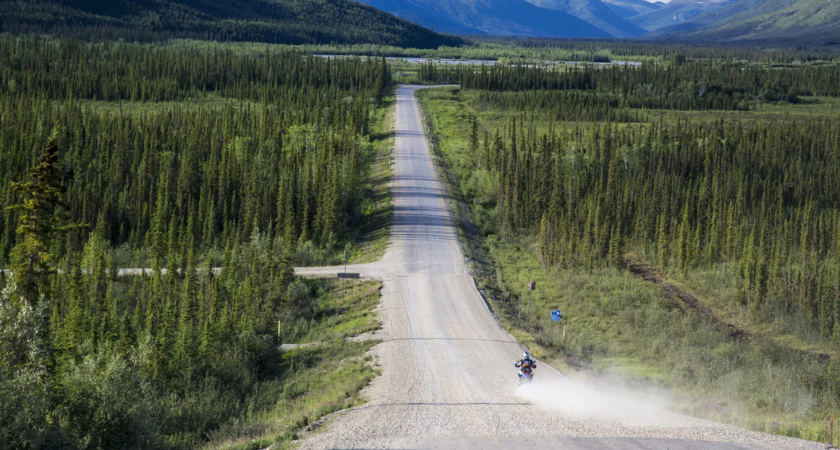
Though often overlooked, gravel plays a critical role in Alaska’s infrastructure, particularly in remote regions. In November, DNR commissioner-designee John Crowther signed an order prohibiting gold, silver, and other forms of mining near gravel quarries along the Dalton Highway, which connects Fairbanks to Prudhoe Bay. For state maintenance crews responsible for keeping the highway operational, gravel availability outweighs the value of more lucrative minerals.
That importance was underscored in 2024, when High Country News reported that gravel on the North Slope is considered a “precious commodity” because of its scarcity and essential role in construction.
One of DNR’s proposed rule changes states “that the department convey material to a state agency or public corporation at a base price of $0.00 per cubic yard and without retaining a reversionary interest.” Under current pricing, the state sells gravel for about $3 per cubic yard in Interior Alaska.
Alaska law requires that any sale of land or public resources below market value must be declared by the commissioner to “serve a public purpose and are in the public interest.” The proposed regulation would automatically consider transfers to state agencies or corporations as meeting that requirement.
As a result, agencies such as the Alaska Department of Transportation and Public Facilities could obtain gravel from state land for free, paying only processing and transportation costs.
In a Q&A notice published Dec. 26, DNR said the change is meant to allow “for maximum use of state land consistent with the public interest.”
“Examples of a public purpose would be a state agency or public corporation using gravel to construct a gravel pad on a state leased site for infrastructure development; to construct a new state highway right-of-way or expand an existing state right-of-way; or to build an embankment along a river; or gravel needed for the development of a gas line right-of-way,” the department wrote.
.jpg)
The free gravel policy would also apply to state-owned corporations, potentially affecting some of Alaska’s most ambitious development efforts. The Alaska Industrial Development and Export Authority is developing a 211-mile road linking the Dalton Highway to mining sites in northwest Alaska and would qualify under the proposal. The Alaska Gasline Development Corp., now a junior partner in the proposed trans-Alaska natural gas pipeline, would also be eligible.
A spokesperson for Glenfarne, the pipeline’s lead developer, said the company did not request the regulatory change.
According to estimates from the Bureau of Land Management in 2024, construction of the proposed Ambler Road alone would require between 15 million and 22 million cubic yards of gravel, with an additional 220,000 to 347,000 cubic yards needed annually for maintenance.
If the state supplies that gravel at no cost, the loss of revenue from construction materials alone could range from $45 million to $66 million.
The public comment period for the regulation change closed Jan. 2, and officials have not yet announced when the new rules might take effect.
Lorraine Henry, director of communications for DNR, said it remains unclear how much gravel would ultimately be conveyed under the policy and emphasized that the department is not targeting specific projects.
“DNR cannot speculate on the volume of gravel that may be involved, as each application from State of Alaska agencies will be evaluated on its merits – and will include a public process and follow statutory authorities,” Henry said in an email.
As Alaska continues to pursue large-scale transportation and energy projects, the proposal highlights the growing role of material policy in shaping infrastructure development — and the tradeoffs between public investment, resource management, and long-term revenue considerations.
Originally reported by James Brooks in Alaska Public.