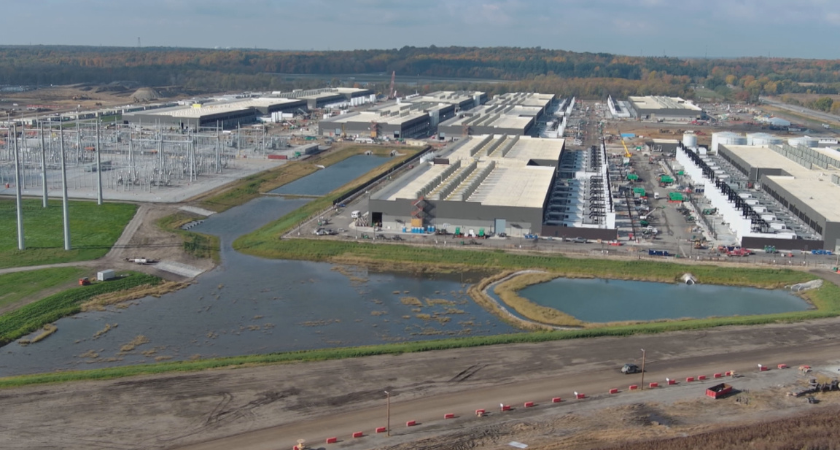
Amazon is making one of its largest U.S. technology investments in state history, committing $15 billion to build multiple data center campuses in northern Indiana. The announcement was unveiled Monday along with a major power agreement designed to ease public concern about energy usage from artificial intelligence infrastructure.
As part of the investment, Amazon signed a $1 billion deal with NIPSCO, northern Indiana’s leading power utility, to pay the full cost of generating and transmitting 2.4 gigawatts of electricity—the massive amount required to operate the new data centers.
Amazon says the expansion will produce 1,100 high-skilled positions and create additional jobs within the broader “data center supply chain,” ranging from construction and utilities to advanced technology services.
Indiana Gov. Mike Braun praised the move, calling it a milestone in economic development and energy strategy.
“Amazon’s historic investment shows that Indiana’s business-friendly climate continues to attract world-class employers and drive growth in our state. This project will create more than a thousand jobs while supporting thousands more across the region, further strengthening Indiana’s position in energy dominance and economic leadership.”
AI data centers have received criticism nationwide for driving up energy consumption and contributing to higher utility bills. Indiana has been hit especially hard, with a congressional report forecasting another 16% increase in electricity costs in 2025.
To counter that concern, Amazon is not just paying for the power it uses—it has pledged to fund an additional 3 gigawatts of new power generation, more than the facilities will consume. The company emphasized that this will ultimately benefit consumers across the state.
Gov. Braun called the arrangement a victory for households struggling with rising rates.
“This is a massive win for Hoosier ratepayers. This agreement will ensure a surplus in new energy development that will deliver real savings to Hoosier ratepayers,” he said.
AI data centers need unique infrastructure because they rely on specialized GPUs that consume more energy and require intensive cooling systems. Amazon both manufactures these chips and rents them to companies through its cloud platform, AWS. The technology also powers the company’s own AI systems, including its shopping assistant, Rufus.
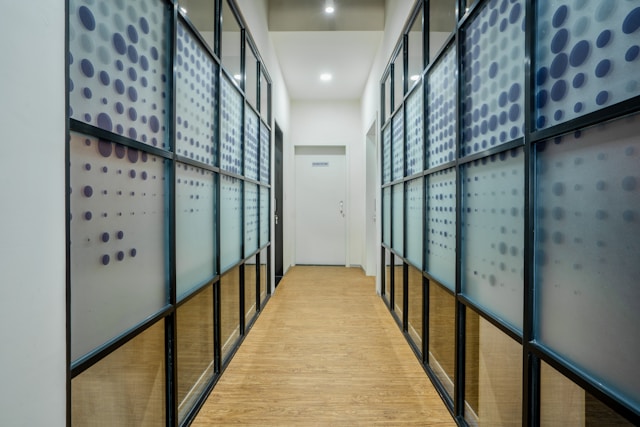
Amazon has not disclosed exact locations for the data centers, saying only that they will be built in “northern Indiana” within NIPSCO’s service territory. In a statement to 13News, Amazon confirmed it is “exploring several areas,” but did not offer a construction timeline.
Local leaders indicate some areas may not be chosen. St. Joseph County Council President Dan Schaetzle said the development will not be located in his county, despite Amazon already building one of the world’s largest data centers in nearby New Carlisle. Another developer pushing for additional data centers in the region is expected to face rejection, Schaetzle said.
“If I read my fellow council members correctly, it probably is going to fail at the council level as well, just based upon what I'm hearing,” Schaetzle said.
He added that communities need to slow down and evaluate the impacts of massive data development.
“I think we have to go very slow here in St. Joe County. We really need to slow down and just digest what we've already approved.”
As data center projects have proliferated across central and northern Indiana, public opposition has intensified. Concerns include utility rate hikes, increased water usage, large tax incentives, and relatively limited full-time jobs compared to the scale of investment.
That pushback has had real consequences: Google abandoned a proposed data center in Franklin Township after widespread community backlash, while projects in Martinsville faced heavy opposition before moving forward.
Amazon did not disclose when construction will begin, how many campuses are planned, or whether any surplus energy supported by the NIPSCO deal will be redirected to Indiana residents.
Originally reported by Mike Potter, Alex Almanza in WTHR.