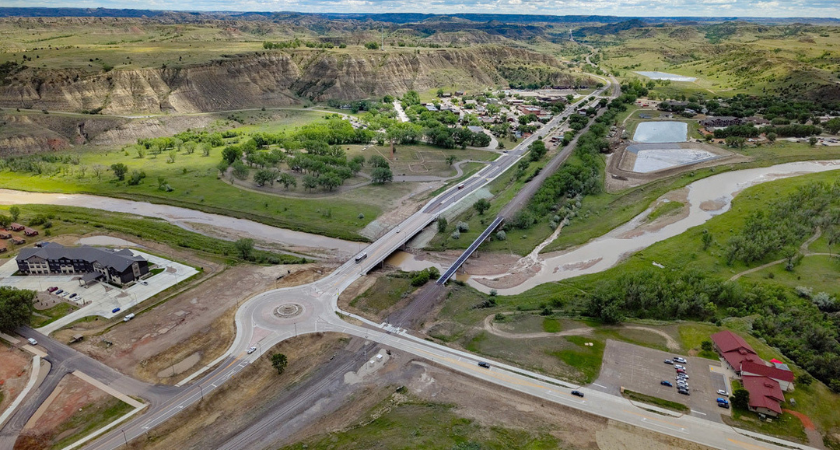
Transportation and tourism infrastructure projects continue to shape development activity in smaller regional markets preparing for increased visitor demand and major civic destinations. Ames Construction recently completed roadway and bridge improvements in Medora, North Dakota, ahead of the opening of the Theodore Roosevelt Presidential Library and national Independence Day events.
Ames Construction completed the Medora Business Loop and City Section project, a 3.2-mile transportation improvement program designed to support traffic operations and pedestrian mobility within the tourism-driven community.
Construction activities included installation of a new roundabout intended to improve traffic circulation and reduce congestion during peak visitation periods. The project also widened the bridge crossing over the Little Missouri River and added an additional turn lane to improve vehicle capacity.
Shared-use pedestrian paths were constructed on both sides of the bridge to improve safety and reduce pedestrian interaction with roadway traffic.
Project design elements incorporated materials and color selections intended to align with the surrounding North Dakota Badlands landscape associated with the Theodore Roosevelt region.
According to project information released by Ames Construction, exposed bridge deck surfaces and handrail finishes were selected to visually reflect the area’s sedimentary rock formations and natural terrain characteristics.
The infrastructure program was initiated in October 2024 as Medora prepared for anticipated increases in tourism activity connected to the Theodore Roosevelt Presidential Library opening and national commemorative events.
Communities across the United States continue to invest in roadway, pedestrian and public infrastructure improvements tied to tourism growth, cultural destinations and regional economic development initiatives.
Projects in smaller destination markets frequently combine transportation modernization with context-sensitive design approaches intended to preserve local identity while accommodating increased visitor volumes.
For contractors, public agencies and infrastructure owners, projects such as the Medora corridor improvements highlight continuing demand for transportation upgrades that balance mobility, pedestrian safety and community-focused design objectives.
Source: Ames Construction.