SAN RAFAEL VALLEY, ARIZ. — Environmental groups, tribal members, and residents from both sides of the U.S.–Mexico border gathered over the weekend to protest ongoing construction of a 30-foot steel border wall cutting through one of Arizona’s last open ecological corridors. The event, called “Rally for the Valley,” took place just 200 meters from the construction site in the San Rafael Valley, where advocates warn the barrier will devastate wildlife, harm binational communities, and exhaust natural resources shared by both countries.

For many attendees, this project represents a new phase of border militarization in an area long recognized as a critical habitat for jaguars, bobcats, pronghorn, pumas, and countless migratory species. The region, situated between the Patagonia and Huachuca Mountains, is one of the only remaining open stretches of land along the southern Arizona border.
The Sky Island Alliance, Sierra Club, tribal representatives of the Tohono O’odham Nation, and residents from Sonora, Mexico were among those who joined Rep. Adelita Grijalva (D-AZ), who publicly criticized the construction. During her remarks, she questioned the expense and necessity of the wall and raised concerns over the resources being consumed to build it.
Grijalva emphasized not only the lack of proven security benefit, but the potential environmental destruction, asking how many migrants have truly crossed in this area and pointing out the waste of precious desert water. She told the crowd she intended to scrutinize both the justification for the project and the water being used to support it.
Erick Meza, border coordinator for the Sierra Club, echoed those concerns in his remarks during the rally. He said the demonstration was organized to unite communities who live near or interact with the valley and to expose what he called an “ecocide” in progress. Construction began in September, and Meza said the public needed to see the scale of damage firsthand.
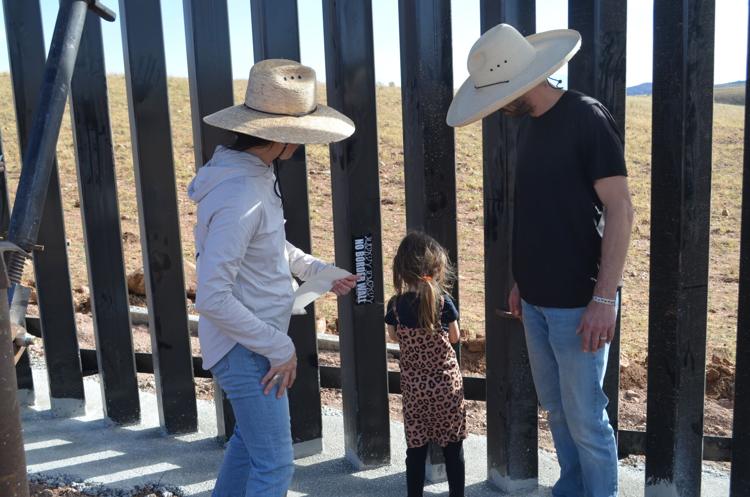
Meza also warned that wall construction impacts both sides of the border, stressing that the U.S. and Mexico rely on the same underground water sources. He emphasized how the excavation, dust control processes, and concrete mixing consume large quantities of water at a time when the Southwest is facing unprecedented drought.
"Another worrying aspect is the amount of water used to mix the concrete and control dust, in addition to the stone and gravel extracted from the mountain," Meza commented.
He explained that both nations draw from the same shared aquifer, meaning depletion would affect wildlife, ranchers, and local communities on both sides. Meza insisted the fight must continue, explaining that the group plans more events and direct actions because, in his words, “people need to understand that the construction of the wall is completely unnecessary.”
To emphasize the cultural unity of border residents, the Mexicayotl dance group performed a ceremonial dance facing the construction site. Onlookers from Sonora and Arizona watched together before sharing burritos on both sides of the border, creating a spontaneous moment of cross-border solidarity.

Rubén Peralta, who traveled from Santa Cruz, Sonora, explained that he opposes the project due to its threat to deer, bobcats, raccoons, pronghorn, and other species that depend on free movement through the valley.
Many participants carried cardboard cutouts of jaguars and coyotes, while others lifted handmade birds on wooden poles to “fly” above the crowd. This symbolic act represented what wildlife will no longer be able to do once the barrier is complete.
Jen Allen, Pima County District 3 supervisor, highlighted the broader political agenda behind the project, stating:
“We can see how this administration wants to continue militarizing our border, even though our communities are like a binational community.”
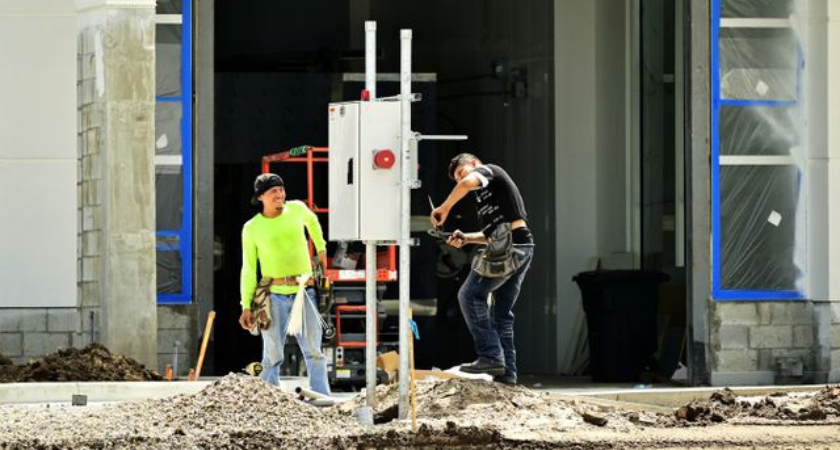
The wall is being built by Fisher Sand & Gravel Company under a contract exceeding $300 million, according to U.S. Customs and Border Protection. The 27-mile construction is scheduled to continue through 2027.
Advocates warn the long-term damage will be catastrophic. According to Eamon Harrity, wildlife program manager for the Sky Island Alliance, an estimated 85% of animals — nine out of 10 species — are unable to cross border barriers, effectively fragmenting ecosystems and isolating wildlife populations.
Originally reported by César Barrón in Calo News.