The US construction market is sending mixed signals in 2026. While data centres and energy infrastructure are generating record backlogs for major contractors, other segments — from manufacturing to offices and retail — are slowing noticeably.
.webp)
Recent hiring activity underscores the imbalance. A routine announcement about Fluor recruiting two senior leaders for data centre and semiconductor projects quickly became one of the most-read industry stories — a sign of just how dominant the sector has become. Both executives previously worked at Bechtel, highlighting the intense competition for talent in high-growth segments.
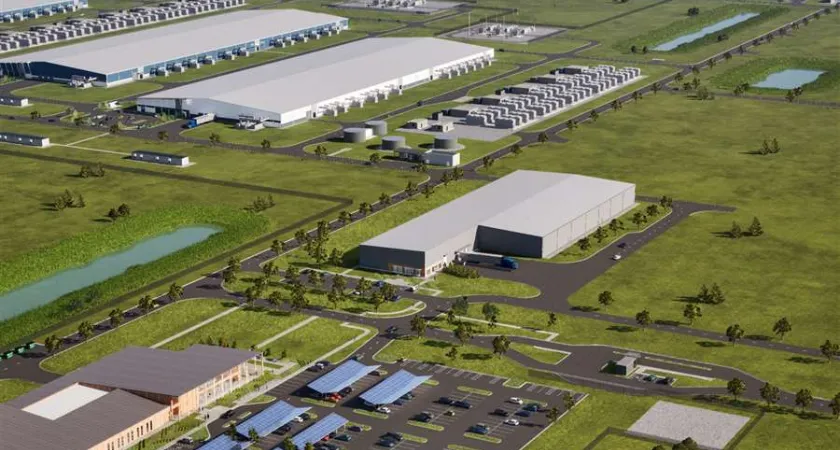
According to economists at ConstructConnect, US data centre construction starts in 2025 are expected to exceed $60 billion — more than double the value recorded annually since 2021. The surge is driven largely by demand for artificial intelligence (AI) computing capacity.
Major contractors are repositioning portfolios to capture this wave. Deloitte noted in its 2026 engineering and construction outlook that many large firms are actively reallocating resources toward data centre megaprojects.
The effect is visible in backlog data. The Associated Builders and Contractors (ABC) reported that companies with annual revenues above $100 million recorded their highest backlog since 2021, at 14.2 months, as of December 2025.
However, smaller firms with less than $30 million in annual revenue reported backlog levels of just 6.7 months — their lowest since 2021 — underscoring a widening gap between large and mid-sized contractors.
Similarly, a January survey from the Associated General Contractors of America (AGC) showed contractors are more optimistic about data centre construction than any other segment in 2026, with a net +57% expecting higher project values this year.
The rapid expansion of data centres is intensifying demand for electricity. Deloitte estimates US data centre power demand could grow from 33 gigawatts in 2024 to 176 gigawatts by 2035 — more than fivefold.
In response, federal policymakers have signaled renewed interest in nuclear energy. In October 2025, the US government announced a partnership with Westinghouse Electric to build at least $80 billion worth of new nuclear reactors.
Meanwhile, firms such as Clayco have joined consortia pursuing next-generation nuclear-powered AI data centre campuses, including proposals involving the Idaho National Laboratory.
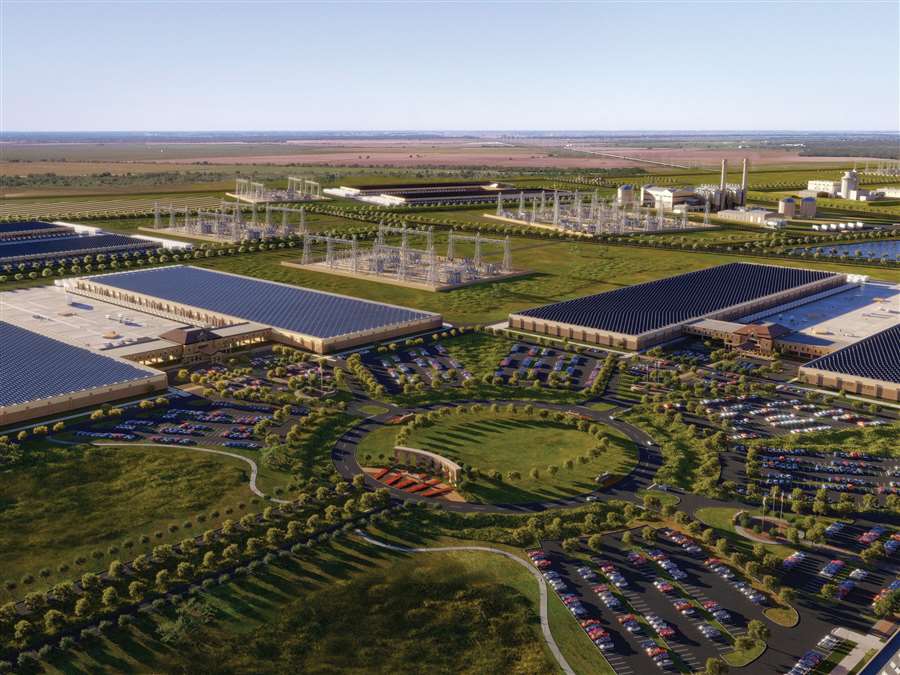
Private sector initiatives are also advancing. Fermi America is overseeing Project Matador, an 11-gigawatt energy campus in Texas aimed at supporting AI and industrial growth.
Still, large-scale nuclear construction remains years away from full deployment. Deron Brown, president and COO of US operations at PCL Construction, noted that natural gas plants are likely to supply most new energy capacity in 2026. “The renewed interest in nuclear power is encouraging, but widespread adoption – both investing in existing units and developing small modular reactors – is still several years away from significant deployment,” he said.
While data centres and energy shine, other segments are dimming.
Manufacturing construction, previously boosted by federal programs such as the CHIPS and Science Act and the Inflation Reduction Act, is retreating. The American Institute of Architects (AIA) forecast declines of 2% in 2025 and 2.6% in 2026 after a peak of $230 billion in 2024.
Warehouse construction has also slowed sharply following its pandemic-era boom, with significant declines in 2024 and 2025, though a modest rebound is expected in 2026.
AGC survey respondents were most pessimistic about lodging, private office and retail construction in 2026. Education construction — both K-12 and higher education — is also experiencing decelerating growth.
The labor market presents another contradiction. Construction unemployment remains relatively low at 6.9% in January, according to ABC, yet overall hiring momentum has slowed. The industry recorded a net loss of 1,000 jobs in 2025 — its first annual decline since 2020 and 2021.
Residential construction employment has fallen by 43,600 jobs over the past year, accounting for much of the weakness.
ABC chief economist Anirban Basu noted an unusual disconnect: “Backlog fell to a four-year low in January, yet contractors remain shockingly sanguine about the near-term outlook. Just 13% of contractors expect their sales to decrease over the next six months, the smallest share since February 2022.”
At the same time, contractors face mounting cost pressures. Seventy percent of AGC survey respondents reported being affected by tariffs in 2026, with 40% raising bid prices and 20% adding price-sharing clauses to contracts.
AGC CEO Jeffrey Shoaf warned, “While there are pockets of optimism in select private-sector markets, contractors’ overall sentiment has dampened notably compared to last year.”
Tariff volatility — including shifts following US Supreme Court rulings and subsequent new tariff announcements — continues to inject uncertainty into supply chains and pricing.
Despite falling backlog levels to an average of eight months, contractor confidence remains stronger than a year ago, particularly among larger firms. Borrowing costs, energy investment clarity and federal infrastructure policy are likely to determine whether optimism proves justified.
Large contractors are responding by investing in digital tools, modular construction techniques and early contractor involvement strategies to better manage risk.
“The contractors that perform best will be those who compete on certainty, not just price,” Brown said. “The teams that collaborate early and structure contracts that effectively manage risk will find the most success.”
For now, the US construction market appears divided: buoyed by AI-driven data centre and energy megaprojects at the top end, while smaller contractors and traditional commercial segments confront tighter margins, softer demand and rising uncertainty.
Originally reported by Neil GerrardSenior Editor, Construction Briefing in Construction Briefing.