Construction has long been a male-dominated industry, but new data shows gradual progress nationwide — and mixed results for Texas.
.webp)
According to recently released figures from the U.S. Census Bureau, women account for 11.7% of payroll employees in the construction industry across the United States. The analysis, conducted by Construction Coverage, highlights steady gains over the past several years as employers confront a major labor shortage estimated at 349,000 workers.
In response to workforce gaps, the U.S. Department of Labor has invested millions through its Women in Apprenticeship and Nontraditional Occupations (WANTO) grant program to encourage women’s participation in industries like construction.
While women remain underrepresented, the share of female construction workers has trended upward. Prior to 2016, women consistently made up about 9% of the construction workforce, with that percentage fluctuating between 8.9% and 9.5% from 2003 to 2015.
Since 2016, however, the percentage has increased almost every year — reaching 11.1% in 2022 and climbing further to 11.7% by 2024.
The rise reflects both labor market necessity and targeted diversity initiatives. As older workers retire and fewer young workers enter the trades, employers are increasingly looking to women to fill open roles and sustain industry growth.
Nationwide, more than 1.36 million women now work in construction, compared to over 10.2 million men.
Although participation is increasing, women remain concentrated in specific roles.
According to the U.S. Bureau of Labor Statistics, women make up 81.4% of office and administrative roles in construction. They are also more represented in professional, sales and management positions compared to field-based jobs.
However, female representation drops sharply in skilled trade roles. Women account for:
These figures highlight a structural divide between office-based and field-based employment within the sector.
One notable bright spot for women in construction is compensation.
Full-time female construction workers earn a median annual wage of $57,725 — higher than the $55,817 median for women across all industries.
Interestingly, the opposite pattern exists for men. Male construction workers earn a median of $60,561, compared to $67,260 for men across all industries.
The gender pay gap in construction is also narrower than the national average. Across all industries, women earn about 17% less than men. In construction, the gap shrinks to approximately 4.7%.
That narrower disparity may make the industry more financially attractive for women considering career options in skilled trades or construction management.
Regional variation plays a significant role in female construction participation.
Delaware leads the nation, with women representing 14.2% of its construction workforce. Florida follows at 13.5%, with metros such as Jacksonville (17.4%) and Orlando (15.7%) ranking among the highest in the country.
Alaska (13.3%), Hawaii (13.2%), Washington (13.0%) and Oregon (12.7%) also exceed the national average.
At the other end of the spectrum, some major metropolitan areas in Texas and the Northeast report female representation below 9%. McAllen, Texas, ranks lowest among major U.S. metros, with just 7.5% of construction workers identifying as female.
Texas falls slightly below the national average.
By comparison, nationwide figures show:
While Texas trails the national average by a small margin, its large construction workforce means it remains a significant player in shaping industry diversity trends.
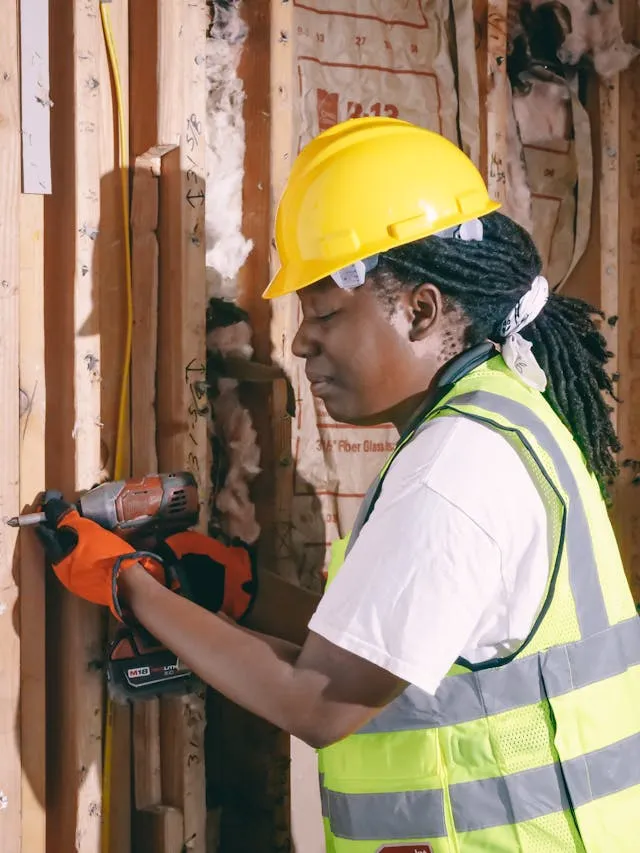
With persistent labor shortages and ongoing infrastructure investment, expanding female participation may be less a matter of equity alone and more a matter of economic necessity.
Industry leaders point to apprenticeship programs, mentorship initiatives and wage transparency as potential tools to bring more women into skilled trades roles rather than concentrating them in office positions.
As workforce pressures intensify, the data suggests one clear takeaway: the future growth of construction — in Texas and nationwide — may increasingly depend on how successfully the industry attracts and retains women across all job categories.
Originally reported by Construction Coverage in KTEN.