Chicago-based Century Aluminum Co. has divested property in Hawesville, Kentucky, that once hosted a primary aluminum smelter.
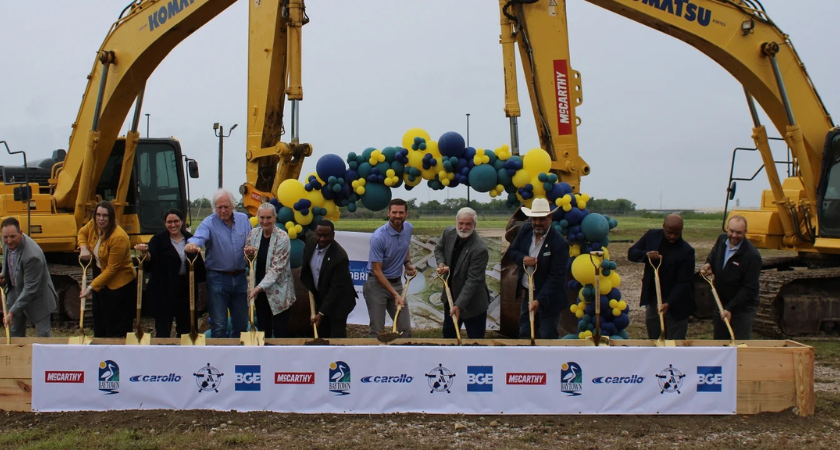
The announcement was made shortly before Century named Bechtel and ERM as two contracting firms that will be involved in building a planned smelter in Inola, Oklahoma, that is a joint venture with United Arab Emirates-based Emirates Global Aluminium (EGA).
.webp)
According to Century, the Kentucky site will be redeveloped by Maryland-based TeraWulf Inc. into a digital infrastructure campus supporting high-performance computing and artificial intelligence (AI) workloads. Century says it will retain a noncontrolling minority equity stake.
The Form 8-K document filed by Century with the Securities and Exchange Commission lists Delaware-based Justified DataPower LLC as the buyer of the approximately 750-acre Hawesville site.
An report from the Hancock Clarion refers to Justified DataPower as a company affiliated with TeraWulf. The SEC form indicates Justified DataPower has agreed to pay Century $200 million in cash and a 6.8 percent nondilutive minority equity interest in another TeraWulf affiliate called Raylan Data Holdings LLC.
Terms and conditions pertaining to environmental liabilities and zoning and permit issues tied to demolition, remediation and redevelopment activities are mentioned throughout the Form 8-K, pointing to the site’s history as a metals production facility.
“We are very pleased to see the Hawesville site transition to productive use that will benefit Hawesville and the entire Commonwealth of Kentucky,” Century President and CEO Jesse Gary says. “Our agreement allows us to remain connected to the project and supportive of the community as the site is redeveloped.”
TeraWulf is a company that develops and operates integrated, sustainably powered data centers for energy-efficient advanced digital applications.
Local officials have described the sale as a symbolic turning point for Hancock County, where aluminum production once served as a major employer. The planned data center campus is expected to create a new category of technology-focused jobs while reusing industrial land that has been largely idle since smelting operations wound down. Community leaders say the project could attract related suppliers, fiber providers and energy-service companies to the region.
The Hawesville location offers access to existing power transmission and transportation networks—assets originally built for metal production but increasingly valuable to energy-intensive computing facilities.
“The Hawesville redevelopment follows a series of other significant investments in the United States by Century, [including] Century’s expansion of its Mt. Holly, South Carolina, smelter and its new, cutting-edge 750,000-metric-ton smelter to be built in Inola, Oklahoma, with partner EGA," Century Aluminum says.
In the TeraWulf transaction, BofA Securities served as exclusive financial advisor to Century, while FBT Gibbons and Vedder served as legal counsel.
“Century is proud to be the largest producer of primary aluminum in the United States and is dedicated to continuing to invest domestically to meet the national security needs of the United States for this critical mineral,” Gary says.
Because the property hosted decades of smelting activity, significant site preparation will be required before construction of server facilities can begin. Regulatory filings reference demolition of remaining structures, soil remediation and new permitting for electrical substations and cooling systems. Industry analysts note that repurposing former industrial sites for data centers has become more common as developers seek large tracts with robust power access.
TeraWulf has promoted its model of pairing data centers with low-carbon energy sources, a factor that could influence how the Hawesville campus is designed and powered. The company has previously developed facilities near hydroelectric and nuclear generation in other states.
.webp)
The transaction underscores the accelerating demand for AI and cloud computing capacity across the United States. Analysts estimate that data center electricity consumption could double within the decade, prompting developers to search for sites with existing high-voltage infrastructure—exactly the type left behind by energy-intensive manufacturing plants.
For Century Aluminum, the sale allows the company to monetize a noncore asset while keeping a financial interest in the project’s future growth. The 6.8% equity position in Raylan Data Holdings provides potential upside if the campus expands beyond its initial phase.
Kentucky economic development officials have previously targeted technology and advanced manufacturing as diversification strategies. The Hawesville project could complement other digital infrastructure initiatives along the Ohio River corridor.
Meanwhile, Century continues to focus on its core metals strategy. The planned Oklahoma smelter with EGA is being promoted as one of the most modern facilities in North America, and contractors Bechtel and ERM are expected to handle engineering, permitting and environmental compliance.
Local stakeholders will watch how quickly the Hawesville transformation progresses. Early phases are likely to involve clearing legacy equipment, upgrading substations and securing long-term power purchase agreements—critical steps before server halls can be built.
Originally reported by Brian Taylor, Senior Editor in CD Recycler.