Construction costs continued their upward trajectory in September, marking the fifth consecutive month of increases and adding new layers of uncertainty for U.S. contractors navigating tight margins and shifting economic conditions.
.jpg)
According to an analysis from Associated Builders and Contractors (ABC) of the latest Producer Price Index data from the U.S. Bureau of Labor Statistics, construction input prices rose 0.2% in September, driven primarily by major materials such as iron and steel. Overall construction input costs are now 3.5% higher compared to last year, while nonresidential inputs climbed 3.8%.
“Construction input prices rose for the fifth straight month in September,” said Anirban Basu, ABC chief economist, in the release. “While that represents the longest streak of monthly increases since the first half of 2022, those increases are relatively modest. Materials prices have risen at a 3.2% annualized rate since April, a rate that is faster than ideal but nowhere near the escalation that occurred in 2021 and 2022.”
The Bureau of Labor Statistics’ September report was delayed due to the federal government shutdown, but the updated numbers reveal ongoing cost pressures across nearly all major construction inputs. The Associated General Contractors of America (AGC) emphasized that the pattern is keeping procurement unpredictable for builders.
“Persistent input-price pressure, even when the increases are modest, creates a stop and go rhythm in procurement and production instead of a steady flow contractors and suppliers need,” said Macrina Wilkins, senior research analyst at AGC. “These month-to-month swings make it harder for firms to plan confidently and protect already thin-margins.”
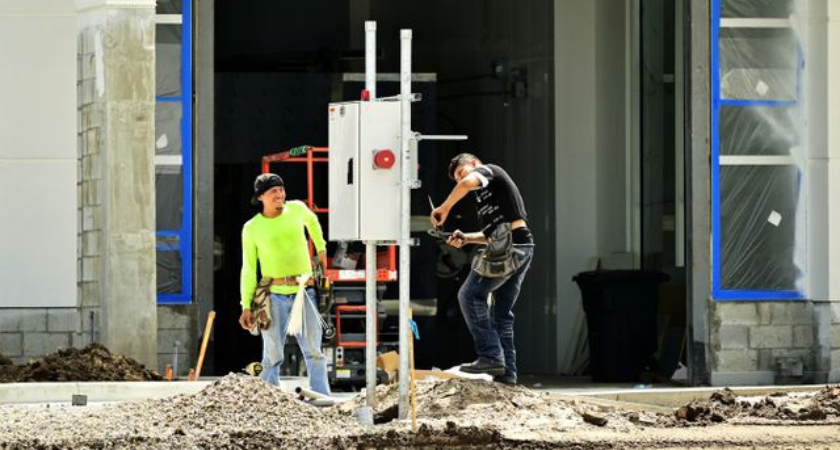
Steel mill products surged 12.4% over the past 12 months, while electrical equipment — particularly switchgear, switchboard, and industrial control systems — posted a 10.3% increase year-over-year. Copper wire and cable also jumped 9.1%, signaling further complications for projects relying heavily on electrical infrastructure.
Contractors now face additional uncertainty as new tariffs on iron, steel, aluminum and copper begin to shape future pricing trends.
“Unfortunately, it’s unclear how higher tariffs on key materials like iron and steel and aluminum and copper will affect prices over the next several months, and it’s noteworthy that commodities related to those materials have exhibited significant year-over-year price increases,” said Basu. “Despite the prospect of ongoing materials price escalation, contractors remain cautiously upbeat about their profit margins and sales over the next six months.”
This steady uptick comes as several commercial construction segments show signs of softening demand, creating an environment that is forcing firms to weigh cost risks more heavily during bidding.
.jpg)
While many materials trended upward, a few energy categories offered modest relief. According to the PPI data, natural gas prices dropped 8.7%, unprocessed energy materials fell 3%, and crude petroleum dipped 1.7%. However, these declines have not been enough to offset the cumulative strain created by rising material costs.
In many regions, bidding remains competitive, with bid prices failing to rise at the same pace as material costs. This mismatch is pushing already tight margins even thinner.
“Contractors can manage modest cost increases, but they need a predictable environment to keep projects moving,” said AGC CEO Jeffrey Shoaf. “Greater clarity on tariff policy and progress on outstanding trade issues would help stabilize materials markets and give firms more confidence to plan for the work ahead.”
Despite challenges, many contractors remain cautiously optimistic about upcoming work opportunities, particularly those tied to federal infrastructure programs and data center expansion. However, analysts warn that volatility in materials pricing could continue well into 2026 if tariff impacts, global supply constraints and geopolitical shifts persist.
The construction sector — especially firms working on steel-intensive infrastructure, power systems, and large commercial projects — will need to monitor pricing trends closely as they navigate the final months of 2025 and prepare budgets for a potentially turbulent year ahead.
Originally reported by Sebastian Obando in Construction Dive.