For communities across southwest Alaska, the devastation left by the remnants of Typhoon Halong remains staggering, with some villages facing years of recovery and others uncertain whether rebuilding is even possible. In the middle of that uncertainty, a small group of seven trainees from Kipnuk has stepped forward to begin learning the skills that could one day help restore their community.
.webp)
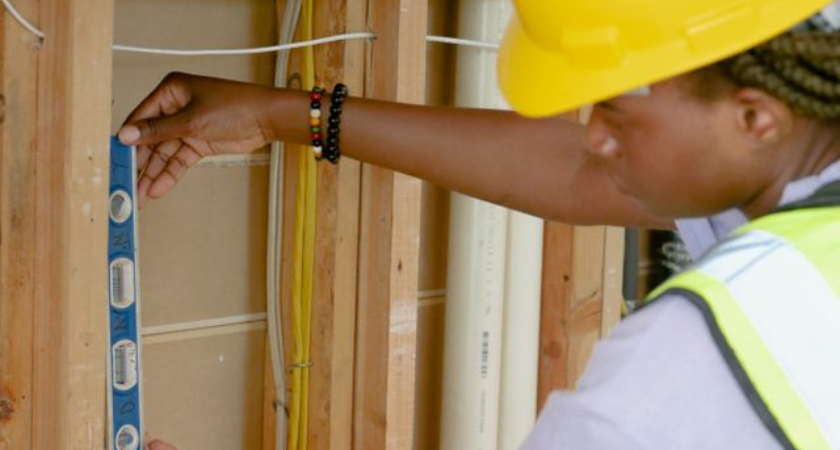
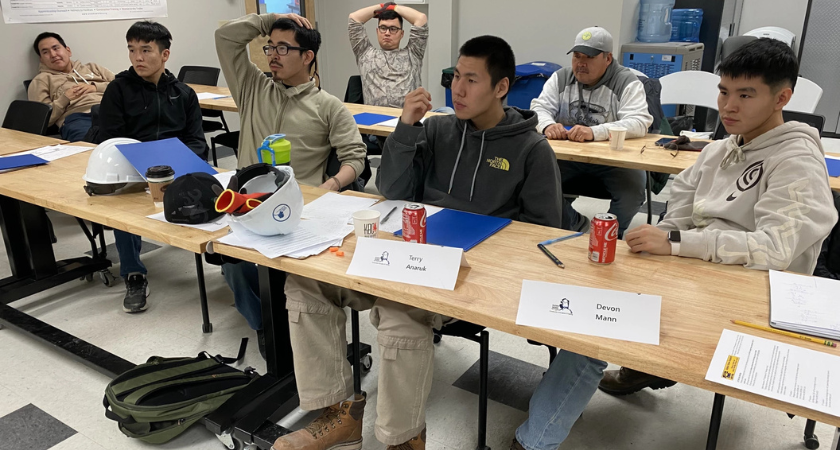
The Alaska Works Partnership, a nonprofit funded primarily by the state, created a one-week construction workshop specifically for storm evacuees. Held at the organization’s Mountain View headquarters, the hands-on program was designed not only to teach basic framing skills but also to help participants regain confidence and purpose after losing so much.
Most of the apprentices are from Kipnuk, one of the hardest hit communities where homes were destroyed or swept away. Since the Oct. 9 storm, the group has been living in Anchorage after being airlifted out when conditions became too dangerous to remain.
“They just lost their homes,” said Tiffany Caudle, training coordinator for Alaska Works Partnership. “They lost everything.”
But Caudle says the workshop is already making a difference. “I do think this is really helping them stay positive and stay hopeful,” she said.
Inside a large, mostly empty garage, the work began on Oct. 20. What started as a bare room filled only with boards, nails, and tools quickly turned into a lively training space, buzzing with the steady rhythm of hammers and saws. The men volunteered for 40 hours of instruction, determined to be part of their community’s recovery.
“This is the door, and this one’s going to be the window,” said 19-year-old Devon Mann as he laid out boards for a frame. “Everything we’re learning in here and doing, it’s going to be useful for our village.”
Yet for Devon, the trauma of the storm is still close. He survived being carried more than five miles inside his home as floodwaters surged through Kipnuk. “The way the house was rocking, how fast we were going,” he said. “Worst experience I ever had.”
In the chaos that night, Devon and his younger brother stayed behind to save items drifting away. Suddenly, water rose around them, trapping them in darkness as their home floated off its foundation. They fought the flood with buckets and bedding, trying to seal off the incoming water. “I thought something bad was going to happen to the house, like break apart. I thought that would be it for us,” Devon said. “But I had hope. I had hope.”
.webp)
Today, that sense of hope drives him to prepare for whatever comes next. “Leveling, framing, stuff we’re doing here in the training – it’s useful in the village,” he said. Devon and his classmates don’t know whether Kipnuk will be rebuilt where it stands or relocated to higher ground, but they want to be ready to help either way. “I want to step up,” he added. “And I want to know what to do in that moment.”
William Andrew, a longtime Alaska Works instructor, says the group’s attitude has been inspiring. He calls them “naturals,” impressed by how quickly they learn despite the hardship they’ve endured. “From what they went through, I’ll be honest with you, their attitudes are awesome,” Andrew said. “They’re wanting to learn. They’re being great.”
As he checked their work, Andrew pushed them to focus on technique, knowing small mistakes could become big issues on real projects. “I can’t stress it enough. Use your wrist. Use your wrist,” he said as he demonstrated with a hammer.
Andrew, who is Yup’ik and originally from the village of New Stuyahok, understands firsthand how rebuilding efforts often pass over local workers. He hopes this training marks a different path for Kipnuk residents. “I’m excited about their future. And I’m hoping they get to rebuild it,” he said.
The Alaska Works Partnership now hopes to expand its support and is seeking new funding partners to offer more courses. The agency believes these trainees can build more than house frames—perhaps new careers that strengthen their villages and improve community resilience.
For the villagers of Kipnuk, the future is still uncertain. But in Mountain View’s workshop, surrounded by the sound of saws and hammers, hope is beginning to take shape.
Originally reported by Rhoda McBride in KNBA.