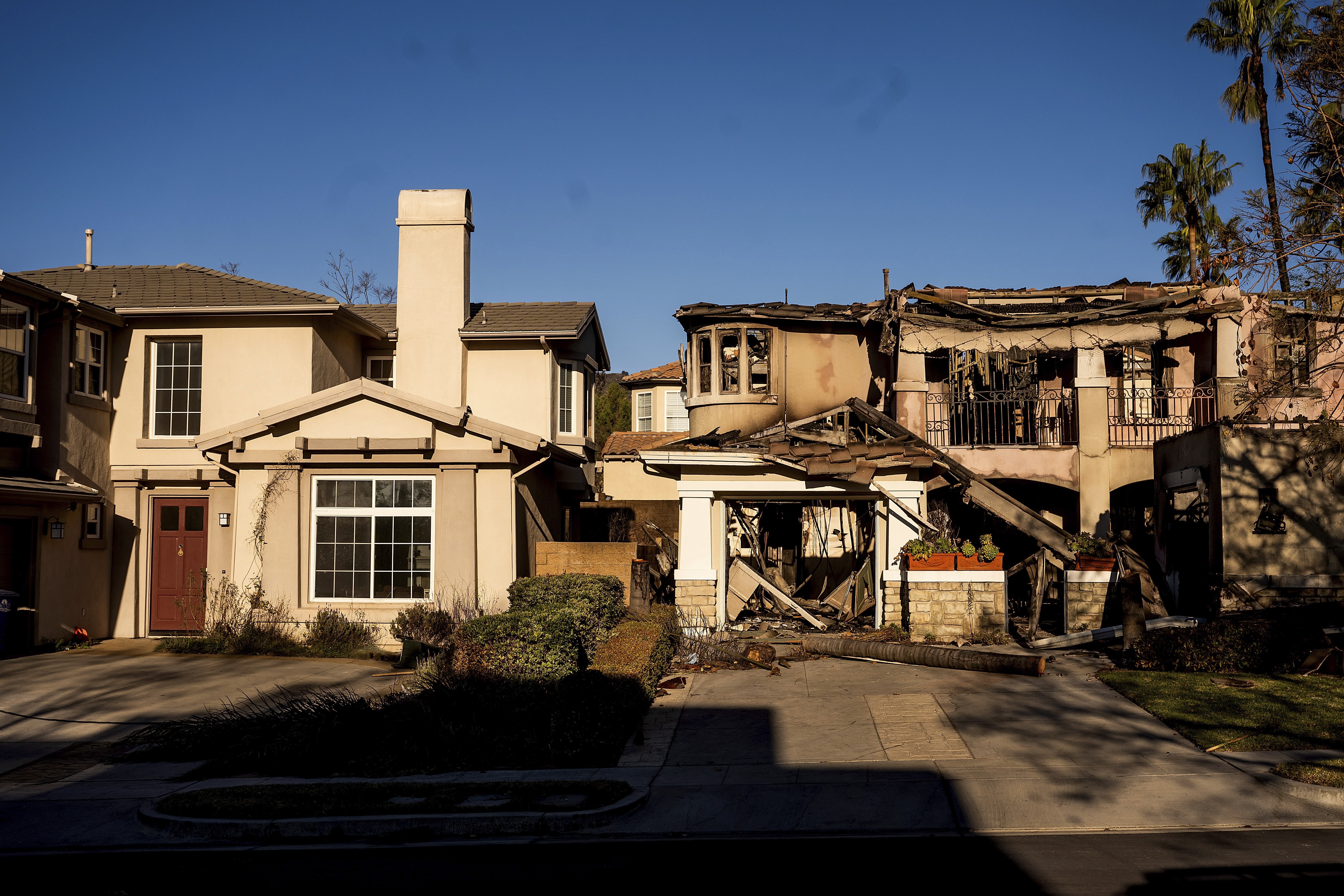
Los Angeles officials hoped to highlight a major recovery milestone nearly a year after wildfires destroyed 13,000 homes across the region. Instead, the announcement triggered backlash and frustration among survivors still living in limbo.
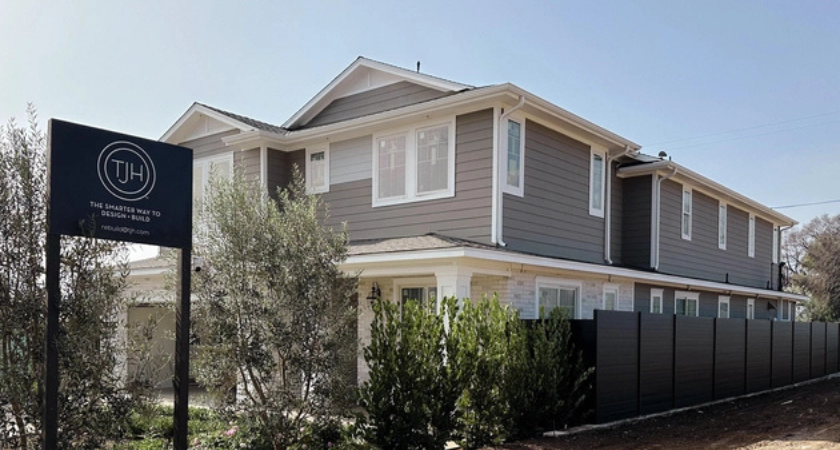
Ahead of Thanksgiving, Mayor Karen Bass publicly celebrated the first newly completed home following the January 2025 fires—a four-bedroom property in Pacific Palisades that had just received its certificate of occupancy.
“The Palisades community has been through an unimaginable year, and my heart breaks for every family that won’t be able to be home this holiday season,” Bass said. “But today is an important moment of hope.”
But the milestone quickly unraveled. The home Bass hailed as a symbol of resilience didn’t belong to a returning family. Instead, it was owned by Thomas James Homes, a homebuilding firm that had purchased the parcel before the fire and already planned to demolish the existing structure. The wildfire, in effect, completed that job. The company constructed the new house not for a displaced resident but as a model home to showcase what it could build for homeowners still deciding how or whether to rebuild.
When survivors learned the truth, many called the announcement tone deaf, arguing that a builder’s model home shouldn’t count as the city’s “first rebuild.” Bass deleted her initial posts the next morning amid mounting criticism.
The dispute surrounding the property at 915 North Kagawa Street exposed the emotional stakes of the recovery timeline—and how much symbolic weight comes with identifying the “first home” rebuilt. Sociologist Rebecca Ewert said such milestones often serve as emotional benchmarks for neighborhoods trying to heal.
“The recovery process is overwhelmingly measured by rebuilding, by regular people and by officials,” Ewert said. “It’s a visible symbol of things returning to normal.”
But in this case, she added, the symbolism rang false.
“Developer rebuilds don’t shore up that community fabric,” she said. “People want to see the community knitting back together.”
Complicating matters further, another project—completed just days earlier—also challenged conventional definitions of rebuilding.
In Altadena, Jose and Sandra Rodriguez rebuilt the garage that burned behind their home and turned it into a two-bedroom ADU for their adult son, David. Working with a small crew, Jose completed the 630-square-foot accessory dwelling on November 17.
Despite being the first project to receive a certificate of occupancy on the county’s rebuilding dashboard, it received no public acknowledgment until POLITICO asked for comment. Supervisor Kathryn Barger later called the development “another tangible reminder that Altadena’s recovery is moving forward.”
Ewert noted that both examples—the model home in Pacific Palisades and an ADU in Altadena—fall outside the traditional narrative that celebrates displaced homeowners who rebuild their primary residences first.
“This symbolic link between who rebuilds first and who is seen as the most responsible and worthy obscures the deep inequalities that lead to uneven rebuilding in the first place,” she said.
Despite the backlash, Thomas James Homes argues its project demonstrates what’s possible for survivors eager to return.
CEO Jamie Mead said the company has already built more than 60 homes in the Palisades and is working with 30 residents on wildfire rebuilds. He believes the model home can give survivors clarity and confidence during an overwhelming process.
“What we’re showing with this development is we can bring the community back,” Mead said.
.webp)
Records show the company bought the site in November 2024, and the city approved its demolition permit on January 7—the day the fire swept through. The new 4,000-square-foot home moved from permit approval to completion in just 7.5 months.
Yet residents argue the mayor should not have showcased a pre-fire project as proof of streamlined rebuilding.
Palisades resident Frank Renfro, who tracks permitting, said the example was misleading.
“It’s overlooking that chunk of time and the real-world challenges that people have to overcome,” Renfro said.
Following public confusion, Bass’ office clarified that the social media posts were “temporarily removed because of some confusion that we wanted to clarify and to confirm information,” according to spokesperson Paige Sterling. Bass later reposted accurate timelines and pushed back on claims that the house hadn’t burned.
“The original information we shared was accurate, but our priority is to make sure information about this milestone is clear and accessible,” the mayor said.
Roughly 1,100 rebuilding permits have been approved across Los Angeles city and county, with hundreds of homes in various stages of construction in Pacific Palisades and Altadena. By the middle of last week, more completed homes were emerging in the burn zones, and some homeowners were finally moving back.
State leaders, including Bass and Gov. Gavin Newsom, have touted the speed of recovery as the fastest in California history. But a comparison to past disasters complicates that narrative: after the 2017 Tubbs Fire and the 2018 Carr, Camp and Woolsey fires, the first rebuilds were finished in seven to nine months. By contrast, both the Altadena ADU and the Palisades model home took 10.5 months.
The debate over what counts as a “rebuild” underscores the mix of progress, frustration, and inequality that marks many fire recoveries in California. While construction accelerates, thousands remain stuck in permitting, insurance disputes, or temporary housing—still waiting for the milestone that truly signals home.
Originally reported by Politico.