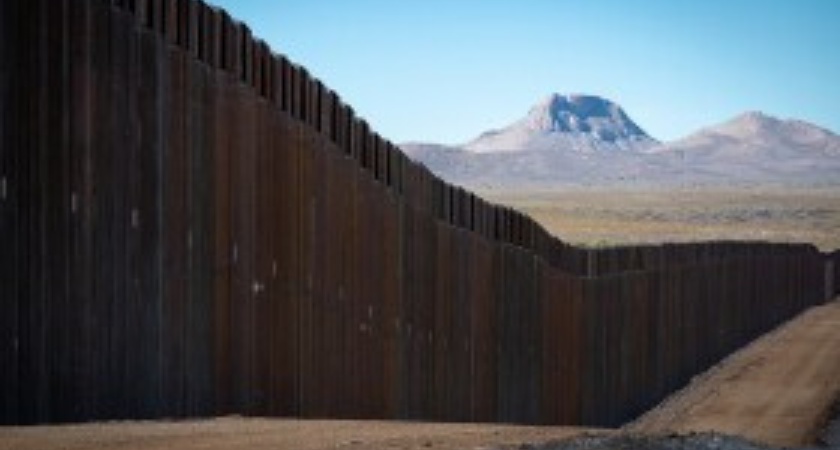
The Department of Homeland Security has issued yet another waiver of federal laws to speed up border wall construction in southern Arizona, marking the latest in a growing series of actions by DHS Secretary Kristi Noem since early summer. The new waiver, announced on Nov. 19, applies to construction between two key border monument markers and represents a continuation of the administration’s push to expand physical and technological infrastructure along portions of the U.S.–Mexico border.
.webp)
Under a federal authority first established in the 1990s and significantly broadened in 2005, DHS secretaries are permitted to bypass dozens of federal statutes — including environmental, cultural, and historic protection laws — when building border barriers. The tool has been used by previous administrations but has become increasingly layered in certain regions of the Southwest.
According to Myles Traphagen of the Wildlands Network, the newly designated stretch runs “just east of the Tohono O’odham Nation and extend[s] into New Mexico,” an area already covered by multiple waivers dating back to 2019. “So we’re essentially looking at a club sandwich of waivers, where they’re piled on top of each other. And I don’t really know the utility of that,” he said. “The waivers don’t expire unless they’re repealed.”
Much of this landscape already includes significant border infrastructure — from existing steel walls to patrol roads — raising questions among environmental advocates about whether additional construction will provide new benefits or simply duplicate what’s already there. Many migration corridors, wildlife habitats, and tribal lands lie within or adjacent to this region, making waiver decisions particularly consequential.
The latest authorization may be tied to the administration’s earlier announcement of a so-called “Smart Wall,” a secondary barrier projected to incorporate enhanced lighting, surveillance systems, and a new physical structure designed to track and deter crossings more effectively. Traphagen notes that while the waiver could pave the way for that project, “it’s not clear yet what exactly that will entail,” leaving both border communities and environmental groups waiting for clarity on design, construction timelines, and long-term impacts.
This newest exemption adds another layer to the complex patchwork of legal and policy decisions shaping border enforcement in Arizona and New Mexico. As DHS continues invoking these waivers, the implications for tribal sovereignty, wildlife movement, and ecological preservation remain front and center — especially in areas like the Tohono O’odham Nation borderlands, where past waivers have already transformed the landscape.
Originally reported by Alisa Reznick in KJZZ.