Google has officially confirmed it is moving forward with a second major data center campus in Kansas City’s Northland, continuing the rapid expansion of large-scale tech infrastructure in the region.
.webp)
The announcement puts to rest months of speculation that the global tech giant was behind “Project Mica,” a 500-acre development near the northeast corner of Interstate 435 and U.S. Highway 169.
The project adds to Google’s growing footprint in Missouri and strengthens Kansas City’s position as a rising hub for data infrastructure.
On Thursday, Google revealed that it is the customer behind the development known as Project Mica. The campus is located in the Northland near the Interstate 435 and U.S. Highway 169 interchange.
Rumors had circulated since August 2025 that Google was the company backing the massive site. The confirmation follows the company’s earlier $1 billion data center project announced in March 2024, which is currently under construction east of Interstate 435 near Worlds of Fun.
To help finance the second campus, Port KC authorized up to $10 billion in taxable revenue bonds in July 2025. The incentive package also includes a 25-year, 75% property tax abatement and 100% exemptions on local and state sales taxes for construction materials and equipment.
In return, Google committed to providing $1.5 million to the Smithville School District and $250,000 to the Northland Career Center, both to be paid upfront.
“We have been proud to call Missouri home since we broke ground on our first data center campus in the state in 2024, which is still under construction,” said Trystine Payfer, Google’s regional head of data center public affairs, in a Thursday news release. “We’re thrilled to confirm we are continuing our growth with another data center campus in Kansas City.”
Payfer added that the infrastructure will “support economic growth for the area, power Google’s services that Missourians and local businesses use daily, and drive scientific breakthroughs that directly impact our customers.”
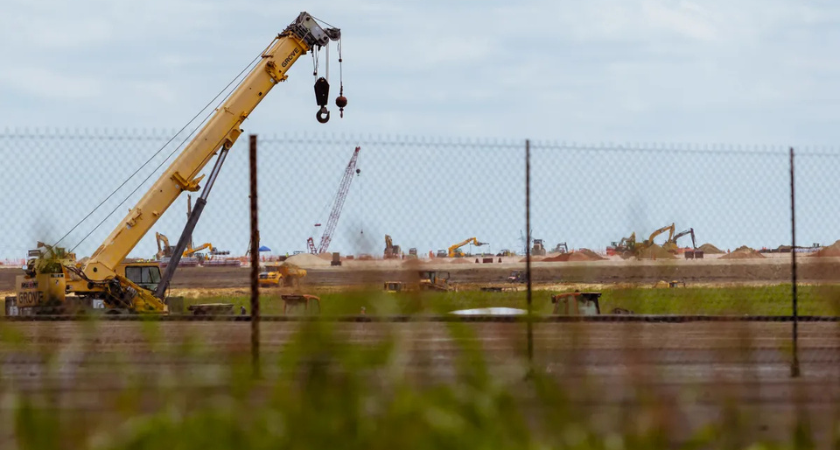
While construction on the second campus is already underway, Google declined to offer a firm completion date. Payfer cited labor availability, construction schedules, weather and supply chain timing as variables. She noted that Google’s data center construction timelines typically range from 18 to 24 months.
“When we are looking to grow our portfolio, we look for robust infrastructure, a strong pool of talent, and local partners who want to work together,” Payfer said. “All of which, we have already found and experienced with our first data center project in Kansas City, along with a strong community and local leadership that has been great to work with.”
The second campus also comes with a newly structured power arrangement involving Evergy, the region’s largest electricity provider.
According to Payfer, under an agreement with Evergy, Google “will cover the full energy costs associated with powering both of the Google data center campuses” through what the company calls its Capacity Commitment Framework.
An Evergy spokesperson said the utility introduced a new rate structure in 2025 that “ensures data centers pay their fair share and benefits existing Evergy customers.”
Google will be the first customer under the Large Load Power Tariff, a rate created for customers with monthly peak demand of 75 megawatts or more. The rate plan received approval from the Missouri Public Service Commission in November 2025, with a similar structure approved by the Kansas Corporation Commission.
Under the tariff, data centers must sign long-term contracts that include “significant early cancellation penalties.” They are also required to pay “all direct costs” for service and a premium rate above what existing large customers pay.
Evergy says the higher rate helps cover new generation and transmission investments while protecting current residential and business customers from bearing additional infrastructure costs.
“We are excited about Google’s newly announced data center campus, which supports the infrastructure and economy of the future for Kansas City and the region,” the Evergy spokesperson said.
The rapid growth of data centers has also sparked policy discussions at the federal level.
On Wednesday, Josh Hawley introduced the Guaranteeing Rate Insulation from Data Centers (GRID) Act alongside Richard Blumenthal.
The proposed legislation would require new data centers to rely on energy sources not connected to the traditional power grid. Existing facilities would have 10 years to transition to alternative power sources.
Hawley argues the bill would protect average ratepayers from higher utility bills driven by the energy demands of artificial intelligence and large-scale computing operations.
“It’s time to make AI work for working people,” Hawley said. “We need to start protecting people’s access to electricity, to water, to these basic things they’re already paying for.”
The debate reflects a broader national conversation about how to balance economic growth, energy demand, and consumer protection as artificial intelligence and cloud computing expand.
For residents living near the construction site, the development is both visible and tangible.
George Hawkins, who has lived in the Woodland Creek neighborhood since 2019, can see cranes from Google’s Project Mica site rising above nearby homes.
“There’s noise. At times, there’s quite a bit of dirt in the air,” Hawkins said.
He acknowledged that the disruption has not dramatically affected his daily life so far. However, he remains concerned about potential long-term impacts, especially regarding electric rates.
“I don’t know this facility will necessarily benefit me in any way,” Hawkins said. “So I sure don’t want to pay more money for something they want to do.”
Hawkins said he plans to closely monitor both construction progress and future changes to utility costs.
.webp)
Kansas City has increasingly become a destination for large-scale data infrastructure projects, driven by available land, transportation access, stable utilities, and a growing workforce. With two Google campuses underway, the region’s profile as a technology and innovation corridor continues to expand.
Supporters argue that the projects bring long-term tax base growth, construction jobs, and technological investment. Critics and cautious observers, however, continue to raise questions about environmental impact, water usage, and the strain on local utilities.
As construction progresses, both economic opportunity and infrastructure pressures are likely to remain central topics in Kansas City’s evolving development story.
Originally reported by Charlie Keegan , Sam Hartle in KSHB.