Immigration enforcement is emerging as a quieter but potentially transformative force for the U.S. construction industry as it moves into 2026, with contractors bracing for labor constraints that may deepen existing workforce challenges — even as enforcement actions remain uneven across jobsites.

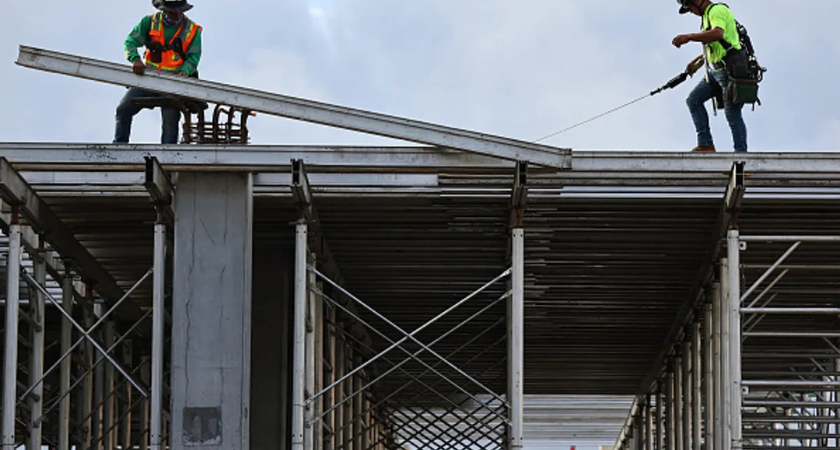
Immigration reform was a central theme in each of President Donald Trump’s campaigns for the White House. Now, nearly a year into his second term, increased Immigration and Customs Enforcement activity is beginning to ripple through construction, though not always in the ways national headlines might suggest. For many nonresidential contractors, especially those tied to data centers and other megaprojects, the pressure is less about visible raids and more about the growing difficulty of finding qualified workers.
“I’ve been hopping around the country ... and it’s hard to find a construction company that says they’ve been affected [by Trump’s immigration policy] even indirectly,” Ken Simonson, chief economist at the Associated General Contractors of America, told Construction Dive.
Industry observers say the impact of enforcement so far has been nuanced. While the Trump administration began mobilizing law enforcement resources roughly five months into the second term, those efforts have not centered heavily on construction sites, according to Brian Turmail, vice president of public affairs and workforce at AGC.
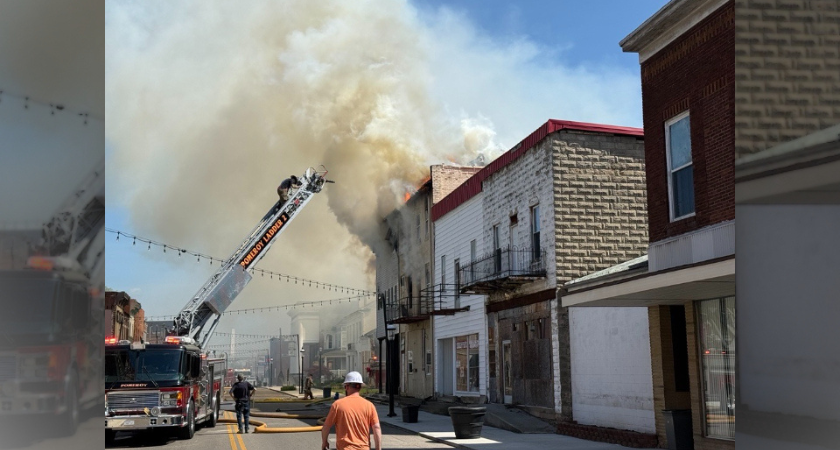
High-profile ICE actions unfolded in Portland, Oregon, and Los Angeles in June, followed by Chicago later in the year. A Sept. 4 raid at a Hyundai plant in Georgia resulted in the arrest of 475 workers, capturing national attention. But construction advocates say such incidents masked a broader enforcement strategy that appeared to shift away from individual jobsites.
“It seems the administration has shifted from a jobsite focus on immigration enforcement to a community-wide focus on immigration enforcement,” Turmail told Construction Dive. “This kind of coincided with the surges that we saw in ICE enforcement in LA and in Chicago.”

Construction remains one of the most immigrant-dependent industries in the U.S. Simonson estimates that roughly 34% of construction trades workers are immigrants, with some trades reaching as high as 61%.
“It means that the construction inflow of potential workers has been turned off.”
Despite that reliance, contractors have not widely reported dramatic jobsite disruptions. Instead, economists and contractor groups say undocumented workers are increasingly opting out of the workforce altogether, often preemptively.
Rather than sudden raids, undocumented workers may simply stop showing up, either due to apprehension by ICE or fear of future enforcement.
“With many undocumented construction workers self-deporting or simply not showing up to work anymore even though they remain in the country, many of these contractors haven’t replaced that talent,” Anirban Basu, chief economist for Associated Builders and Contractors, told Construction Dive.
Simonson warned that the industry may only be in the early stages of feeling the policy’s impact. Increased ICE funding through the One Big Beautiful Bill Act, additional officer training time and declining immigration levels could lead to renewed jobsite enforcement in 2026.
“It means that the construction inflow of potential workers has been turned off,” Simonson said.
“So the story of 2025 has been a marketplace in which demand for construction services has been declining in many segments, while the cost of delivering such services has been rising. That’s not good from an industry perspective.”
As the available labor pool shrinks, contractors that still need workers are increasingly competing for documented employees, pushing up labor costs. However, the wage picture is not uniform across the industry.
While data center construction continues to command premium pay, other sectors — particularly residential and multifamily — have seen demand soften. As a result, contractors in those segments have pulled back on aggressive wage growth.
For example, a Baker Tilly report found that many builders scaled back compensation strategies in 2025, reflecting what the firm described as a “right-sized” workforce aligned with existing backlogs.

“I’m not sure that immigration policy is having a huge impact on wages currently,” Aaron Faulk, principal and hospitality sector lead at Baker Tilly, told Construction Dive. “Some of the uncertainties with tariffs, some uncertainty with interest rates and some of the mid-market segments that aren’t performing at a high level have moderated the need to expand the workforce.”
One clear exception remains the booming data center market, where competition for elite talent is expected to intensify further in 2026. Hyperscalers continue to outbid other sectors for top-tier electricians, project managers and specialized trades.
“The reason the data centers can attract higher quality talent is because the hyperscalers can pay more,” Basu said. “These electricians that work on data centers, they’re major leagues. They’re not Double-A or Triple-A, they’re major league and they’re very expensive and they’re in very short supply. Who can afford this kind of talent on scale? Only the hyperscalers.”
Faulk added that demand for high-performing project managers — a role that remains difficult to replicate quickly — is also likely to stay highly competitive.
Despite a sharp year-over-year drop in open construction jobs in August, layoffs have remained low, signaling that contractors are still betting on a rebound. Job openings surged again in November, according to Bureau of Labor Statistics data, reinforcing that cautious optimism.
“Presumably, they’re still optimistic,” Simonson said. “That is what I hear when I go around the country. Most contractors say, ‘Our order books for next year are strong. We just aren’t getting the go ahead on projects now.’”
Looking ahead, Simonson expects immigration enforcement to further separate construction’s winners from its laggards. Data centers and megaprojects may continue to thrive, while more traditional residential and generic projects struggle to attract both labor and investment.
“Those with the skills do that kind of [in-demand] project, they’re going to be in high demand, whereas more generic kinds of projects are going to languish,” Simonson said.
Originally reported by Zachary Phillips, Editor in Construction Dive.
.png)


.png)