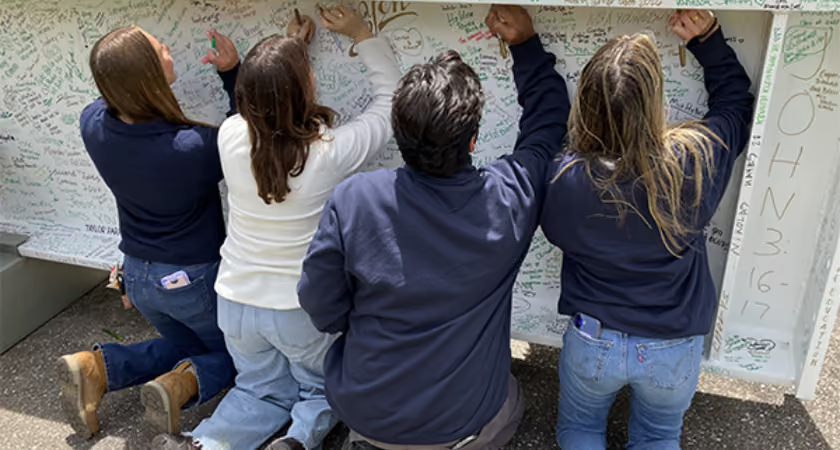
The construction of the University of South Florida's new on-campus football stadium is serving not only as a major campus development project but also as a training ground for the next generation of construction professionals.
Manhattan Construction and its joint venture partners, HJ Russell & Company and DuCon, are providing students with hands-on internship opportunities that place them directly within project teams responsible for delivering the new stadium.
Unlike traditional observation-based internships, the program emphasizes active participation in project operations, allowing students to gain practical experience while contributing to ongoing construction activities. Interns are working alongside experienced professionals and gaining exposure to the planning, coordination, and execution processes involved in delivering a large-scale sports and higher education facility.
The project offers students an opportunity to apply classroom knowledge in a real-world setting while developing technical and professional skills that can support long-term careers in the construction industry.
Construction firms across the country continue expanding internship and early-career programs as they seek to address ongoing workforce shortages and attract new talent into the industry.
Large projects often provide ideal environments for experiential learning because they expose students to multiple disciplines, including project management, scheduling, field operations, safety, quality control, and stakeholder coordination. These experiences help bridge the gap between academic programs and professional construction careers.
Contractors increasingly view internship programs as a key component of workforce planning, allowing companies to identify promising talent while giving students meaningful exposure to project delivery processes.
The USF stadium project demonstrates how large institutional developments can serve as platforms for workforce development in addition to meeting facility and infrastructure needs.
Students participating in the internship program gain firsthand insight into the complexity of delivering a major sports venue, from early construction activities through project execution. Exposure to active jobsites can help accelerate professional development and provide valuable experience that is difficult to replicate in a classroom setting.
As demand for skilled construction professionals continues to grow, partnerships between contractors, universities, and project owners are becoming increasingly important in building future talent pipelines.
For construction owners, internship programs embedded within major projects can provide long-term benefits by helping develop the industry's future workforce. Owners who support contractor-led training and workforce initiatives may contribute to a stronger labor pipeline while enhancing project engagement with educational institutions and local communities. As workforce availability remains a critical industry challenge, investments in experiential learning programs can help support future project delivery capacity.
Source: Manhattan Construction Group.