Despite a recent slowdown in overall manufacturing construction spending, several of the world’s largest manufacturers are pressing ahead with massive U.S. factory investments in 2026, signaling continued confidence in domestic production.
U.S. manufacturing construction spending declined after peaking in 2024, according to U.S. Census Bureau data. At the same time, industry analysts at E2 report that companies canceled more than $32 billion in clean energy manufacturing projects in 2025, citing reduced government incentives, funding cuts and tariff-related pressures.
.jpg)
Yet amid these headwinds, a number of global manufacturers are significantly expanding their U.S. footprints. Federal policies aimed at boosting domestic production — including funding from the CHIPS and Science Act and state-level tax incentives tied to job creation — continue to drive investment, particularly in semiconductors, electric vehicles and pharmaceuticals.
What follows are some of the largest factory construction projects scheduled to break ground or enter production in 2026.
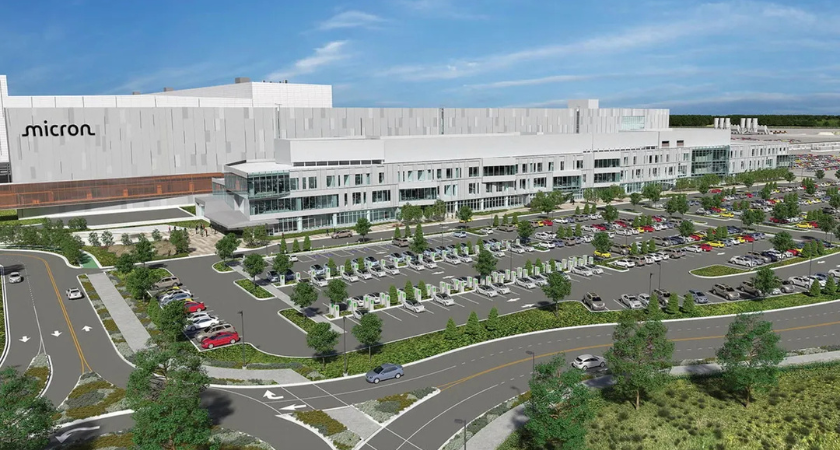
Micron has begun construction on its flagship memory manufacturing facility in Clay, New York, marking a major milestone in the company’s long-term U.S. expansion strategy. Production at Micron’s Idaho site is expected to begin next year.
The company plans to invest $150 billion in semiconductor fabrication plants and $50 billion in research and development, including two fabs in Idaho, four fabs in New York and the expansion of its existing Virginia facility. Once complete, the project is expected to produce 40% of Micron’s dynamic random access memory in the U.S. and generate an estimated 90,000 direct and indirect jobs.
The initiative includes $6.4 billion in funding from the U.S. Department of Commerce through the CHIPS and Science Act.
Samsung Electronics’ semiconductor plant in Taylor, Texas, represents the largest foreign investment in the state. Construction resumed in mid-2025 after being paused due to softened demand.
The facility is expected to be operational in 2026 and is projected to create 1,800 jobs within a decade. Samsung previously outlined plans to invest up to $44 billion in Texas, though revised plans reduced the investment to $37 billion, resulting in CHIPS Act funding being adjusted from $6.4 billion to $4.7 billion.
The Taylor project is part of Samsung’s broader multibillion-dollar presence in Texas, where the company has invested more than $47 billion since the 1970s.
Stellantis is investing $13 billion to increase U.S. production capacity by 50% over four years. The automaker plans to launch a new four-cylinder engine line in Indiana in 2026, reopen an Illinois facility to produce two new Jeep models in 2027, and retool its Michigan operations for next-generation electric and hybrid vehicles.
Additional upgrades include preparation for next-generation Dodge Durango production at the Detroit Assembly Complex by 2029. Collectively, the investment is expected to create more than 5,000 jobs, making it Stellantis’ largest-ever U.S. investment.
.jpg)
Eli Lilly is set to break ground on a $6 billion active pharmaceutical ingredient facility in Huntsville, Alabama, as part of a broader $27 billion plan to build four new production sites nationwide.
Additional facilities include a $6.5 billion plant in Houston and a $5 billion cancer drug manufacturing facility in Richmond, Virginia, both expected to come online within five years of construction. The projects fall under Lilly’s broader $50 billion U.S. expansion strategy, which the company describes as the largest pharmaceutical manufacturing investment in U.S. history.
Texas Instruments plans to invest $11 billion in a new 300-millimeter semiconductor fab in Lehi, Utah, adjacent to its existing facility. Production is targeted for 2026, with the project expected to create 800 direct jobs and thousands more indirectly.
Electric vehicle maker Rivian is preparing to ramp up construction on its long-delayed $5 billion manufacturing campus in Georgia. The 9-million-square-foot facility is expected to produce 400,000 vehicles annually by 2028 and could unlock $1.5 billion in state incentives if job targets are met.
Other major projects slated to break ground or advance in 2026 include:
Originally reported by Sakshi Udavant in Manufacturing Dive.