Global investment in data center development is expected to reach at least $3 trillion over the next five years, driven by surging demand from hyperscalers and expanding digital infrastructure needs, according to a new report from Moody’s Ratings.
The New York City-based financial services firm said data center construction pipelines will remain strong, even as developers face higher construction costs, power availability constraints, and longer completion timelines. Hyperscalers are projected to fuel double-digit growth in data center capacity through at least 2026, providing a significant boost to nonresidential construction activity.
.jpg)
Despite escalating costs, the report notes that financing structures are evolving to support large-scale projects. In some cases, tenants are increasingly willing to assume portions of construction and delivery risk in order to accelerate project timelines.
Moody’s emphasized that the data center construction surge remains “in its early stages,” with the next wave of development focused on larger hyperscale facilities exceeding 300 megawatts of capacity. These massive projects are expected to come online beginning this year, dramatically expanding total capacity across key markets.
As facilities grow larger, developers are also moving faster. Construction schedules are being compressed to meet hyperscalers’ demands for quicker speed-to-market, even as supply chain and infrastructure challenges persist.
That acceleration is partly enabled by changes in risk allocation. According to the report, more tenants are now willing to exempt power and essential utility availability from completion requirements, while also increasing their share of risk related to unforeseen delays. Moody’s said those shifts help move projects forward, even when delivery timelines stretch.
Global shortages of skilled labor and essential materials continue to complicate the outlook. Miners of copper and rare earth metals, along with manufacturers of cooling systems and power-related equipment, are cautiously expanding production to meet rising data center demand. However, Moody’s said those increases are unlikely to fully offset price pressures in 2026.
As a result, new data center facilities are becoming significantly more expensive than older assets in comparable markets. Even so, Moody’s does not anticipate that higher costs will dampen demand.
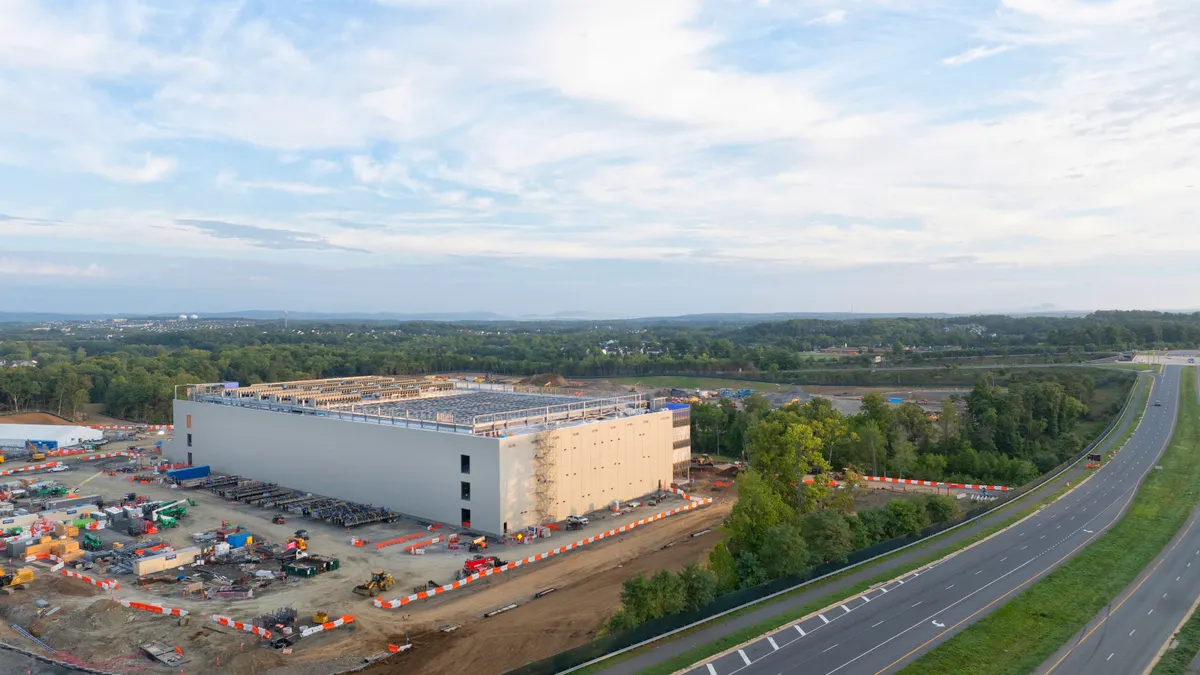
In Northern Virginia, the world’s largest data center market, leases for hyperscale facilities exceeding 4 megawatts climbed to $130 to $190 per kilowatt per month in 2025, up from $110 to $150 in 2024. Similar pricing trends were observed in markets such as Atlanta, with Moody’s attributing the increases largely to financing structures rather than weakening demand.
Moody’s highlighted a shift toward financing models that reduce credit risk and expand access to capital. More projects are now structured so construction debt can be fully repaid within initial lease terms that often exceed 15 years.
“To balance the uncertainty of a rapidly growing market, an increasing number of new financings are being structured with the ability to fully repay their construction debt within their initial lease term without any extensions or renewals,” the report said. “This lowers the credit risk of the data center project financing compared to data centers that are exposed to lease renewal risk to repay their development financing.”
Most data center development capital continues to come from a mix of project finance, corporate bank loans, private capital, developer equity and tenant equity. Moody’s said those funding sources are expected to remain dominant through 2026, enabling developers to push ahead with increasingly costly builds despite mounting construction and infrastructure challenges.
Originally reported by Sebastian Obando, Reporter in Construction Dive.



.png)