A slower pace of hiring across the U.S. economy continued into June, with residential construction showing signs of weakening despite modest employment gains in the broader construction sector. The latest labor data highlights ongoing workforce challenges that could influence project planning and labor availability for builders, contractors and developers.
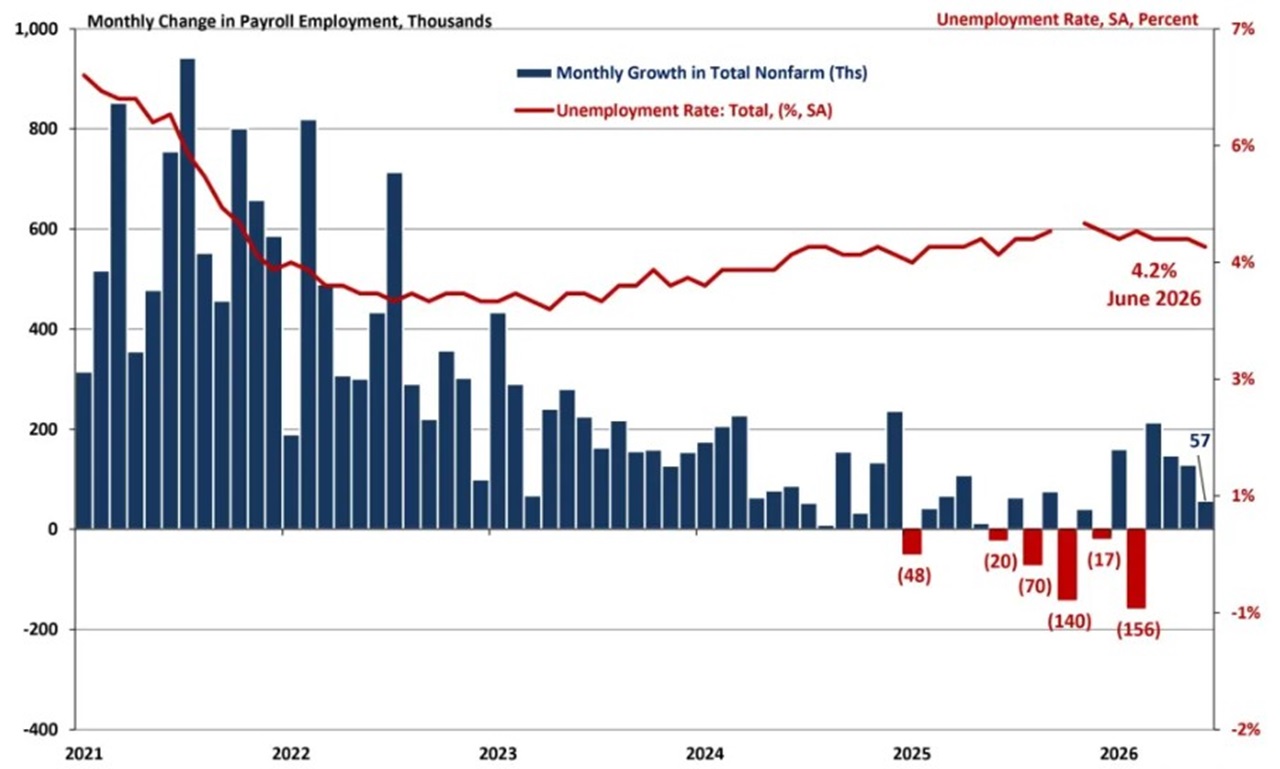
The National Association of Home Builders reported that total nonfarm payroll employment increased by 57,000 jobs in June, representing the smallest monthly gain since February's employment decline. Average monthly payroll growth has reached 92,000 jobs during 2026, exceeding 2025 levels but remaining below the pace recorded in 2024.
Within construction, total industry employment increased by 11,000 positions during the month. However, residential construction employment moved in the opposite direction, declining by 8,600 jobs.
Over the past 12 months, residential construction has recorded a net loss of 48,800 positions, although employment remains substantially above post-recession lows.
The national unemployment rate measured 4.2% in June, remaining close to year-earlier levels. Labor force participation declined during the month, contributing to the overall unemployment figure.
Construction workers experienced a different trend, with the industry's unemployment rate increasing to 6.2% in June, compared with 5.2% in May. The June reading represents the highest construction unemployment rate since July 2021.
Employment across the home building industry totaled approximately 3.3 million workers in June. Residential specialty trade contractors accounted for about 2.4 million jobs, while builders and remodelers employed roughly 916,000 workers.
Slowing employment growth and rising construction unemployment suggest continued adjustments across the residential building market. For construction owners, home builders and specialty contractors, labor market conditions remain an important consideration when evaluating workforce planning, project scheduling and future hiring needs. While overall construction employment continued to expand, the decline in residential construction jobs reflects ongoing pressures within the housing sector.
Source: NAHB.