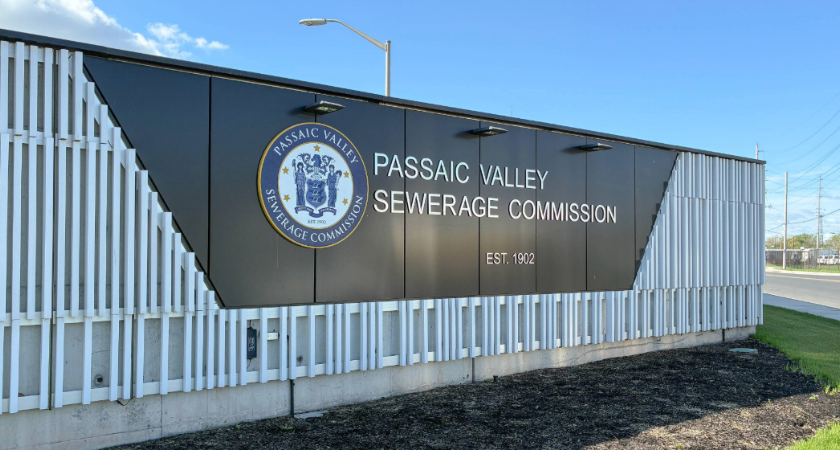
A major flood protection project completed at the Passaic Valley Sewerage Commission’s wastewater treatment facility in Newark is emerging as a model for how utilities and infrastructure owners are rethinking resilience planning in an era of intensifying climate risks.
The newly completed 2.5-mile perimeter floodwall surrounds the commission’s 140-acre treatment campus, a critical regional facility that processes hundreds of millions of gallons of wastewater daily for communities across northern New Jersey.
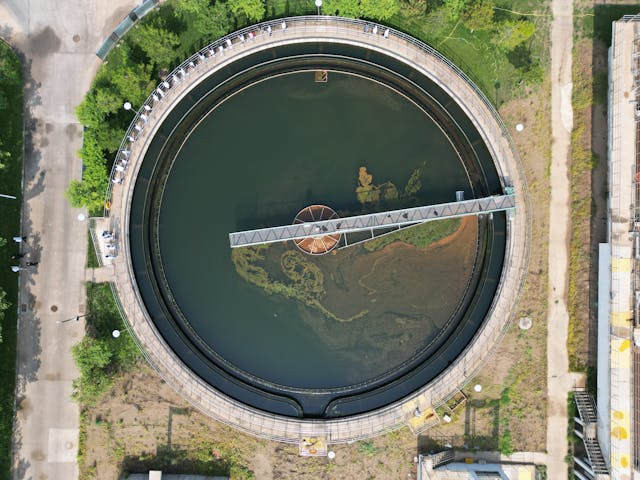
The project represents one component of a broader resilience initiative valued at approximately $800 million, aimed at protecting essential utility infrastructure from storm surge, flooding and future sea-level rise.
Engineering firm STV led structural design and modeling efforts for the floodwall system, which was developed in response to vulnerabilities exposed during Hurricane Sandy more than a decade ago.
During that storm, flooding severely disrupted treatment operations, damaged electrical systems and submerged critical infrastructure throughout the facility. Since then, utilities nationwide have faced increasing pressure to harden water and wastewater assets against extreme weather events.
Rather than relying solely on traditional flood protection standards, the project team incorporated advanced hydraulic modeling, future climate projections and enhanced debris-impact criteria into the design process. Engineers calibrated wall elevations and structural systems to address potential storm conditions exceeding historic benchmarks.
The completed floodwall includes a combination of reinforced retaining structures, specialized foundations and movable steel gate systems intended to maintain both operational access and storm protection capabilities.
One of the most technically complex elements involved integrating flood defenses around an active wastewater treatment campus without interrupting ongoing utility operations. The site contains extensive underground tunnels, power infrastructure and process systems that could not be taken offline during construction.
Project teams also designed portions of the system to resist impacts from large industrial debris associated with waterfront storm surge conditions, reflecting the plant’s location near tidal waterways and industrial shipping activity.
For construction owners and public agencies, the project underscores the growing financial and operational stakes tied to climate resilience investments. Wastewater treatment facilities are increasingly viewed as high-priority infrastructure assets because service interruptions can trigger environmental violations, public health risks and major economic disruption.
The resilience sector has become a major growth area for engineering firms, contractors and infrastructure developers as federal and state agencies direct funding toward coastal protection, utility modernization and disaster mitigation programs.
Industry analysts expect climate adaptation requirements to shape future procurement strategies for water, transportation and energy infrastructure projects, particularly in coastal and flood-prone regions.
For utility owners, the Newark floodwall project demonstrates how resilience planning is evolving beyond code compliance toward long-term operational continuity and asset protection strategies designed for increasingly volatile environmental conditions.
Source: STV.