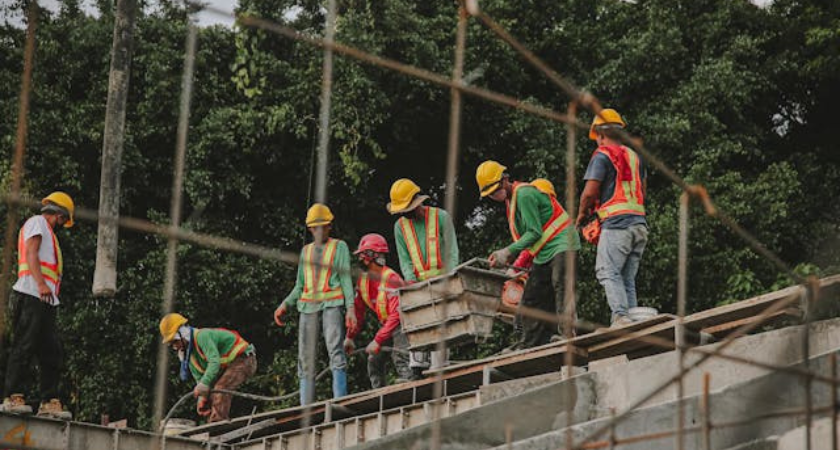
Construction firm Shawmut Design and Construction is reinforcing its jobsite safety approach by emphasizing a culture built on proactive planning, worker engagement and total worker health, including mental well-being and fatigue management.
In a recent internal reflection on its safety philosophy, the company described safety not only as a compliance requirement but as a core operational mindset embedded across its projects and workforce.
.jpg)
Shawmut leaders noted that safe project delivery begins well before field work starts, with structured planning, hazard identification and coordinated execution across all stakeholders involved in a project.
The company also underscored that effective safety performance depends heavily on collaboration between field teams, trade partners and clients, particularly in complex construction environments where sequencing, logistics and workforce coordination play a critical role.
Across the construction industry, contractors are increasingly expanding the definition of jobsite safety to include behavioral and human-performance factors such as fatigue, stress and communication breakdowns.
Shawmut’s approach reflects that broader shift, with leadership emphasizing that maintaining alertness, managing workload demands and supporting worker well-being are essential to reducing risk exposure on active jobsites.
The company also highlighted the importance of fostering trust and communication among project teams to ensure that hazards are identified early and addressed before work begins.
Industry observers note that leading contractors are increasingly embedding “total worker health” principles into safety programs, recognizing that physical and mental readiness directly impacts decision-making and incident prevention.
Shawmut’s safety philosophy also emphasizes accountability across all levels of the project structure, from leadership teams to field supervisors and trade partners.
The company frames safety as a collective responsibility in which every worker plays a role in identifying risks, speaking up about concerns and ensuring that work proceeds under controlled conditions.
This approach aligns with broader industry trends where contractors are prioritizing engagement, communication and continuous improvement as key drivers of safety performance.
As construction projects become more complex and schedule-driven, firms are increasingly relying on structured planning processes and early coordination to reduce last-minute changes and avoid unsafe conditions in the field.
For owners and developers, the emphasis on culture-driven safety programs highlights the growing importance of contractor selection based not only on compliance metrics but also on workforce engagement and planning discipline.
Contractors that integrate fatigue management, communication systems and proactive planning into their safety models may be better positioned to deliver consistent performance on complex projects.
As workforce pressures continue across the construction industry, safety culture is increasingly becoming a key indicator of both operational reliability and long-term project success.
Originally reported by Shamut.